
Selling Your Car to Used Car Buyers: The Ultimate 2026 Australian Checklist
With over 222,000 used cars changing hands in a single month, the Australian market is moving faster than ever. Yet, for most sellers, the process remains a source of significant anxiety. You’ve likely worried about navigating dealer negotiations or felt overwhelmed by conflicting state-specific transfer rules. It’s frustrating when you aren’t sure if your paperwork is in order or if a hidden history issue might slash your profit. Using a professional checklist for selling to used car buyers is the most efficient way to strip away this complexity and regain control of your sale.
We’ve designed this guide to help you master the professional sale process and secure a fair market price based on real-time 2026 data. The first step is always to Value My Car to establish a clear price baseline before engaging with professional used car buyers. You’ll learn exactly how to prepare for a seamless handover while avoiding the frustration of tyre-kickers. We’ll cover everything from the A$2.00 PPSR search to specific state requirements like the A$52.00 New South Wales safety check. This article provides a logical, step-by-step progression to ensure you receive immediate payment and a stress-free transaction.
Key Takeaways
- Prioritise speed and security by choosing a professional buyer over the unpredictability of private classifieds.
- Prepare your Australian drivers licence and current registration papers to facilitate an immediate and legal handover.
- Boost your vehicle’s value by focusing on interior detailing and ensuring all accessories like spare keys are present.
- Follow a detailed checklist for selling to used car buyers to understand exactly what appraisers look for during the inspection.
- Streamline your sale by using the My Car Value platform to access a competitive network of professional buyers nationwide.
Why Sell Your Vehicle to Professional Used Car Buyers?
Selling a vehicle in the 2026 market requires a data-driven exit strategy. Professional used car buyers offer a model built on three pillars: speed, security, and certainty. Unlike private listings that can linger for weeks, a professional sale is designed to be completed in hours. This efficiency is essential for anyone using a checklist for selling to used car buyers to maximise their return. You are not just selling a car; you are reclaiming your time and eliminating the risks associated with the traditional marketplace.
Consider the “Time-Value” calculation. While a private buyer might theoretically offer a slightly higher price, the hidden costs often erode that margin. You must factor in the cost of ongoing insurance, registration, and the inevitable depreciation that occurs while a car sits on the market. In March 2026, the Australian market saw 222,810 used car sales. High volume means prices shift quickly. A fast sale to a professional ensures you lock in today’s market value before the next shift occurs. It also eliminates “tyre-kickers” and the genuine security risks of hosting strangers for home-based test drives.
Professional buyers also simplify the financial handover, especially for encumbered vehicles. If you still owe money on your car, a professional buyer can coordinate an immediate payout with your finance provider. This removes the stress of managing bank transfers and payout letters yourself. They handle the heavy lifting, ensuring the title is cleared and you receive the remaining equity without delay.
The Security of Professional Transactions
Private sales are often targets for marketplace scams and fraudulent payment proofs. Professional buyers mitigate this by using secure electronic transfers, such as Osko, for instant settlement. This ensures funds are in your account before the keys change hands. You also maintain your privacy. There is no need to share your residential address or personal contact details with unverified individuals. Ownership transfer is handled through the Australian vehicle registration system with professional precision, ensuring you are legally cleared of any future liabilities the moment the car leaves your driveway.
Trade-In vs. Direct Sale to Specialists
Many sellers assume a dealership trade-in is their only convenient option. However, a dedicated used car buyer often outbids a trade-in offer. Dealerships usually view your car as a hurdle to selling a new one, whereas specialists in the My Car Value network are actively looking for specific stock types to fill their inventory. Whether you are selling in Sydney or a regional hub, specialists value your car based on its individual merit rather than a trade-in margin. This focused approach is a key part of your checklist for selling to used car buyers, ensuring you don’t leave money on the table at the dealership.
The Essential Paperwork Checklist for Australian Sellers
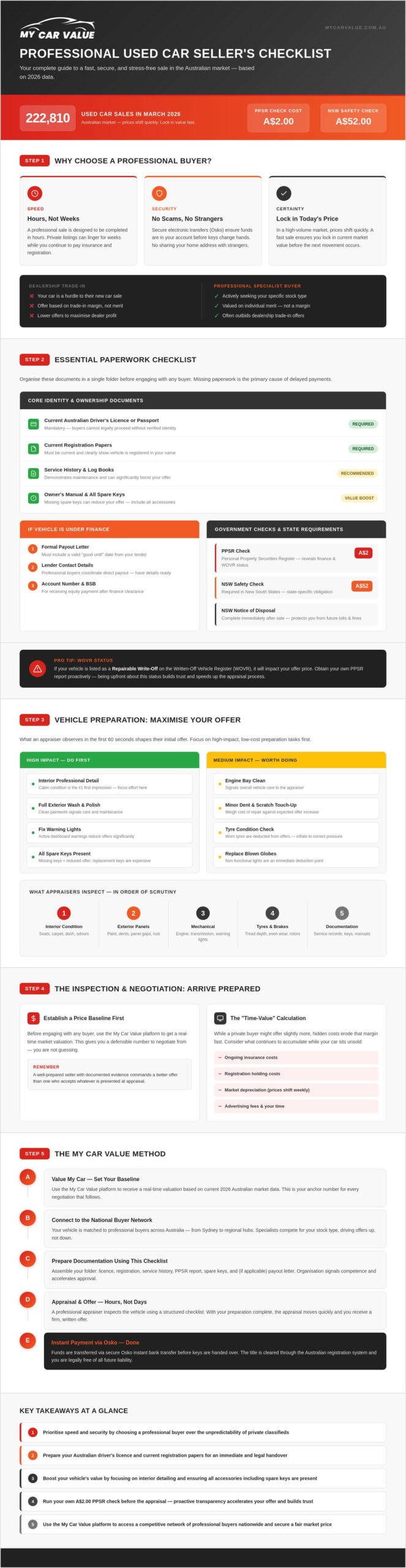
Organisation is the enemy of delay. When you engage with professional buyers, having your documentation ready determines how quickly the funds reach your account. The most basic requirement is proof of identity. You must provide a current Australian Drivers Licence or a valid Passport to verify ownership. Without these, a professional buyer cannot legally proceed with the purchase. Your registration papers must also be current and clearly show the vehicle is registered in your name. If you are selling in New South Wales, you will need to complete a NSW Government notice of disposal immediately after the sale to protect yourself from future tolls or fines.
If your vehicle is under finance, transparency is vital. You must obtain a formal payout letter from your lender that includes a valid “good until” date. Professional buyers are experts at handling encumbered vehicles, but they require this specific document to clear the title correctly. Having a complete checklist for selling to used car buyers ensures you don’t stall the transaction at the final hurdle. Prepare these documents in a single folder to project competence and reliability during the appraisal.
PPSR and WOVR Transparency
Every professional buyer will run a Personal Property Securities Register (PPSR) check. This official government search costs A$2.00 and reveals if the car has any financial interests recorded against it. It also shows the Written-Off Vehicle Register (WOVR) status. If your car is a “Repairable Write-Off”, it will impact the offer price. Proactively obtaining your own PPSR report prevents surprises and demonstrates honesty. It shows you have nothing to hide, which builds immediate trust with the buyer.
Service Records and Logbooks
A stamped logbook is your most valuable piece of paper. It provides a chronological record of how the vehicle was maintained. A complete car service history check validates the vehicle’s mechanical health and justifies a higher market price. Gather all receipts for major repairs, such as timing belt replacements or recent tyre purchases. Ensure the most recent service interval is clearly recorded and stamped by a qualified mechanic. This documentation is a critical component of your checklist for selling to used car buyers, as it removes the guesswork for the appraiser. Before you meet a buyer, it’s wise to Value My Car to see how a full service history influences your baseline offer.
Vehicle Preparation: Maximising Your Professional Offer
Preparation is the most effective way to protect your car’s value. When an appraiser inspects your vehicle, they are looking for “reconditioning costs,” which are the expenses they will incur to make the car ready for resale. Every stain, scratch, or missing item represents a dollar deduction from your final payout. By using a checklist for selling to used car buyers, you can systematically remove these excuses for a lower offer. Start with a thorough “Curb Appeal” detail. Focus on interior touchpoints like the steering wheel, centre console, and door handles. A clean car suggests a well-maintained engine, even if the two aren’t mechanically linked.
Gather all accessories before the inspection occurs. This includes the parcel shelf, satellite navigation SD cards, and original floor mats. If these items are missing, the buyer will deduct the retail cost of replacements from your offer. You should also address minor mechanical “quick fixes.” Check your fluid levels and replace any blown light bulbs. These are low-cost tasks that prevent an appraiser from flagging the car as “neglected” during their walk-around. Finally, remove all personal data. Delete your call history and home address from the infotainment system to ensure your privacy remains intact after the handover.
The High Cost of Missing Spare Keys
Modern proximity keys and smart fobs are high-value components. In 2026, replacing a single lost key can cost upwards of A$500. If you cannot provide two sets of keys, expect a professional buyer to reduce their offer by at least that amount. Check the boot to ensure the factory tool kit, jack, and spare tyre are all in their correct positions. If your vehicle uses a tyre repair kit instead, verify that the canister is within its expiry date. These details confirm to the buyer that the car is complete and ready for its next owner without immediate investment.
Mechanical Transparency and Roadworthies
The requirement for a Roadworthy Certificate (RWC) varies across Australia. For example, the Consumer Affairs Victoria selling guide notes that while an RWC is mandatory for private sales, many professional buyers will purchase your car without one. They simply adjust the price to cover the cost of the inspection and any necessary repairs. Being transparent about known issues is part of an effective checklist for selling to used car buyers. It prevents the deal from collapsing during the test drive. For more advice on maximising your return through different sale methods, view our guide on Car Trade-In Alternatives.
The Inspection and Negotiation: Arriving Prepared
The appraisal is a forensic evaluation of your vehicle’s current state. When you meet an appraiser, they aren’t just looking at the paint; they are listening for mechanical inconsistencies. They check panel gaps for signs of previous accident damage and inspect the engine idle for any rhythmic misses. Arriving with a checklist for selling to used car buyers allows you to anticipate these checks. It ensures you aren’t caught off guard when they point out a minor leak or a worn tyre. This inspection is a standard business procedure designed to verify the data you provided during the initial valuation.
The test drive is equally functional. It isn’t a joyride. The appraiser is testing the transmission shift points, the suspension’s response to road imperfections, and the braking performance. They will likely drive in silence to hear every click or hum. Once the drive is complete, the conversation shifts to the final offer. You must understand the difference between wholesale and retail pricing. A professional buyer operates on wholesale margins to cover their overheads and resale risks. Knowing your “Walk-Away” price based on actual 2026 market data keeps you in control of the negotiation.
Using Valuation Data as Leverage
Data is your strongest ally in any negotiation. Before you arrive, present your vehicle market value calculator results to set the tone. This report clearly defines the difference between a trade-in value and a private sale price. Use the My Car Value baseline to justify your counter-offer if the appraiser’s initial figure feels low. When you show that you understand the current market trends, you move from being a passive seller to a savvy negotiator. This level of preparation is a core part of any checklist for selling to used car buyers.
Finalising the Contract and Payment
Review the purchase agreement with precision before signing. Watch for hidden admin fees or “consignment” clauses that could delay your payout. A legitimate professional buyer will offer a straightforward contract. Ensure you process the Notice of Disposal immediately after the sale to clear yourself of future toll or fine liabilities. For payment, insist on a secure method like Osko for an instant transfer. Never hand over the keys until you have confirmed the funds are cleared in your account. To start this process with a reliable price baseline, Value My Car before booking your first inspection.
The My Car Value Method: A Faster Path to Cash
Traditional car selling involves visiting multiple physical dealerships and enduring repetitive appraisals. The My Car Value method replaces this legacy system with a streamlined, digital-first approach. We act as a savvy intermediary, connecting you with a vast network of professional used car buyers who compete for your vehicle. This competition ensures you receive a fair market price without the need for aggressive negotiation. By following our checklist for selling to used car buyers, you provide the transparency these buyers need to make their highest possible offers from the start.
The “Value My Car” process is the essential first step in your journey. It provides a data-driven baseline that reflects the current 2026 market conditions. Once you have your valuation, the transition to a secure handover is fast and methodical. We handle the heavy lifting by matching your car with buyers who specifically need your make and model. This targeted approach eliminates the “tyre-kicker” factor and ensures that the professional who inspects your car is already motivated to buy it. It’s a modernized workflow designed to value your time as much as your vehicle.
National Reach, Local Expertise
Our platform provides national Australian coverage, ensuring that you can access professional buyers regardless of your location. Whether you are looking to sell in Sydney or need a reliable buyer in Perth, our network is active and ready. We maintain a strong presence in Melbourne and offer specialised solutions to sell my car in Brisbane. By matching your specific vehicle type with local specialists, we ensure the appraisal is conducted by someone who understands the local market nuances for your specific SUV, ute, or EV.
Your Next Steps to a Successful Sale
A successful sale is the result of clear preparation and the right partnership. Start by obtaining an accurate valuation to set your expectations. Use our checklist for selling to used car buyers to organise your service history and clean your vehicle’s interior touchpoints. Once your paperwork is ready, connect with a professional buyer through our platform for a no-obligation cash offer. This methodical path ensures you move from a stressful listing to a cleared payment with minimal friction. Take control of your sale today and experience the efficiency of a modernized transaction.
Secure Your Best Price Today
Selling your vehicle doesn’t have to be a source of stress or uncertainty. By following a structured checklist for selling to used car buyers, you move from an anxious seller to a prepared professional. You’ve learned how to organise your logbooks, prepare your vehicle for appraisal, and use real-time market data to defend your price. These steps ensure you avoid the common pitfalls of private listings while maximising your car’s value in a fast-paced 2026 market.
Trusted by thousands of Australian sellers, My Car Value provides accurate 2026 market data to ensure you never leave money on the table. We strip away the complexity of traditional sales, allowing you to bypass private sale stress entirely. It’s time to stop worrying about tyre-kickers and start moving toward a secure, immediate payment.
Get your free car valuation and connect with professional buyers now. You’re ready to complete a seamless handover and get the fair price you deserve.
Frequently Asked Questions
Do I need a Roadworthy Certificate (RWC) to sell my car to a used car buyer?
You don’t usually need a Roadworthy Certificate (RWC) when selling to a professional buyer. While private sales in Victoria or Queensland often require a valid certificate before a transfer, professional used car buyers purchase vehicles “as is”. They conduct their own internal inspections and factor any necessary repair costs into their final offer. This saves you the upfront cost and the time spent visiting a mechanic before the sale.
Can I sell my car to a professional buyer if it still has finance owing?
You can absolutely sell a car with finance owing to a professional buyer. They specialise in handling encumbered vehicles and will coordinate the payout directly with your lender. You simply provide a current payout letter from your bank. The buyer pays the finance company first and transfers the remaining equity into your account. This ensures the title is legally cleared during the handover without you managing the debt transfer.
How much less do professional used car buyers pay compared to private sales?
Professional buyers typically pay a wholesale price, which is lower than a private retail price. This margin covers their business overheads, reconditioning costs, and the risk of resale. While you might see higher figures in private classifieds, those listings often take weeks to sell and involve advertising fees. A professional sale offers immediate payment and removes the costs of ongoing insurance, registration, and depreciation while waiting for a private buyer.
Will a dealer buy my car if it has high kilometres or mechanical issues?
Yes, dealers and specialists will buy vehicles with high kilometres or mechanical faults. They use their own service networks to recondition cars for the used market. Your offer will be adjusted to reflect the vehicle’s condition and the projected cost of parts. Being honest about these issues is a key part of your checklist for selling to used car buyers to avoid the deal collapsing during the final test drive. If you’re concerned about how your odometer reading affects your offer, our guide on selling a car with high kms in Australia explains how to secure a fair price for a high-mileage vehicle.
What paperwork do I need to sign to transfer ownership to a used car buyer?
You will need to sign a formal purchase agreement and the relevant state transfer of registration documents. In New South Wales, you must also process a notice of disposal to clear your legal liability. Have your Australian drivers licence and current rego papers ready. Following a checklist for selling to used car buyers ensures you have all required identity and ownership proofs to finalise the contract on the spot.
How long does it take to receive payment from a professional buyer?
Payment is typically settled on the same day as the appraisal. Most professional buyers use Osko or real-time electronic funds transfers to ensure the money is in your account before you hand over the keys. This is a significant advantage over private sales, where you might wait days for bank cheques to clear or deal with the security risks of handling large amounts of cash with strangers.
Do I need to clean my car before taking it for an appraisal?
You should definitely clean your car to maximise its perceived value. An appraiser will often deduct “detailing costs” from their offer if the car is poorly presented. Focus on the interior touchpoints and remove all personal rubbish. A clean car signals that you have maintained the vehicle well. This often leads to a more favourable appraisal and a much faster negotiation process during the walk-around.
What happens to my insurance and registration after the sale is finalised?
You should cancel your insurance policy the moment the sale is finalised and the car is no longer in your possession. For registration, the buyer takes over the remaining balance. You must lodge a notice of disposal with your state’s transport authority, such as Service NSW or VicRoads. This ensures you aren’t held liable for any future tolls, parking fines, or traffic infringements incurred by the new owner.