

VIN Digits Explained: The 2026 Australian Guide to Decoding Your Vehicle
With 140,058 new vehicles hitting Australian roads in June 2026 alone, the secondary market is flooded with options that look identical on the surface. You’ve likely felt the frustration of staring at a 17-character string of letters and numbers, wondering if you’re looking at a genuine bargain or a hidden disaster. It’s a valid concern; failing to correctly read those vin digits can lead to overpaying for a vehicle or, worse, unknowingly buying a statutory write-off.
We understand that the technical jargon of automotive specs can be overwhelming. You want a clear path to the truth about a car’s history without the stress. This guide will teach you to decode your vehicle’s DNA, allowing you to verify its exact build date, factory origin, and legal status with total confidence. We’ll show you exactly where to find the physical plate and how to use that data to secure a professional valuation that reflects the car’s true market worth.
Key Takeaways
- Identify your vehicle’s unique 17-character identity to distinguish it from similar models in the Australian market.
- Learn to decode specific vin digits to reveal manufacturer, engine type, and production plant details.
- Verify the country of origin to better understand the build quality and local specifications of your vehicle.
- Avoid costly buying errors by ensuring your VIN data is accurate for PPSR searches and finance checks.
- Provide correct data for a professional valuation to prevent unexpected price drops during a physical inspection.
What Are VIN Digits? The DNA of Your Vehicle
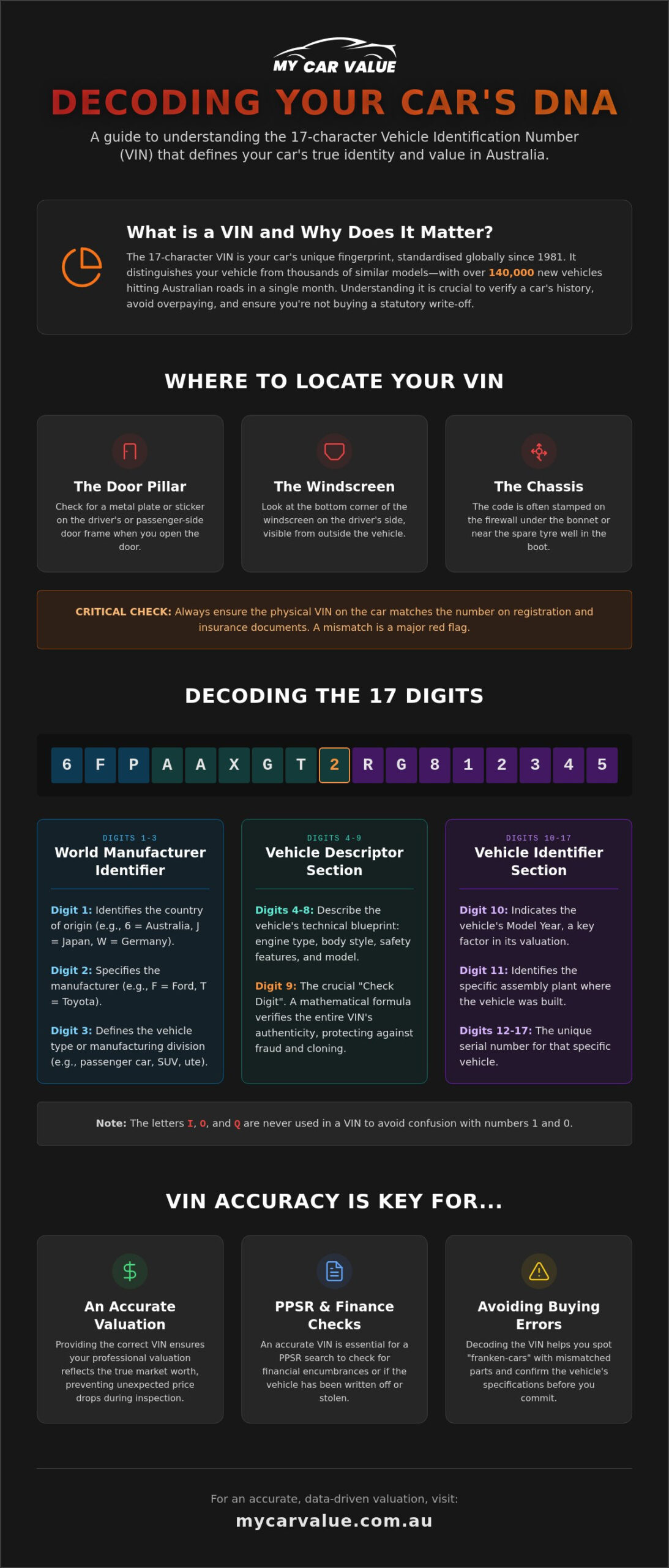
Every vehicle on Australian roads carries a unique biological signature. This 17-character alphanumeric code, known as the Vehicle Identification Number, identifies everything from the engine type to the specific assembly plant. In local trade circles, you might hear it called a chassis number or frame number. Regardless of the terminology used, the VIN is the definitive legal identity of a car in Australia. Understanding these vin digits is the first step in protecting your investment and ensuring you aren’t buying a vehicle with a hidden or fraudulent past.
Why 17 Characters Are the Gold Standard
Before 1981, manufacturers used their own internal numbering systems. This lack of consistency created massive confusion for insurers, buyers, and law enforcement. The modern 17-digit format solved this by creating a global language for automotive data. This standardisation ensures that every car produced since 1981 can be tracked and identified with absolute precision. To maintain accuracy, the system intentionally excludes the letters I, O, and Q. These characters are too easily confused with the numbers 1 and 0. This strict logic ensures that no two vehicles in the world share the same code. It makes it nearly impossible for a vehicle to be “cloned” or misrepresented without a data trail appearing.
Where to Find Your VIN in Australia
Locating your car’s identity is usually a quick process. You don’t need tools or mechanical knowledge to find it. Start by checking these common locations:
- The Door Pillar: Look for a metal compliance plate or a high-security sticker on the passenger-side or driver-side door frame.
- The Windscreen: Check the bottom corner of the windscreen on the driver’s side. The code is often visible through the glass from the outside.
- The Chassis: Manufacturers frequently stamp the code directly onto the metal. Look under the bonnet on the firewall or near the spare tyre well in the boot.
Once you locate the number, always cross-reference the physical VIN with your registration papers or insurance renewal notice. Any discrepancy between the physical car and the official paperwork is a major red flag. It suggests the vehicle might have been tampered with or incorrectly recorded in government databases. Always verify the 17 vin digits match across all documents before committing to a purchase or a sale.
Decoding the 17 VIN Digits: A Position-by-Position Breakdown
Every character in a 17-digit string serves a specific purpose. Positions 1 through 17 follow a strict logical sequence. This structure allows professional used car buyers to extract precise data for accurate quoting. Without this breakdown, you might miss signs of a “franken-car.” These are vehicles where parts from different models or years have been mismatched to hide heavy damage or theft history. Decoding these vin digits manually gives you the power to spot these discrepancies before spending a cent on a used vehicle. It’s a vital skill in the 2026 market where imported models are increasingly common.
World Manufacturer Identifier (Digits 1-3)
The first three vin digits establish the vehicle’s origin and brand. Digit 1 identifies the country. For example, 6 represents Australia, J is Japan, and W is Germany. Digit 2 identifies the manufacturer, such as F for Ford or T for Toyota. The third digit specifies the division or vehicle type. It distinguishes between a standard passenger car, a rugged SUV, or a commercial ute. This section ensures the car’s base identity is verified before looking at any technical details or equipment levels.
Vehicle Descriptor Section (Digits 4-9)
Digits 4 through 8 describe the vehicle’s technical blueprint. This includes the engine type, body style, and specific safety features like airbag configurations. Professional appraisers use these digits to confirm the car’s exact trim level and market desirability. Digit 9 is the “Check Digit.” It’s a mathematical result of a complex formula used to verify the VIN’s authenticity. This digit acts as the first line of defence against VIN cloning. If the check digit doesn’t match the rest of the string, it’s a clear sign of a fraudulent or tampered code. Verifying this is essential before conducting a PPSR search to ensure you’re checking a legitimate vehicle record.
Vehicle Identifier Section (Digits 10-17)
The final section provides the individual identity of the unit. Digit 10 is arguably the most important for valuing your car, as it indicates the model year. Note that the model year doesn’t always match the calendar year of sale, which can impact resale price. Digit 11 identifies the specific plant where the vehicle was assembled. Finally, digits 12 through 17 represent the unique production sequence or serial number. This ensures that even if two cars are identical in every other way, they remain distinct units in the manufacturer’s database. If you’re preparing to sell, having this data ready helps you get a precise market offer quickly.
Spotting Australian Market Origins and Model Years
Australia’s automotive landscape is unique. Unlike markets with massive domestic production, we rely heavily on a global network of manufacturers. In the first half of 2026, China emerged as the leading source of new cars in Australia, accounting for 31% of the market. While many online guides focus on North American codes like 1, 4, or 5, these are less common on our roads. Understanding the specific vin digits used for Australian imports allows you to verify build quality and local specifications. Professional buyers use this origin data to calculate regional demand and potential resale speed.
A common mistake is confusing the “build date” found on a physical plate with the “model year” encoded in the VIN. The build date is simply when the vehicle left the assembly line. The model year determines the technical specification and feature set of the car. To accurately decode the vehicle identification number, you must isolate the characters that signal these market-specific traits. This distinction is vital for anyone looking to sell a car in Brisbane or other competitive city markets where buyers demand precise data.
Identifying Common Country Codes in Australia
The first character of your VIN tells you where the car was born. In Australia, you will most frequently encounter these four codes:
- J (Japan): Represents high-demand brands like Mazda and Toyota. These vehicles typically maintain excellent resale value due to their reputation for reliability.
- M (Thailand): The origin of Australia’s favourite dual-cab utes, including the Toyota HiLux and Ford Ranger. These are often built to specific “heavy-duty” Australian standards.
- K (South Korea): The identifier for Hyundai and Kia models. This code is essential for verifying that a vehicle carries the full local warranty and safety features.
- 6 (Australia): Used for locally manufactured classics like Holden or Ford. While local mass production has ceased, these codes remain critical for the enthusiast and collector markets.
The 10th Digit: Nailing Down the Model Year
The 10th character is the most reliable way to determine a car’s true age. It is far more accurate than the registration date, which only shows when the car was first put on the road. The system uses a 30-year cycle of letters and numbers. For example, a “late-year” model might be built in November 2025 but carry the 2026 model year code. This single character change can significantly increase the market value of the vehicle. If you are preparing to list a vehicle in Perth, ensuring you have identified the correct model year prevents you from underpricing your asset. Always check the 10th digit against official manufacturer charts to confirm you are getting the most recent specification available for that series.
Why VIN Digits Are Critical for PPSR and Valuation
Your vehicle’s financial and legal history is tied directly to its 17 characters. In Australia, the Personal Property Securities Register (PPSR) is the only way to confirm if a car has finance owing. A single digit error in the vin digits can lead to a “clean” report on a vehicle that is actually encumbered. This mistake could leave you liable for someone else’s debt. Professional buyers always run a VIN-based search to ensure the title is clear before making a final offer. Using a vehicle market value calculator shows how these data points directly influence your quote.
Official PPSR searches cost only $2.00 via the government website. Avoid third-party sites that charge significantly more for the same data. If you are selling, providing a correct VIN allows the buyer to verify the car’s status instantly. This transparency speeds up the transaction and removes the primary cause of deal-breaking surprises. Accuracy is the best way to protect your equity.
Protecting Yourself from Statutory Write-offs
The VIN reveals if a car appears on the Written-Off Vehicle Register (WOVR). This is a critical distinction in the Australian market. A statutory write-off is so badly damaged it can never be legally registered again. It is essentially scrap metal. A repairable write-off can return to the road, but only after passing a complex Identity and Safety Inspection. As of July 2026, the Northern Territory requires even stricter logbooks for these repaired vehicles. Running a VIN check is the most important step in any car service history check. It ensures you aren’t buying a polished wreck.
Ensuring Accurate Market Valuations
Incorrectly decoding your VIN leads to “trim level” errors. Sellers often confuse an entry-level model with a top-spec variant because of similar badges or aftermarket accessories. The data in digits 4 through 8 provides the truth about the engine, body style, and factory safety features. In 2026, new Australian Design Rules (ADRs) for Advanced Emergency Braking and Lane Departure Warning Systems have made these digits even more significant for pricing. Buyers pay a premium for verified safety tech. Providing an accurate VIN prevents a “valuation drop” when the buyer performs a physical inspection. This level of honesty builds trust with used car buyers and secures a more competitive cash offer.
Stop guessing your car’s market worth. Value my car in Sydney using our data-driven platform to get an accurate price today.
Get an Accurate Valuation with My Car Value
My Car Value simplifies the selling process by using data-driven insights. Instead of guessing your car’s worth based on generic online listings, our platform uses the specific data embedded in your vehicle’s identity. We connect you with professionals who understand the nuances of VIN data. This ensures you receive a quote that reflects the true specification and market desirability of your car. Avoid the stress of private classifieds and the frustration of dealing with tyre-kickers. Get a verified market value first to ensure you are in a position of power. If you are ready to move forward, you can sell my car in Brisbane or other major hubs through our streamlined network.
The Australian used car market moves fast. In 2026, buyers are more cautious than ever, frequently checking the PPSR for any sign of financial encumbrance or accident history. By providing accurate information upfront, you eliminate the friction that often stalls private sales. Our system acts as a savvy intermediary, doing the heavy lifting so you don’t have to. We prioritise transparency and ease, creating a path to a sale that is both fast and reliable.
From VIN Decoding to Cash Offers
Providing your 17 vin digits at the start of the process removes the guesswork. Our network of buyers uses this information to verify the trim, engine, and safety features instantly. This speeds up the offer process significantly. You don’t have to spend hours explaining the car’s history to multiple parties. Dealing with verified buyers provides a level of security that private sales lack. These professionals perform their own PPSR checks to confirm the title is clear. This moves you from the “what is it worth” phase to “sold” in a few simple steps. It is a methodical approach designed for maximum efficiency.
Why Professional Buyers Rely on VIN Integrity
Professional buyers rely on VIN integrity to guarantee they are purchasing a legitimate vehicle. The code acts as a lock and key for the car’s entire history. It helps reduce the risk of odometer tampering by linking to historical service records and registration data. When a buyer sees a consistent data trail, they are more likely to offer a premium price. Transparency with your vehicle’s identity builds immediate trust. It proves that the car is exactly what you claim it to be. This impartial, data-driven approach is the modern way to handle automotive transactions. Accuracy is the best way to prevent a price drop during the final inspection.
Value my car in Adelaide or your local area today using your decoded VIN details to secure a competitive market offer.
Secure Your Next Move with Data
Decoding your vehicle’s identity is the most effective way to eliminate uncertainty in the Australian car market. You now have the tools to verify a car’s origin, confirm its true model year, and protect yourself from the risks of statutory write-offs or hidden finance. Every character in those 17 vin digits provides a layer of security that ensures you are making a calculated, informed decision. Whether you are buying your next SUV or preparing to sell a reliable ute, accuracy is your greatest asset.
My Car Value provides a stress-free alternative to car auctions by connecting you with an Australia-wide network of professional buyers. We specialise in providing accurate market-based valuations that reflect the real-world data of your specific vehicle. Don’t leave your equity to chance or settle for generic estimates that ignore your car’s unique DNA. Take the final step toward a transparent and profitable transaction today. Our platform does the heavy lifting, allowing you to bypass the complexity of private negotiations.
Get a professional valuation for your car today and move forward with total confidence. It is time to turn your data into a concrete offer.
Frequently Asked Questions
Can I tell the engine size from the VIN digits?
Yes, you can identify engine specifications by looking at the Vehicle Descriptor Section. These vin digits, specifically positions four through eight, encode technical data including displacement, fuel type, and cylinder configuration. Manufacturers use these specific codes to distinguish between base models and high-performance variants during production and for future servicing requirements.
What happens if the physical VIN does not match the rego papers?
A mismatch between the physical plate and registration papers is a critical red flag. It suggests the vehicle might be cloned, stolen, or have a significant administrative error. Stop the transaction immediately and contact your state’s transport authority, such as VicRoads or Service NSW, to verify the vehicle’s legitimate history. Do not exchange money until the discrepancy is legally resolved.
Is the VIN the same as the engine number in Australia?
No, the VIN and engine number are distinct identifiers. The VIN tracks the chassis and legal identity of the entire car. The engine number is stamped directly onto the engine block and identifies that specific motor. While both are required for registration and comprehensive history searches, they serve different purposes in identifying the vehicle’s primary components.
How do I decode a VIN for a car made before 1981?
Cars manufactured before 1981 do not follow the modern 17-character standard. These older vehicles use shorter, manufacturer-specific chassis numbers that vary in logic and length. To decode these, you must consult brand-specific archives or enthusiast databases. The universal 17-digit system only became the global requirement in 1981 to standardise automotive data tracking.
Does the VIN show if a car has money owing on it?
The VIN itself does not display financial data, but it is the essential key for a PPSR search. Entering the 17 vin digits into the official government register will reveal if there is a security interest or finance owing. This check is vital for any buyer to avoid inheriting a previous owner’s debt, which can lead to the vehicle being repossessed.
Can I find the colour of my car from the VIN digits?
Most manufacturers do not include the exterior colour within the 17-digit code. You should look for a separate “Paint” or “Trim” code on the compliance plate usually located in the door jamb or under the bonnet. While some luxury European brands might encode this data in the final production sequence, it is not a standard feature of the global system.
Why are some letters like I, O, and Q never used in a VIN?
The letters I, O, and Q are excluded to prevent visual confusion with numbers. The letter I looks too similar to the number 1; the letters O and Q are easily mistaken for the number 0. This strict exclusion ensures that data entry remains accurate and reduces the risk of administrative errors during registration, insurance claims, or police checks.
How much does it cost to get a full VIN history report in Australia?
An official PPSR search through the Australian Government costs exactly $2.00 as of July 2026. This provides a certificate showing if the car is stolen, written off, or has finance owing. Be cautious of commercial third-party websites. These often charge between $20 and $40 for the same basic information provided by the official ppsr.gov.au portal.