
What Do Used Car Buyers Look For? 2026 Seller’s Guide
In 2026, the median used car price in Australia sits at $25,800, yet many sellers still leave thousands on the table because they misjudge what actually drives a sale. You likely know the frustration of listing a vehicle only to face endless tyre-kickers or the anxiety that a hidden mechanical flaw will derail your deal. It is a stressful, time-consuming process that often feels like a gamble when you don’t have the right data.
We are here to strip away that complexity. This guide explains exactly what do used car buyers look for in today’s market, helping you prepare your vehicle for a fast, high-value sale. You will learn why mechanical transparency and verified history now outweigh cosmetic perfection in the eyes of serious purchasers. We’ll outline how professional buyers evaluate your logbooks and provide a clear list of preparation priorities to ensure you secure a fair price with zero stress. Stop guessing what your car is worth and start using a methodical approach to get the result you deserve.
Key Takeaways
- Understand why modern buyers prioritise reliability and fuel efficiency over cosmetic flashiness in the current Australian climate.
- Discover exactly what do used car buyers look for regarding mechanical transparency and why your logbook is your most valuable asset.
- Learn how to prepare your car’s interior and infotainment systems to create a strong first impression that justifies a higher price.
- Identify the essential paperwork, including PPSR certificates and registration status, needed to eliminate buyer friction.
- Compare the advantages of selling to professional buyers versus private individuals to find the fastest path to a fair valuation.
Understanding the Modern Used Car Buyer’s Priorities
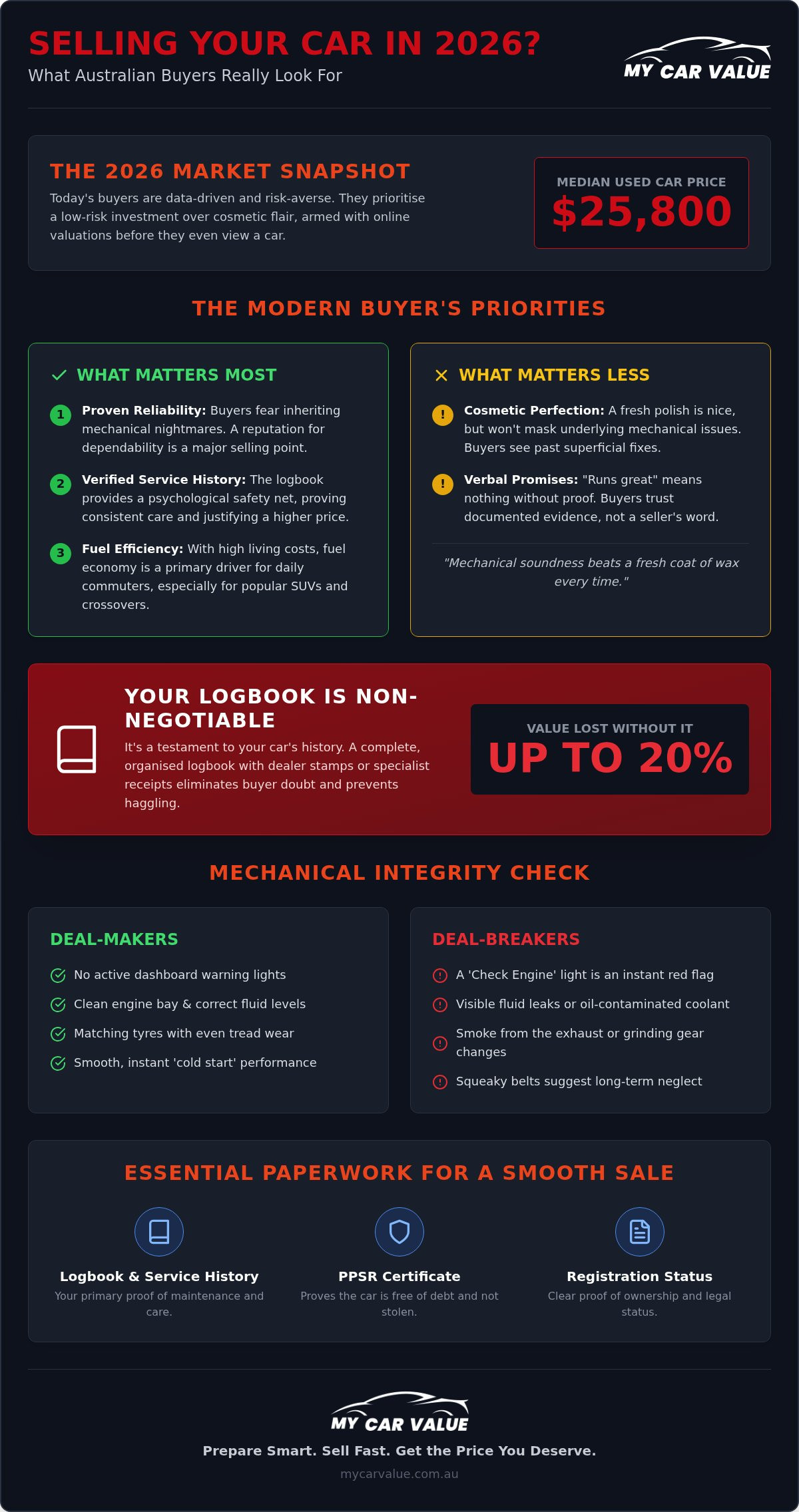
The 2026 Australian automotive market is defined by a shift toward data-driven decisions. Buyers no longer rely on a quick kick of the tyres. Instead, they seek the best possible value-to-risk ratio. With the median price of a used vehicle sitting at $25,800, every purchase represents a significant investment. Consequently, what do used car buyers look for most is a vehicle that balances a fair price with a low probability of immediate mechanical failure.
Reliability and fuel economy remain the primary drivers for Australian commuters. High fuel prices and the rising cost of living have made efficient midsize crossovers and SUVs the most sought-after categories. Buyers are using online valuation tools to set their expectations before they even see a car in person. They arrive with a clear understanding of market value, leaving little room for sellers to negotiate based on sentiment. For a comprehensive overview of the used car market and its pricing structures, understanding these foundational metrics is vital.
The Core Pillar: Peace of Mind
A buyer’s biggest fear is inheriting someone else’s mechanical nightmare. This anxiety dictates the entire transaction. A clean, well-documented vehicle provides a psychological safety net that justifies a higher asking price. If your service history has gaps, you have already lost the buyer’s trust. Professional buyers quantify this risk differently than private individuals. While a private buyer might be swayed by a fresh detail, a professional looks for consistent maintenance patterns that indicate long-term durability. They want evidence of care, not just verbal promises.
Reliability vs. Aesthetics
Mechanical soundness beats a fresh coat of wax every time. You might spend hundreds on a professional polish, but a single puff of smoke from the exhaust or a grinding noise during a gear change will end the sale instantly. Common deal-breaker issues include active warning lights, mismatched tyres, or visible fluid leaks. These signs suggest long-term neglect. In the Australian market, brand reputation plays a massive role in retaining resale value. Reliable Japanese and Korean brands often fetch a premium because buyers perceive them as lower-risk investments compared to luxury models with notoriously high repair costs.
Mechanical Integrity and Verified Service History
Mechanical integrity is the single biggest factor in determining your vehicle’s final sale price. While a clean exterior attracts initial attention, the mechanical state determines whether a buyer actually transfers the funds. Understanding what do used car buyers look for during a physical inspection allows you to pre-empt their concerns and justify your asking price. You must prove the car has been maintained, not just washed.
The Power of the Logbook
Your logbook is more than a record of oil changes. It’s a legal testament to your vehicle’s history. A stamped dealer history often carries a premium, but well-documented receipts from an independent specialist are equally valid if they show consistent care. Organise these records chronologically in a clear folder. This transparency eliminates doubt and prevents haggling. Be aware that a missing logbook can drop a car’s value by up to 20% because it forces the buyer to assume the worst about its history.
Under the Bonnet Essentials
Professional buyers often request a ‘cold start’ to listen for rattles, knocks, or smoke that might disappear once the engine warms up. Ensure your battery is healthy and the engine fires up instantly. Check your fluid levels before any viewing. Oil should be clear or honey-coloured, not black or milky. Coolant must be at the correct level and free from oil contamination. If a warning light is active on your dashboard, fix the underlying issue before listing the vehicle. A single ‘Check Engine’ light will kill a sale faster than a dented bumper. For more advice on standard inspection protocols, you can consult the FTC Used Car Buying Guide, which outlines common professional evaluation steps used to identify hidden risks.
The condition of your rubber also signals your maintenance habits. Mismatched tyre brands or uneven tread wear suggest you’ve cut corners on essential servicing. Ensure all tyres have adequate tread depth and are inflated to the correct pressure. Address minor leaks or squeaky belts before the first viewer arrives. These small, audible issues are often perceived as symptoms of larger, more expensive problems. If you want to see how these mechanical factors impact your specific model’s worth, you can value your car online to get a baseline before the physical inspections begin.
The Impact of Aesthetics and Modern Technology
Aesthetics close the deal. While mechanical integrity provides the rational justification for a purchase, the visual and technological state of your car creates the emotional connection required to finalise the transaction. When considering what do used car buyers look for, the first thirty seconds of an inspection often dictate the final offer. A vehicle that looks and smells well-maintained suggests a level of care that extends beneath the bonnet.
Interior cleanliness is paramount. Stale odours from tobacco, pets, or spilled coffee are immediate red flags that can devalue a car by thousands. Similarly, the exterior condition must distinguish between acceptable wear and tear and genuine neglect. Minor stone chips are expected on Australian roads, but sun-faded paint or deep gouges suggest the car hasn’t been garaged or protected. Buyers in 2026 also prioritise seamless connectivity. If your Bluetooth pairing is glitchy or your USB ports are loose, it creates a perception of a dated, unreliable system.
First Impressions and ‘Kerb Appeal’
A professional detail offers a significantly higher return on investment than a simple DIY driveway wash. Professionals use high-grade extractors to remove deep-seated grime from upholstery and clay bars to restore paint clarity. Fix small dents and paint chips before listing. These minor imperfections often serve as leverage for buyers to haggle. Ensure every light globe, wiper blade, and window motor functions perfectly. A single blown brake light is a small fix, but it signals to a buyer that you haven’t been paying attention to the details.
Tech and EV Specifics
Modern buyers expect their digital life to integrate with their vehicle. Take the time to update GPS maps and system software before showing the car. This small step ensures a smooth demonstration of Apple CarPlay or Android Auto, which are now non-negotiable features for many Australian commuters. This preparation is a key part of maximising your car’s value in a competitive market.
The 2026 market has seen a surge in used electric vehicles, with approximately 300,000 EVs expected to come off lease this year. If you’re selling a Hybrid or EV, battery health is the primary concern. Providing a certified State of Health (SoH) battery report is essential. This document proves the remaining capacity of the battery pack, removing the biggest “unknown” for a used EV buyer. Without this certificate, you’ll likely face low-ball offers from buyers hedging against the risk of a future battery replacement.
Essential Documentation and the PPSR Check
Documentation provides the final layer of verification. While a shiny exterior and a smooth engine build interest, the paperwork confirms the car’s legal and financial standing. When considering what do used car buyers look for, the answer often lies in the “cleanliness” of the vehicle’s history. A car with six months of registration (rego) remaining is inherently more attractive than one about to expire. It removes an immediate administrative burden and cost for the new owner, making the deal feel more complete.
Clearing the PPSR Hurdle
Professional buyers will always run a Personal Property Securities Register (PPSR) check. This search reveals if the vehicle has “encumbrance,” which means there is outstanding finance owed to a bank or lender. You must clear any debt or have a formal payout letter from your financier ready before you list the vehicle. Selling a car with uncleared finance is a major red flag that stops most deals instantly. It creates unnecessary risk for the purchaser.
An official online PPSR search currently costs approximately A$2. This report includes a certificate showing if the vehicle is on the Written Off Vehicle Register (WOVR). A WOVR listing indicates the car has been significantly damaged or written off by an insurer in the past. For many professional purchasers, a WOVR status makes a car un-sellable. It complicates insurance and future resale values. Providing a clean report yourself demonstrates transparency and builds immediate confidence in the transaction.
The Paperwork Checklist
Keep your Vehicle Identification Number (VIN) and engine number easily accessible. Buyers need these to verify that the car matches its registration papers exactly. Beyond the logbook mentioned earlier, gather your recent repair invoices. These documents serve as proof of ongoing care and proactive maintenance. They show you didn’t just wait for things to break before visiting a mechanic. Using a car service history check is an excellent way to consolidate this information and build trust.
Don’t forget the small items that signal a meticulous owner. Original owner’s manuals and a full set of spare keys are highly valued. Replacing a modern electronic key can cost upwards of A$400, so having both sets present is a tangible financial benefit for the buyer. Ensure you have the proof of ownership and the correct transfer of registration forms ready to sign. This level of preparation ensures the handover is as fast and seamless as the rest of the sale.
Professional Buyers vs Private Sales: Finding the Best Value
Deciding where to sell your vehicle is just as critical as the preparation itself. While we have detailed what do used car buyers look for in terms of mechanical integrity and paperwork, the identity of your buyer changes the negotiation dynamic. Private buyers typically hunt for the absolute lowest price. They often lack the technical knowledge to appreciate your meticulous maintenance records. This misalignment leads to the “tyre-kicker” phenomenon, where individuals waste your time with low-ball offers or fail to show up for inspections.
In the Australian market, a private sale often drags on for 4 to 6 weeks. You spend your weekends hosting strangers and your evenings answering repetitive messages. It’s a high-effort path that offers no guarantee of a fair result. Professional industry purchasers operate with a different set of priorities. They value speed, transparency, and quality stock. They aren’t looking for a bargain at the expense of safety; they want a reliable vehicle they can process and settle quickly.
Why Professionals Are Often the Smarter Choice
Professional buyers provide a streamlined exit strategy for your vehicle. You receive instant payment and avoid the administrative burden of complex paperwork. In many Australian states, selling privately requires you to provide a valid Roadworthy Certificate (RWC). This often involves unexpected repair costs just to make the car legal for sale. Professionals often bypass this stress by purchasing the vehicle based on its trade potential and handling the reconditioning themselves. If you need a fast, reliable result, check our specific guides for selling your car in Sydney or Melbourne.
The My Car Value Advantage
My Car Value bridges the gap between individual sellers and the professional market. We remove the uncertainty of the private classifieds by matching you with a network of vetted buyers. You don’t need to guess what do used car buyers look for because we connect you with experts who already understand your vehicle’s specific worth. Our platform acts as a savvy intermediary that does the heavy lifting for you.
Start the process by getting an accurate vehicle market value in seconds. Our system is designed for busy Australians who want to skip the legacy headaches of traditional sales. You avoid the risk of meeting strangers at your home and the frustration of deal-breaking negotiations. It is a modernized, data-driven approach that ensures you secure a fair price with minimal effort.
Secure Your Best Sale Today
Preparing your vehicle for the 2026 market requires a focus on verified data and mechanical transparency. You now know that what do used car buyers look for most is a clear service history and functional modern tech, rather than just a shiny exterior. By addressing these priorities, you eliminate the risk for the purchaser and justify a higher valuation. Ensuring your PPSR is clean and your battery health is documented provides the peace of mind serious buyers demand.
Choosing the right sales channel is the final step in the process. While private sales often drag on for weeks, professional buyers value your time and the quality of your preparation. You can bypass the traditional stress of classifieds and secure a fair price without the constant back and forth of negotiations. It is about working smarter to ensure your car’s value is recognised by those who understand the market best.
Take the guesswork out of your next sale. Our platform provides accurate Australian market valuations and connects you with a national network of ready to buy professionals. You have done the hard work of preparing your car; now let us handle the heavy lifting of finding the right buyer. Secure your stress free sale today.
Frequently Asked Questions
What is the most important thing used car buyers look for?
Mechanical reliability and transparency are the top priorities. When asking what do used car buyers look for, the answer is always peace of mind. A vehicle that starts cleanly and shows no warning lights builds immediate trust. Professional buyers specifically look for consistent maintenance patterns rather than just a clean exterior. This transparency justifies your asking price and ensures a faster transaction without the need for heavy negotiation.
Does a full service history actually increase my car’s value?
A full service history is the most valuable document you own. It can prevent your vehicle’s value from dropping by as much as 20% compared to a car with missing records. Buyers view a complete logbook as proof that you haven’t cut corners on essential maintenance. It turns a potential mechanical risk into a verified asset, making your car much easier to sell in a competitive 2026 market.
Should I fix small scratches and dents before selling my car?
You should fix minor cosmetic issues if they provide the buyer with negotiation leverage. Small dents and paint chips are often used by purchasers to justify lower offers. While you don’t need a full respray, a professional detail and basic touch-ups improve kerb appeal significantly. This small investment often returns its value by helping you maintain a higher firm price during the final sale.
What documents do I need to sell my car in Australia?
You need the original registration certificate, proof of ownership, and a complete service history. Ensure you have your VIN and engine number ready for verification against the PPSR. In some states, you may also need a valid Roadworthy Certificate (RWC) before the transfer can be completed. Keeping all repair invoices and spare keys together signals to the buyer that you are a meticulous and trustworthy owner.
Why do professional buyers ask for a PPSR check?
Professional buyers use the PPSR to confirm the vehicle isn’t stolen, under finance, or a written-off loss. This check protects them from legal and financial risks. A clean report showing no encumbrance or WOVR listing is essential for a professional sale. Since an official search only costs approximately A$2, providing this report yourself can speed up the process and build immediate rapport with the purchaser.
How much ‘rego’ should be left on a car when selling?
Aim to have at least three to six months of registration remaining. Buyers often view rego as an immediate out-of-pocket expense they’ll face after purchase. If a car is sold with only a few weeks of registration left, buyers will likely deduct the renewal cost from their offer. Having a healthy registration period makes your vehicle more attractive to commuters who want a car that is ready to drive immediately.
Do buyers care about high kilometres if the car is well-maintained?
High kilometres are less of a deterrent if you can prove the car has been meticulously serviced. Buyers look for evidence that high-wear items, such as timing belts or water pumps, were replaced at the manufacturer’s recommended intervals. A well-maintained vehicle with 200,000 kilometres on the clock is often more desirable than a neglected one with half that distance. Your logbook is the key to proving this durability.
Is it better to sell to a professional buyer or a private individual?
Professional buyers are generally the better choice if you value speed and security. While a private individual might pay a slightly higher price, the process often takes four to six weeks and involves significant stress from tyre-kickers. Professionals offer instant payment and handle the complex paperwork for you. This approach is ideal for busy Australians who want a fair price without the hassle of private classifieds.