
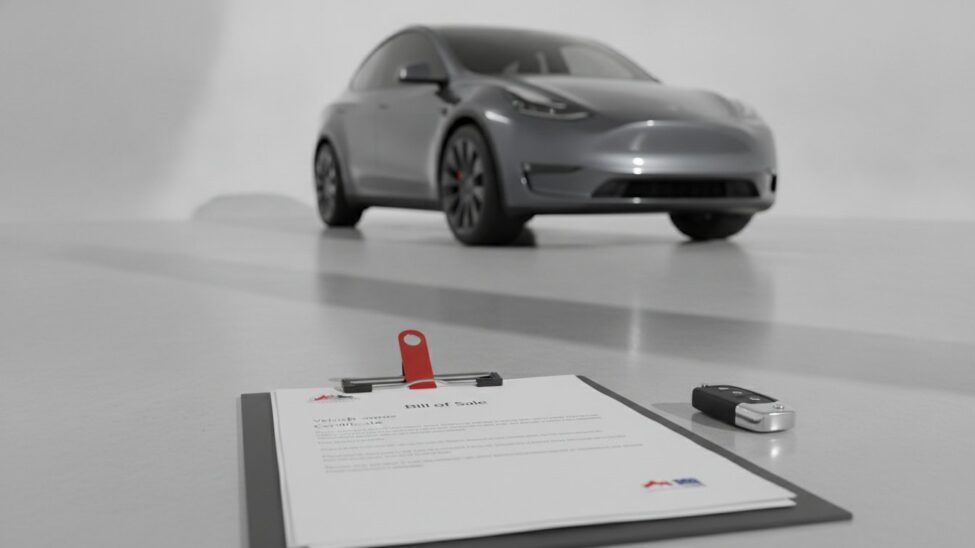
Documents Needed to Sell a Car in Australia: The Complete 2026 Seller’s Checklist
In the 2026 Australian car market, your paperwork is a financial asset. Complete documentation doesn’t just enable a legal sale; it justifies a premium price. Most sellers find the documents needed to sell a car in australia confusing because rules change the moment you cross a state border. You might be worried about whether you need a Pink Slip or a Roadworthy Certificate, or how to handle a vehicle that’s still under finance.
It’s frustrating to feel like a simple paperwork error could leave you liable for someone else’s future fines. You want a fast, clean break from your old vehicle. This guide provides a national-standard checklist to help you master the paperwork required to sell your vehicle legally and for the best possible price. We will cover state-specific requirements, official PPSR clearances, and the essential steps to ensure your legal transfer is foolproof and efficient.
Key Takeaways
- Verify your status as the legal registered operator by matching your Australian Driver’s Licence with the vehicle’s current registration certificate.
- Identify the specific safety certificates and documents needed to sell a car in australia to ensure your listing meets state-specific 2026 legal standards.
- Secure a PPSR report to prove the vehicle doesn’t have owing finance, which builds buyer trust and supports a higher asking price.
- Create a comprehensive Bill of Sale to shield yourself from liability for fines or accidents once the car leaves your driveway.
- Explore how professional buyers streamline the process by handling complex paperwork and finance payouts on your behalf.
The Essential ‘Proof of Ownership’ Documents
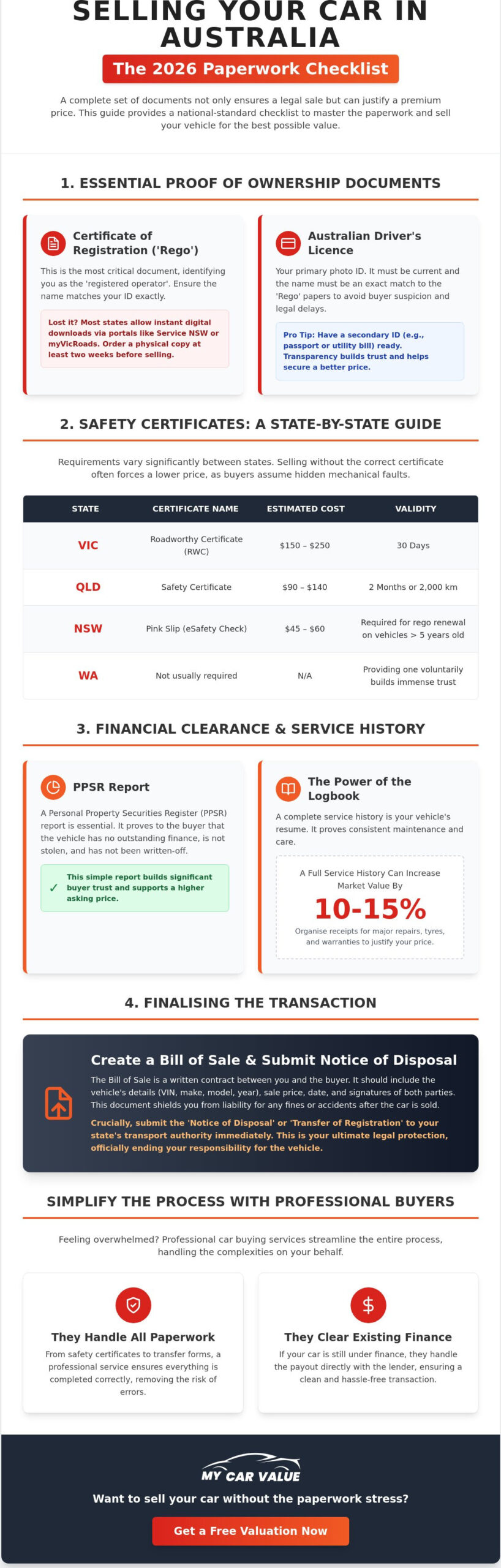
Before you list your vehicle, you must prove you have the legal right to sell it. The Certificate of Registration, commonly known as ‘rego’, is the most critical item among the documents needed to sell a car in australia. This document identifies you as the ‘registered operator’. In Australian law, being the registered operator is not the same as being the legal owner. The operator is simply the person responsible for the vehicle’s use on public roads, including fines and registration fees. While these roles usually overlap, you must ensure your name is the one recorded with your state’s transport authority. If you recently acquired the vehicle and the transfer isn’t finalised, keep your original tax invoice or sales receipt as a secondary proof of purchase.
Your Australian Driver’s Licence serves as your primary photo identification. Buyers will check that the name on your licence matches the name on the registration papers exactly. Any discrepancy can cause immediate suspicion or legal delays during the transfer. This verification process is standard across all states, despite variations in Australian vehicle registration plates and local reporting systems. Ensure your licence is current; an expired licence is not a valid document for finalising a sale.
Replacing a Lost Registration Certificate
Don’t panic if you’ve misplaced your physical papers. By 2026, most Australian states allow you to download a digital registration certificate instantly through portals like Service NSW or myVicRoads. If you require a physical replacement, apply at least two weeks before you plan to sell. Mail delivery times fluctuate and waiting until the day of the sale is a common mistake that kills deals. The Registration Certificate is the vital link between the VIN and the seller’s identity.
Verifying Your Identity for the Buyer
Savvy private buyers and professional used car buyers will often ask for a secondary form of ID. This might include a passport or a recent utility bill to confirm your current address matches the PPSR records. Transparency builds trust and helps you secure a better price. Once you hand over the keys, submit a ‘Notice of Disposal’ or ‘Transfer of Registration’ form immediately. This document is your ultimate protection. It officially ends your responsibility for the vehicle, ensuring you aren’t liable for any fines or accidents caused by the new owner.
Safety Certificates and Mechanical Documentation
Safety certificates are often the most misunderstood part of the documents needed to sell a car in australia. Requirements fluctuate significantly depending on your location. In Victoria, a Roadworthy Certificate (RWC) is mandatory for almost every transfer. These certificates typically cost between $150 and $250 and remain valid for 30 days from the date of issue. Queensland private sellers must display a Safety Certificate from the moment they list the car. For a standard passenger vehicle in QLD, this costs between $90 and $140 and is valid for two months or 2,000 kilometres, whichever comes first.
New South Wales operates differently. Sellers of vehicles older than five years usually provide a Pink Slip, officially known as an eSafety Check. This costs approximately $45 to $60 and is required to renew registration. If you’re in Western Australia, you generally don’t need a safety certificate for a private sale of a registered vehicle. However, providing one voluntarily builds immense trust. Selling a car ‘as is’ without these documents often forces you to drop your price. It signals to buyers that the vehicle might have hidden mechanical faults, significantly shrinking your pool of potential offers.
To avoid the risk of mechanical faults, regular maintenance with high-quality components is essential. For those who also manage heavy machinery or commercial fleets, sourcing parts from Storm Parts Australia ensures that your equipment remains reliable and retains its market value.
State-by-State Safety Requirements
Interstate sellers must be cautious. If you’re selling a car to a buyer in a different state, the vehicle must meet the specific inspection standards of the buyer’s jurisdiction. If your car has a history as a ‘Repairable Write-off’, you’ll need additional Vehicle Identity Validation (VIV) paperwork to prove it’s safe for the road. Remember that a basic safety inspection only checks essential roadworthiness like brakes and tyres. It’s not a comprehensive pre-purchase inspection, which covers the engine’s long-term health.
If you are selling a car to an interstate or overseas buyer, the logistics of transport can be just as complex as the paperwork; using a specialised service like freightandmore.com.au ensures that all shipping and export documentation, especially for shipments departing from hubs like Fremantle, is handled correctly.
The Power of the Logbook and Service History
A complete logbook is your vehicle’s resume. Industry experts often suggest that a full service history can increase a car’s market value by 10% to 15%. It proves you haven’t skipped essential maintenance. Organise your receipts for major repairs, recent tyre replacements, and battery warranties. This physical trail of care justifies a higher asking price. For more detail on this, read our guide on Car Service History Check: The Australian Guide to Maximising Value (2026). If you want to skip the mechanical stress entirely, you can Value My Car today and see how professional buyers handle these requirements for you.
Mobile safety inspectors are a great time-saving option. In states like Queensland, they can visit your home or workplace to perform the check. This allows you to secure your certificate without losing a day at a workshop. Just be aware that mobile services may charge a small travel fee on top of the government-regulated inspection price.
For sellers who also operate industrial equipment, maintaining high standards is just as important; you can explore Direct Sales of Industrial Components from TME Systems Pty Ltd for the reliable rotary connectors needed to keep your machinery efficient and market-ready.
Financial Clearances and PPSR Reports
Financial transparency is a powerful sales tool. When compiling the documents needed to sell a car in australia, a PPSR certificate should be at the top of your list. The Personal Property Securities Register (PPSR) is the national database that tracks financial interests in vehicles. While buyers often perform this check themselves, providing a recent report builds instant credibility. As of March 2026, the official government fee for a PPSR search is just $2.00 through the Australian Financial Security Authority (AFSA). Avoid third-party sites that charge a premium for the same data.
Your PPSR report proves three critical facts: the car isn’t stolen, it hasn’t been written off by an insurer, and it’s free from ‘encumbrance’ or owing finance. If a buyer sees a clean report, they can commit to the purchase with confidence. This transparency often leads to a faster sale and a firmer price because it removes the buyer’s primary fear of losing the car to a debt they didn’t create. Before you enter negotiations, using a vehicle market value calculator ensures you have an accurate, data-driven price point that reflects real 2026 market demand rather than outdated book figures. Understanding which models are holding their value is equally important; our guide to the cars with best resale value in Australia reveals which SUVs and utes are currently outperforming their original RRP in the 2026 market.
Selling a Car with a Loan (Encumbered)
Selling a vehicle with an active loan is a standard process, but it requires a methodical approach. First, contact your lender to request an official ‘payout figure’. This document states exactly how much is needed to clear the debt by a specific date. Share this letter with your buyer early in the negotiations. Transparency is the only way to avoid a collapsed sale at the final minute when a buyer discovers the debt themselves through their own checks.
The safest way to finalise the deal is a three-way transaction. The buyer pays the payout amount directly to your bank and the remaining balance to you. Once the bank receives the funds, they’ll release their interest on the PPSR. This process protects everyone and ensures the buyer receives a clear title. Don’t forget to keep a copy of the bank’s confirmation receipt as part of your permanent records.
Decoding Your VIN and Chassis Number
You’ll need your Vehicle Identification Number (VIN) to generate your PPSR report and complete the transfer papers. This 17-character code is a unique identifier. You can typically find it in the following locations:
- The driver’s side door pillar on a small metal plate.
- The base of the windscreen on the passenger side.
- Stamped directly into the chassis inside the engine bay.
- On your current registration certificate.
The VIN is the ‘digital fingerprint’ used for all PPSR and history checks. Ensure the VIN on your physical car matches your registration papers exactly. A single digit error can invalidate your documents needed to sell a car in australia and cause significant legal headaches during the transfer.
Finalising the Transaction: Bill of Sale and Transfer
The transaction isn’t over when the money hits your bank account. You must formalise the deal to protect yourself from future liabilities. A Bill of Sale is the most important of the documents needed to sell a car in australia once the price is agreed. It serves as legal proof that the ownership has changed hands on a specific date. Without it, you have no evidence to contest a legal claim or an insurance dispute involving the vehicle’s new owner. To skip the stress of drafting contracts, you can Sell My Car to a professional buyer who manages the entire transfer for you.
Always take a clear photo of the buyer’s driver’s licence with your phone. Private sellers often overlook this step, but it is critical for your safety. You need their full name and current address to complete the transfer papers accurately. Ensure the photo is clear and all text is legible. This prevents the buyer from providing a false name or an old address on the Bill of Sale. If the buyer is hesitant to provide ID, treat it as a significant red flag and consider walking away from the deal.
Creating a Legally Binding Bill of Sale
Your Bill of Sale doesn’t need to be complex, but it must be thorough. Ensure your document includes these seven essential items:
- Full names of both the seller and the buyer.
- Current residential addresses for both parties.
- The 17-character Vehicle Identification Number (VIN).
- The engine number as found on your registration papers.
- The final agreed sale price.
- The date and the exact time of sale.
- Signatures from both parties.
Specifying the exact time, such as 2:15 PM, is vital. If the buyer triggers a speed camera or an e-toll on their way home, the timestamp proves you were no longer the operator. Most private sales should include a ‘Sold as Seen’ clause. This indicates the buyer accepts the car’s current condition and you are not providing a mechanical warranty. In a private sale, the buyer is responsible for their own due diligence.
Lodging the Notice of Disposal (NOD)
Lodge your Notice of Disposal online the moment the car leaves your driveway. State authorities like Service NSW or VicRoads allow you to do this via their mobile apps or websites. This action instantly removes your name from the vehicle’s liability list. In NSW, the buyer has 14 days to lodge their transfer to pay the standard $41 fee. If they wait longer, the fee jumps to $188. While this is the buyer’s cost, their delay can keep the car linked to your name on some systems. Lodging your NOD immediately is the only way to break that link for good. For a deeper look at your options, check out our guide on How to Value My Car: Australian Market Guide.
How Professional Buyers Simplify the Paperwork
Managing the mountain of documents needed to sell a car in australia is the primary hurdle for private sellers. If you want to bypass the mechanical inspections, the finance payout coordination, and the risk of liability errors, selling to a professional is the most efficient path. Professional Used Car Buyers operate as licensed experts. They understand the nuances of state-based legislation and take the administrative burden off your shoulders. This streamlined approach ensures you receive payment immediately while the legal responsibility for the vehicle transfers instantly.
Professional buyers do the heavy lifting. They handle the Notice of Disposal and ensure the registration transfer is lodged correctly with the relevant transport authority. Similar to how specialised logistics firms like Bewlake Lift & Haul Ltd manage complex machinery transport in the UK and Ireland, professional car buyers ensure every detail of your vehicle transfer is handled with precision. This removes the risk of you being held liable for the new owner’s tolls or traffic infringements. You avoid the back-and-forth of private negotiations and the uncertainty of whether a buyer will follow through with their legal obligations. The process is designed for speed and transparency.
The ‘No-Stress’ Documentation Path
Professional networks simplify the entry requirements. You typically only need to provide basic photo identification and your current registration certificate to start the process. Because these buyers use advanced data systems, they cross-reference VIN and PPSR data automatically. This means you don’t have to spend time or money securing your own financial clearance reports. In states like Queensland, selling to a licensed dealer often removes the requirement for you to provide a safety certificate. This saves you the $90 to $140 inspection fee and the potential cost of mandatory repairs required to pass a private roadworthy test.
Get Started with an Accurate Valuation
Knowing your car’s true market value is the essential first step before you gather any paperwork. An accurate valuation gives you a professional starting point and ensures you don’t leave money on the table. Use a vehicle market value calculator to see how your vehicle compares to current market trends in your area. Whether you are looking to Value My Car in Melbourne or seeking a fast sale elsewhere, getting a professional figure sets the foundation for a seamless transaction.
Ready to skip the paperwork stress? Get your car valued and connect with professional buyers today to experience a faster, safer way to sell.
Master Your Car Sale Documentation
Organising your paperwork is the fastest way to turn your vehicle into cash. By following this 2026 checklist, you protect yourself from legal liability and justify a higher market price. Remember that the specific documents needed to sell a car in australia vary by state. Always verify your local RWC or Pink Slip requirements before you list the vehicle. A clean PPSR report and a detailed Bill of Sale are your best defences against future disputes.
If the administrative burden feels overwhelming, you don’t have to manage it alone. Our streamlined, 100% digital process removes the complexity of private selling. We provide expert Australian market valuations and connect you with a network of professional used car buyers who handle the heavy lifting for you. This ensures a fast, secure transfer without the usual stress of government forms and mechanical checks.
Get an instant valuation and simplify your car sale today. You’re now ready to move forward with total confidence and get the best possible result for your vehicle.
Frequently Asked Questions
Is a roadworthy certificate mandatory to sell a car in Australia?
Roadworthy requirements depend entirely on your state’s specific laws. In Victoria, a Roadworthy Certificate (RWC) is mandatory for almost all vehicle transfers. Queensland requires private sellers to display a Safety Certificate from the moment the car is listed. Conversely, Western Australia generally doesn’t require a certificate for the sale of a registered vehicle, though providing one helps justify a higher price.
Can I sell a car if I don’t have the original registration papers?
Yes, you can sell your vehicle by obtaining a digital replacement from your state’s transport authority. Log into portals like Service NSW or myVicRoads to download a current registration certificate instantly. This is one of the most important documents needed to sell a car in australia because it confirms you are the registered operator authorised to sell the vehicle.
What should I do with my number plates when selling a car?
Standard number plates typically stay with the vehicle and are transferred to the new owner. If you have personalised or custom plates, you must visit a service centre to swap them for standard plates before the sale. You can then keep your personalised plates or put them in storage for your next vehicle. Ensure the Bill of Sale reflects the plate number currently on the car.
Do I need a PPSR report if I’m selling the car privately?
A PPSR report isn’t a legal requirement for sellers, but it is a powerful transparency tool. Providing a recent report proves the car isn’t stolen, written off, or under finance. This builds immediate trust with savvy buyers and often prevents negotiations from stalling. Most professional buyers will run this check automatically as part of their standard process.
How do I sell a car that still has money owing on it?
Selling an encumbered car requires an official payout letter from your lender. This document states the exact amount needed to clear the debt. The buyer should pay the lender that specific amount directly, with any remaining balance paid to you. Once the lender receives the funds, they will remove their financial interest from the PPSR database.
What is the difference between a VIN and a chassis number?
A VIN is a unique 17-character international code used to identify modern vehicles. A chassis number is an older, shorter identification system used by manufacturers before the VIN standard was globally adopted in the late 1980s. Most Australian cars built after 1989 will have a VIN stamped on the body and listed on the registration papers.
Who is responsible for paying the transfer fee, the buyer or the seller?
The buyer is responsible for paying the transfer fee and any applicable motor vehicle duty or stamp duty. These costs are calculated based on the vehicle’s purchase price or market value. As the seller, your responsibility is to provide the documents needed to sell a car in australia and lodge the Notice of Disposal to end your liability.
How long do I have to lodge a Notice of Disposal after the sale?
Lodge your Notice of Disposal immediately after the buyer takes delivery of the car. While states like New South Wales allow up to 14 days, delaying this step leaves you liable for any fines the new owner incurs. Use your state’s transport website or app to submit the notice online the moment the transaction is complete.