
How to Sell a Financed Car in Australia: The 2026 Complete Guide
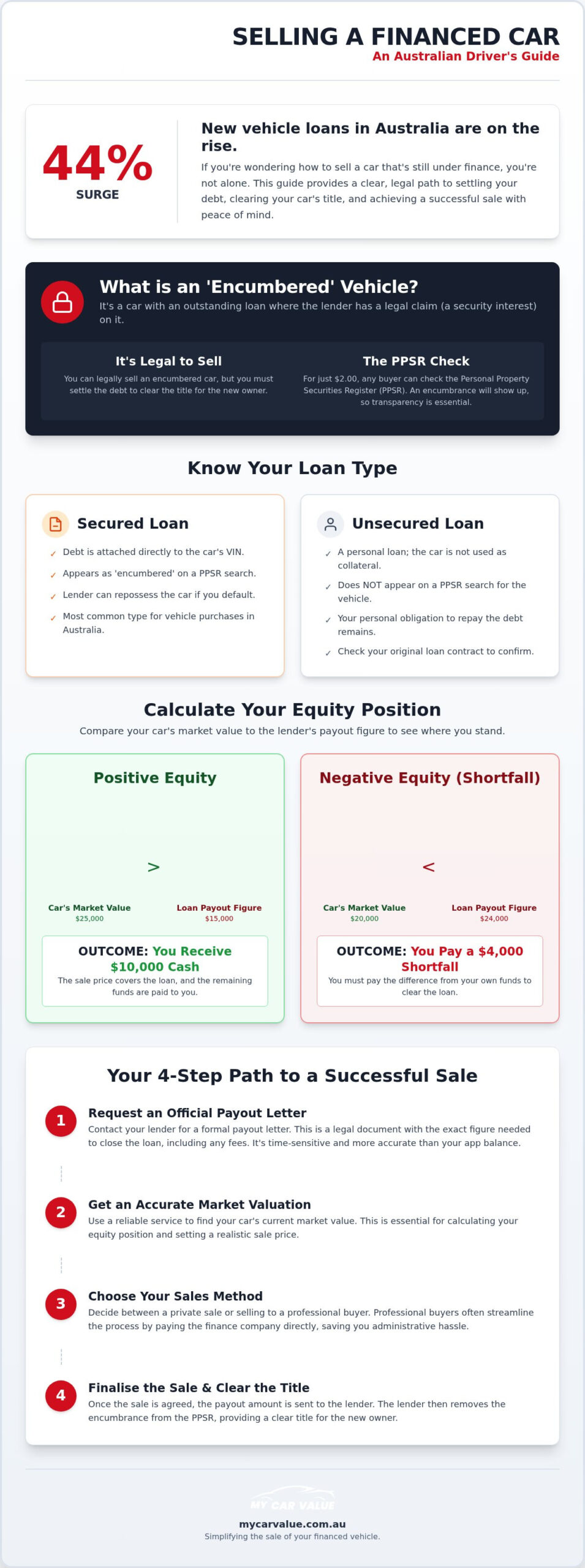
Did you know that new vehicle loans in Australia surged by over 44% leading into 2026? If you are currently wondering how to sell a financed car in Australia, you aren’t alone. It’s common to feel a sense of dread when dealing with the bank or worrying about how a PPSR encumbrance might scare off potential buyers. Managing the gap between your loan balance and the car’s actual value is a genuine stress for many Aussie drivers.
We’ve designed this guide to help you master the process while keeping everything transparent and legal. You’ll learn how to clear your debt, handle negative equity, and secure a fair market price without the typical friction of a private sale. We’ll walk you through requesting official payout letters, understanding the $2.00 PPSR search fee, and why professional buyers are often the most efficient way to settle your finance and move on with total peace of mind. Our goal is to strip away the complexity and provide a clear, logical path to a successful sale.
Key Takeaways
- Understand the legal definition of an encumbered vehicle and how the PPSR protects both lenders and buyers during a sale.
- Obtain a formal payout letter from your lender to establish a fixed settlement figure and ensure a clear title for the next owner.
- Master the exact steps of how to sell a financed car in Australia to avoid the common pitfalls and friction of private negotiations.
- Calculate your equity position accurately to manage potential shortfalls and fulfil your legal obligations to the finance provider.
- Connect with professional used car buyers who can pay out your finance company directly, streamlining the entire administrative process.
Understanding Encumbered Vehicles in Australia
An encumbered vehicle is simply a car with an outstanding debt attached to it. When you take out a loan to buy a car, the lender registers a security interest against the vehicle. This legal claim means the bank technically has a right to the asset until the loan is fully repaid. Understanding Encumbered Vehicles and how these interests work is the first step in learning how to sell a financed car in Australia. It’s perfectly legal to sell a car under finance. You must simply ensure the debt is settled to release the bank’s interest before the new owner takes possession. Selling without disclosing this status is dangerous. It can lead to serious legal consequences, including being flagged for fraud or facing breach of contract claims from the buyer.
What the PPSR Means for Your Sale
The Personal Property Securities Register (PPSR) is the national database where lenders list their financial interests. In 2026, buyers are extremely cautious. Most will spend $2.00 on a PPSR search before they even book a test drive. If your car has finance, it appears as “encumbered” on their report. This often scares off private buyers who worry about the bank repossessing the car later. When you’re figuring out how to sell a financed car in Australia, you must be transparent from the start. Explain that the title will be cleared as part of the sale. This honesty builds trust and prevents your listing from being ignored. Clearing the title is the final step in any successful ownership transfer. It requires a formal payout to the lender to remove the encumbrance entirely.
Secured vs Unsecured Car Loans
Not every car loan results in an encumbrance on the PPSR. You need to know which type of debt you’re carrying. A secured loan is the most common for vehicle purchases. It attaches the debt directly to the car’s Vehicle Identification Number (VIN). If you default, the bank has the right to seize the car. An unsecured loan is different. It’s essentially a personal loan where the car isn’t used as collateral. In this scenario, no interest appears on the PPSR. You can technically sell the car without the bank’s permission, but your personal obligation to pay back the funds remains. Check your original loan contract or run your own PPSR check to confirm your situation before you list the vehicle for sale. Knowing your loan type helps you set the right expectations for potential buyers.
The Payout Letter: Your First Step to a Clear Title
You cannot rely on the “current balance” shown in your banking app when preparing for a sale. That figure usually excludes interest accrued since your last payment or specific early termination fees. To understand how to sell a financed car in Australia properly, you must request a formal payout letter. This is a legal document from your lender that specifies the exact amount required to close the loan and release the security interest. It provides a definitive target for your sale price and proves to potential buyers that you are handling the debt responsibly.
Payout figures are time-sensitive. Most include a “valid until” date, typically spanning 7 to 14 days. Because interest is calculated daily, your lender will also list a “daily settlement rate” or per-diem interest. If you miss the expiry date, you will need to request a fresh document. This level of detail is vital when you check the PPSR, as it ensures the financial interest can be removed immediately after the funds are transferred. Professional buyers expect this documentation to be ready before they make a firm offer.
Requesting the Right Information
Contact your lender’s discharge or settlements department to request the letter. Ensure the document includes your Vehicle Identification Number (VIN), the loan account number, and clear payment instructions for the buyer. Most Australian banks in 2026 issue these via email within 24 to 48 hours. Having this document on hand removes guesswork and prevents delays during the final negotiation. It shows you are a prepared seller who values the buyer’s time and transparency.
Using the Payout Figure for Valuation
Once you have your payout figure, compare it against a reliable market value estimate. This comparison reveals your equity position. If the car is worth more than the payout, you have positive equity and will walk away with cash. If it’s worth less, you face a shortfall, also known as negative equity. You must be prepared to pay this difference to the lender from your own savings to release the title. Using a professional tool to Value My Car helps you identify these figures early, allowing you to plan your finances before you commit to a sale. This data-driven approach is the most efficient way to manage the logistics of how to sell a financed car in Australia without unexpected costs.
Private Sale vs Selling to Professional Buyers
Navigating the logistics of a private sale while carrying a car loan is notoriously difficult. Most private individuals are looking for a simple, risk-free transaction. When they conduct a ppsr check and see an active security interest, it often triggers an immediate exit. This reaction stems from a fear that the seller might pocket the cash without settling the debt. For many, the risk of the bank repossessing their new purchase is simply too high to ignore.
Understanding how to sell a financed car in Australia requires a realistic look at this trust gap. Coordinating a three-way transaction between yourself, a skeptical buyer, and your finance provider is a logistical hurdle. It often involves physical visits to bank branches or awkward phone calls to verify payments in real time. Professional buyers eliminate this friction by acting as a licensed intermediary. They possess the infrastructure to settle debts directly with lenders, ensuring the Personal Property Securities Register (PPSR) is updated and the title is cleared immediately.
The Private Sale Hurdles
Legally, you are obligated to provide a clear title at the point of sale. In a private scenario, this creates a ‘chicken and egg’ problem. The buyer doesn’t want to pay until the title is clear, but you can’t clear the title until the buyer pays. You might find yourself asking a stranger to trust you with tens of thousands of dollars. Even with a formal payout letter, the manual process of transfer and bank verification can take days. This delay often leads to buyers pulling out in favour of unencumbered vehicles.
Why Professional Buyers are the Efficient Choice
Choosing professional used car buyers is the fastest way to resolve these issues. These experts use a ‘split payment’ method. They pay the settlement amount directly to your finance company and transfer any remaining equity to your personal account. This process is automated and secure. It removes the need for you to handle large sums of cash or manage complex bank transfers yourself. Additionally, professional buyers often buy vehicles ‘as is’. This means you can frequently skip the time and expense of obtaining roadworthy certificates, which are often mandatory in private sales across many Australian states. It is a streamlined, data-driven solution for anyone researching how to sell a financed car in Australia without the stress of private negotiations.
Dealing with Negative Equity and Shortfalls
Negative equity occurs when your car’s market value is lower than the amount you still owe the bank. In the industry, this is commonly called a “shortfall.” If you’re researching how to sell a financed car in Australia while in this position, you must understand your legal obligations. A lender won’t release their security interest on the PPSR until they receive the full payout amount. This means you’re responsible for paying the difference between the sale price and the loan balance. Professional buyers cannot legally clear the title for a new owner unless the bank is paid in full. You must bridge this gap to finalise the transaction.
Calculating the Gap
Determining your exact financial position requires simple but precise math. Take your formal payout figure and subtract the offer from a professional buyer. The remaining number is your shortfall. For example, if you owe $25,000 but the car is valued at $21,000, your shortfall is $4,000. Getting an accurate valuation is critical before you commit to a sale. It prevents you from being caught off guard by a debt you can’t cover. If you can’t afford the full amount immediately, contact your lender’s hardship or settlements team. While rare for secured loans, some banks might discuss alternative arrangements to help you settle the gap.
Strategies for Managing the Debt
Many sellers choose to cover the gap using cash savings to end their monthly repayments. If savings aren’t available, you might consider an unsecured personal loan to cover the difference. As of May 2026, the average interest rate for an unsecured personal loan in Australia is 13.87% p.a. While this rate is typically higher than a secured car loan, it allows you to sell the vehicle and stop the bleed of high-interest finance and ongoing depreciation. Selling the car often saves you more in the long run than continuing to pay for a rapidly depreciating asset. Once the shortfall is paid and the bank receives the full payout, ensure you request a “Release of Interest” letter. This document is your final proof that the debt is settled and the bank no longer has a claim to the vehicle. This is a vital step in the process of how to sell a financed car in Australia with total transparency.
How My Car Value Simplifies the Financed Sale
Selling a vehicle with an active loan doesn’t have to be a multi-week administrative burden. My Car Value provides a modernised solution for those wondering how to sell a financed car in Australia without the friction typical of private marketplaces. We replace the uncertainty of classified ads with a data-driven connection to professional buyers. Our system is built to handle the complexities of bank payouts, ensuring you move from a payout figure to a cleared title with minimal effort.
One of the biggest hurdles in a financed sale is the trust gap with private buyers. Most individuals are scared off by a PPSR encumbrance. Our network of Used Car Buyers consists of professionals who specialise in encumbered vehicles. They understand the legal requirements and are comfortable with the bank settlement process. You won’t have to deal with tyre-kickers who back out at the last minute or skeptical strangers asking for proof of payment. We facilitate a transparent transaction where the heavy lifting is handled by experts.
The Step-by-Step My Car Value Path
Our process is designed for speed and clarity. Follow these steps to settle your debt and sell your vehicle:
- Value My Car: Enter your vehicle details into our tool to receive an instant, real-world market valuation based on current 2026 data.
- Match with Buyers: We connect you with professional buyers who are ready to make firm offers on financed vehicles.
- Direct Settlement: Once you accept an offer, the buyer pays your finance company directly using your payout letter. Any remaining equity is transferred to your account immediately.
Whether you need to sell my car in Brisbane or any other major city, our network ensures you aren’t limited by your location or your loan status.
Why Speed Matters in Financed Sales
In the world of car finance, time is literally money. As discussed earlier, your payout letter includes daily interest charges that increase your debt every 24 hours. A car that sits in your driveway for three weeks while you wait for a private buyer is a car that is costing you more to pay off. Using an efficient matching service allows you to close the loop on your car loan before the next monthly repayment is due. This fast-paced approach stops the bleed of interest and protects your equity. It allows you to walk away from your car loan with the confidence that the title is clear and the debt is settled.
Take Control of Your Car Sale Today
Selling an encumbered vehicle doesn’t need to be a stressful ordeal. By securing a formal payout letter and understanding your equity position, you’ve already handled the most critical steps. Choosing a professional path ensures the bank gets paid directly and the PPSR is updated without you having to manage complex three-way negotiations with skeptical strangers.
Mastering how to sell a financed car in Australia is ultimately about prioritising speed and transparency. Accurate market data allows you to identify shortfalls early, while expert matching connects you with buyers who specialise in these transactions. This streamlined approach eliminates the friction of private sales and protects your financial interests. Our hassle-free finance settlement support is designed to get you moving faster.
Take the first step toward a clear title and a fair market price. You now have the knowledge and the tools to close your car loan with total confidence.
Frequently Asked Questions
Is it illegal to sell a car with finance in Australia?
It is perfectly legal to sell a car with finance in Australia, provided you settle the debt to clear the title. You must ensure the lender’s security interest is removed from the Personal Property Securities Register as part of the transaction. Selling the vehicle without disclosing the finance or failing to pay out the loan can lead to serious legal consequences, including fraud charges or breach of contract.
How do I get a payout figure from my bank?
Request a formal payout letter by contacting your lender’s settlements or discharge department directly. Most Australian banks in 2026 allow you to do this via their mobile app or over the phone. Ensure the document includes your VIN, account number, and a “valid until” date. This letter provides a definitive settlement target and includes daily interest rates to keep your calculations accurate.
What happens if my car is worth less than the loan amount?
If your car’s market value is lower than your payout figure, you are in a position of negative equity. You are legally responsible for paying the “shortfall” to the lender to release their security interest. Many sellers cover this gap using personal savings or an unsecured personal loan. This allows you to finalise the sale, clear the title, and stop ongoing vehicle depreciation.
Can a professional buyer pay my bank directly?
Yes, professional used car buyers can pay your finance company directly to settle the debt. This is often the most efficient way to handle the process, as the buyer manages the logistics and ensures the bank receives the correct amount. Any remaining equity is then transferred to your account. This “split payment” method makes the transaction fast, secure, and transparent for all parties involved.
How long does it take for the PPSR to show the car is clear after the sale?
The PPSR typically reflects a clear title within two to five business days after the lender receives the final payout. While the electronic payment might be instant, the administrative process for the bank to remove their interest takes a small amount of time. You should request a “Release of Interest” letter from your bank as immediate proof of settlement while waiting for the register to update.
Do I need to tell the buyer the car is financed?
You must disclose the finance to any potential buyer to maintain transparency and avoid fraud allegations. Most buyers in 2026 will discover the encumbrance themselves by spending $2.00 on an official PPSR search. Being upfront about the situation and explaining how to sell a financed car in Australia helps build trust. It ensures a smoother negotiation and prevents the sale from falling through later.
Can I trade in a financed car for a cheaper model?
You can trade in a financed car for a cheaper model, with the dealer usually facilitating the finance payout as part of the deal. If the trade-in value exceeds your payout figure, the surplus can be used as a deposit for your next vehicle. If there is a shortfall, you will need to pay that difference in cash or roll the remaining debt into a new finance agreement.
What documents do I need to sell a car under finance?
To sell a car under finance, you need a current payout letter from your lender, your vehicle registration papers, and valid photo identification. You should also have your VIN ready for the buyer to verify the car’s history. These documents allow professional buyers to automate the settlement and ensure a legal transfer of ownership. Having everything organised upfront reduces delays and helps you secure a fair market price quickly.