

Car Valuation by Rego in Australia: What Your Number Really Means
Can your number plate tell you what your car is worth? A car valuation by rego Australia search can help identify the vehicle, but it can’t reveal everything that shapes its price. Registration details may point to the make, model and variant; they won’t show the car’s condition, kilometres or service history.
A quick lookup can give you a useful starting point, but it isn’t the same as a buyer’s offer, and neither guarantees the final sale price. Private sale and trade-in values can also differ, so first be clear about which figure you’re looking at.
This guide explains what a rego lookup can establish, where its limits are, and which details can make an estimate more useful. You’ll also learn how condition and market demand affect value, and how to move from an initial valuation towards a potential sale. My Car Value helps owners understand their car’s trade-in and resale position, then connects them with professional used car buyers.
Key Takeaways
- Use a car valuation by rego australia estimate as a starting point, then check the vehicle details behind it.
- Compare indicative valuations, advertised asking prices, trade-in values and buyer offers as different measures, not interchangeable figures.
- Check the variant, kilometres and condition to make your estimate more relevant to your car.
- Remember that advertised prices show what sellers are asking, not what buyers have paid.
- Once you’ve reviewed your car’s market position, decide whether to explore a sale through a connection with professional used car buyers.
Car valuation by rego in Australia: what the lookup can tell you
A car valuation by rego Australia search starts with an identifier. Where a valuation service supports registration lookup, the number may help match your car to available vehicle records and narrow down its make, model or variant. This gives an estimate a more relevant starting point than a guess based on a broad vehicle category.
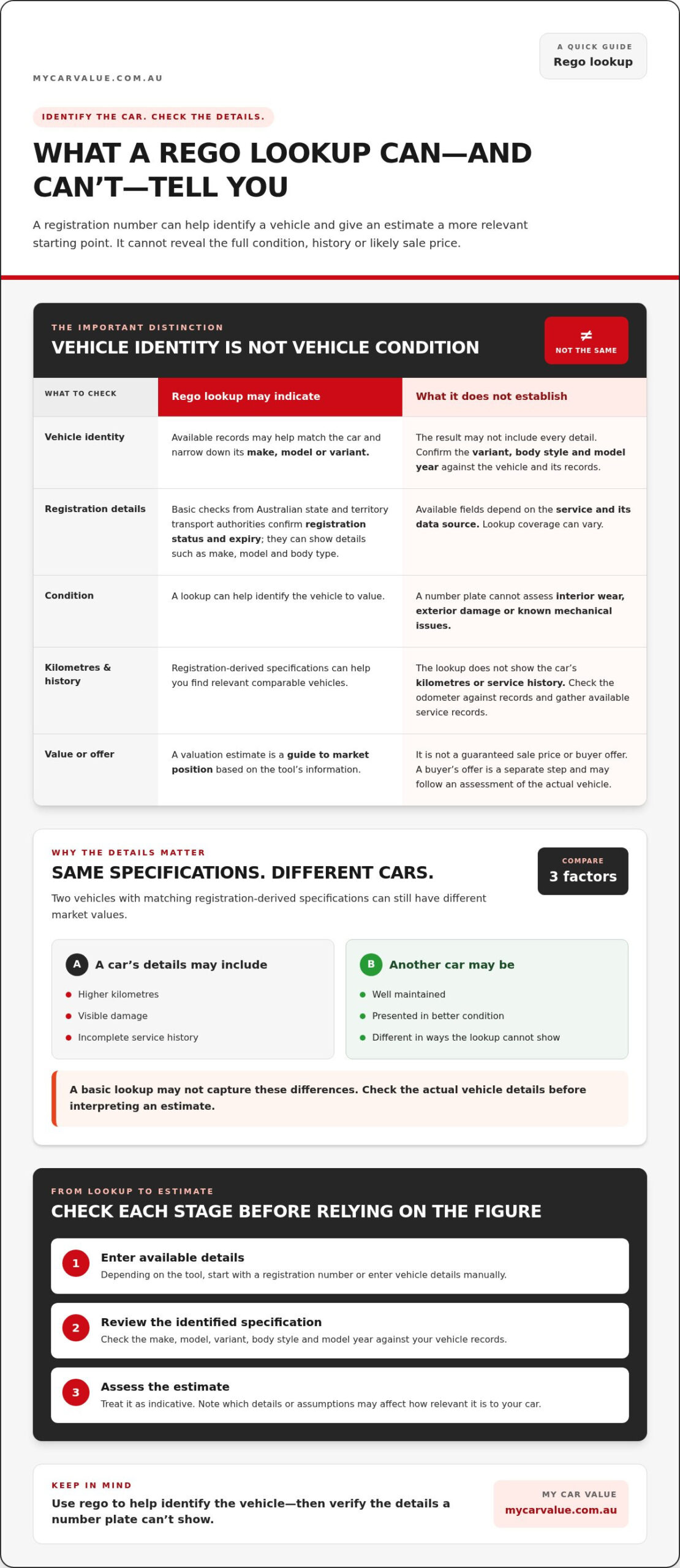
But a rego number doesn’t describe the car’s full history, condition or likely sale price. A lookup may support an initial estimate, while a buyer’s offer is a separate step and may follow an assessment of the actual vehicle. Treat the estimate as a guide to market position, not an amount you’re guaranteed to receive.
A rego lookup helps identify a vehicle, but it cannot assess its physical condition. That distinction is central to understanding what the number can and can’t tell you.
What does a registration lookup identify?
A registration number can be matched against vehicle records, but the information returned depends on the service and its data source. Basic registration checks from Australian state and territory transport authorities confirm registration status and expiry, and can show details such as make, model and body type. A valuation service may use available vehicle information to identify a closer specification, but lookup coverage can vary.
Make, model, variant and year matter because small differences can change which comparable vehicles are relevant. Check the result against your paperwork and the car itself. Australian plates and registration systems vary across jurisdictions; the overview of Australian vehicle registration plates provides useful background, but it doesn’t establish a vehicle’s condition or value.
Why rego alone cannot set a reliable selling value
Two cars with matching registration-derived specifications can still have different market values. One may have higher kilometres, visible damage or an incomplete service history; the other may be well maintained and present in better condition. A basic lookup may not capture these differences, and valuation tools can use different inputs and methods.
Use the lookup to check you’re valuing the right vehicle, then consider the details a number plate can’t show:
- Kilometres: compare the current odometer reading with the vehicle’s records.
- Condition: note interior wear, exterior damage and any known mechanical issues.
- Service history: gather available records to give a clearer picture of maintenance.
Keep confirmed details separate from anything you still need to check. This makes the estimate easier to interpret and gives you a more useful basis for comparing it with a buyer’s assessment.
How a car valuation by rego works, from lookup to estimate
A car valuation by rego Australia process has two distinct parts: identifying the vehicle and estimating its market position. A registration lookup may help with the first step where the service supports it. The valuation tool then uses vehicle details and its own data or method to produce an estimate. A successful lookup doesn’t guarantee that every detail is complete or correct.
Follow this sequence and check each result before relying on the figure:
- Enter the available details. Depending on the tool, you may be able to start with a registration number or enter vehicle details manually.
- Review the identified specification. Check the make, model, variant, body style and model year against your vehicle records.
- Assess the estimate. Read it as an indicative figure, and note which details or assumptions may affect its relevance to your car.
From registration number to vehicle specification
Where a service offers rego lookup, it matches the number to vehicle information available through its data sources. The result can vary between Australian services, so don’t assume each one returns the same fields. Variant, body style and model year can all influence which comparable vehicles are relevant. If a detail is missing or doesn’t match your records, correct it before moving on.
From vehicle details to an indicative market estimate
Once the specification is settled, a valuation tool may combine vehicle details with market information to calculate an estimate. The inputs and method differ by service. CarsGuide, for example, describes its valuation data as updated monthly; that is CarsGuide’s stated approach, not a rule for every valuation tool.
Think of the lookup as a way to identify the car, and the estimate as an indication of value based on the tool’s information. Neither is automatically an offer to buy. An indicative estimate is a guide to market value, not a confirmed buyer offer. A buyer may make an offer after considering the specific vehicle. If the figures differ, review the details and assumptions before deciding what the difference means.
Before relying on an estimate, check for a mismatch that could change the comparison, such as a different variant, body style or model year. Even a small specification error may point the tool towards the wrong comparable vehicles. If information is incomplete, use the available manual fields where offered and leave uncertain details unresolved until you can verify them. Don’t treat a guessed specification as confirmed.
For a practical next step, use My Car Value’s vehicle valuation to understand your car’s market position. The platform also connects vehicle owners with professional used car buyers, helping you move from an estimate towards exploring a sale.
Rego valuation vs market value: why estimates and offers differ
A car valuation by rego Australia estimate is one reference point, not a universal answer to “What is my car worth?” The right figure depends on what you’re trying to understand. A guide to likely market value, a dealer’s advertised price and a buyer’s offer describe different things, so compare like with like.
| Figure | What it tells you |
|---|---|
| Indicative valuation | A guide to a vehicle’s estimated value based on the tool’s data and inputs. |
| Advertised asking price | The amount a seller is seeking, not proof that a buyer paid that amount. |
| Trade-in value | An estimate of what the car may be worth in a trade-in context. |
| Buyer offer | A specific buyer’s proposed purchase amount for your vehicle. |
Asking prices help show how sellers position similar cars, but listings don’t confirm completed sale prices. An advertised car may sell for a different amount or remain unsold. For broader context on how valuation factors fit together, see this vehicle market value calculator guide.
What is the difference between an estimate and an offer?
An estimate is an indicative guide; an offer is a buyer’s proposed amount for purchasing a particular vehicle. The offer may reflect the buyer’s assessment of that car, including details a broad estimate can’t account for. Don’t assume the two figures will match. Use the estimate to set a starting point for understanding value, then consider any offer on its own terms.
Which factors can shift a car’s value after a rego lookup?
Vehicle details can influence an estimate or offer in different ways. Condition covers presentation and wear; kilometres indicate how much the car has been driven; service records provide evidence of maintenance; and the exact specification helps identify comparable models. Current buyer demand and relevant market information matter too. No single factor sets the value on its own.
For example, two cars with the same model and year may attract different offers if one has higher kilometres, visible damage or gaps in its service records. A less common variant may also have a different pool of comparable vehicles. Keep records together so you can represent the car accurately. This Australian car service history guide explains why maintenance documentation can help buyers understand a vehicle’s background.
Before comparing figures, ask what each one represents: a general estimate, a seller’s asking price, a trade-in indication or a buyer’s proposed amount. That distinction makes the numbers more useful and helps you judge them against your selling plans.
How to make a rego-based car valuation more useful
A car valuation by rego Australia result is more useful when the details behind it match the car you’re selling. Take a few minutes to check the vehicle’s identity, gather records and describe its condition accurately. Separate what you know from what you still need to verify. This gives you a clearer basis for considering the estimate and discussing the car with a potential buyer.
Check the car details before accepting the estimate
Start with the vehicle specification. Compare the make, model, year and variant shown in the result with your registration or purchase documents. A close match isn’t always exact, and differences in variant or body style can affect which cars are relevant comparisons. Correct any mismatch before relying on the estimate. Then check the odometer and note the car’s current condition.
- Confirm identity: Match make, model, model year and variant against the documents you have.
- Check kilometres: Use the current odometer reading, not an old figure from a service invoice or listing.
- Describe condition honestly: Record visible damage, worn areas and known issues rather than relying on a general label such as “good”.
- Mark uncertainties: Keep details you haven’t verified separate from confirmed information. Don’t fill a gap with a guess.
This check can prevent a specification error from shaping the estimate. If a detail is unclear, look for it in your vehicle documents before treating the result as a close match.
Bring the details a rego lookup cannot assess
A registration lookup can’t show how the car has been maintained or how it presents today. Gather available service records and ownership details, then make a clear note of the vehicle’s condition. Records can support what you know; be upfront about missing paperwork or details you haven’t checked. Photos or an inspection may provide additional evidence if a later sale process calls for them, but neither is required for every valuation.
Keep your notes specific. Instead of writing “some wear”, identify the affected area, such as a scuff on a door or wear on a seat. Distinguish visible cosmetic marks from issues you haven’t assessed. Clear information helps make an estimate more relevant and gives a buyer a better picture of the vehicle, although tools may not all use the same details.
Accurate vehicle details make a valuation more useful, but they don’t guarantee a sale price. Use the estimate as a reference, then decide whether you’re ready to explore a sale. My Car Value provides market valuations and connects vehicle owners with professional used car buyers.
From car valuation by rego to connecting with Australian buyers
A car valuation by rego Australia estimate gives you a starting point, not a decision you have to act on. First, review the vehicle details behind the figure. Then decide whether you need to gather more information, compare your options or move towards selling. A valuation can help you understand your car’s market position, but it doesn’t guarantee a sale or a particular amount.
What happens after you understand your car’s estimated value?
Use the estimate alongside what you know about your vehicle. If key details are missing, gather them before deciding what to do next. If you’re ready to sell, consider the kind of sale process that suits you and the information you can provide about the car. Keep expectations grounded: an estimate is a guide, while an eventual offer depends on the specific vehicle and buyer.
- Need a clearer picture? Check any details that could affect how closely the estimate fits your car.
- Still weighing up your options? Compare the type of sale process you prefer, not just headline figures.
- Ready to explore a sale? Have your vehicle information and available records to hand.
Preparing those details can make the next conversation more straightforward. The 2026 guide to selling your car covers practical considerations to help you plan your next steps without treating an estimated value as a promised outcome.
How a buyer connection can simplify the selling process
My Car Value helps vehicle owners understand market value and facilitates connections with professional used car buyers. The platform provides a route to explore selling without creating a private classified advertisement and managing the sale directly with prospective buyers.
To understand how this route works, read the professional used car buyers guide. As you consider a buyer connection, keep the estimate in perspective and share accurate details about the car. A buyer may assess the specific vehicle, so the estimate shouldn’t be treated as a confirmed offer or guaranteed sale amount.
The process is straightforward: use the valuation as a reference, review your vehicle information, then decide whether you’re ready to explore a sale. If you are, My Car Value can connect you with professional buyers.
Choose the next step that suits your plans
Use a car valuation by rego australia as a reference point for deciding what you want from a sale. You might prioritise a straightforward process, more control over how you sell, or simply taking time to consider your options. Let that preference guide your next move rather than feeling tied to one estimate.
My Car Value helps owners understand current trade-in and resale value, then connects sellers with professional used car buyers across Australia. This gives you a practical path to explore selling while keeping the decision in your hands.
Start with the information you have, take the next step at your own pace, and move forward when you’re ready.
A clear view of your options can make it easier to decide what to do next.
Frequently Asked Questions
Can I get a car valuation using only my rego?
Sometimes, if the valuation service accepts a registration number and can match it to vehicle records. The lookup may identify a starting specification, but the tool might also ask for details such as variant, kilometres or condition. If it doesn’t accept rego, enter the vehicle details manually and check them against your documents before using the estimate. A rego alone won’t capture every factor a buyer may consider.
How accurate is a car valuation by rego in Australia?
Accuracy depends on whether the lookup identifies the right vehicle and what information the valuation method uses. A car valuation by rego australia is best treated as a guide, not a promise of sale proceeds. Two matching cars may differ in kilometres, damage or maintenance. Correct specification details and honest condition information can make an estimate more relevant, but a buyer’s assessment may still produce a different figure.
What information should I have ready for a car valuation?
Have the registration number or vehicle documents handy, along with the make, model, year and variant if known. Check the current odometer reading and note any modifications, damage or issues you’re aware of. Service invoices or logbook records can support details about maintenance. If you’re unsure about a specification or history detail, leave it as unknown rather than guessing, as inaccurate inputs can make comparisons less useful.
Does a rego lookup show a car’s condition or service history?
No. A rego lookup may return identification or registration information, depending on its source, but it can’t inspect paint, cabin wear or mechanical condition. It won’t replace service records either. Check the car and gather any available maintenance paperwork. A separate history report may include additional records, but coverage varies. Treat missing information as unknown, not as proof that the car has no damage or service gaps.
Can I value a car if its registration has expired?
An expired registration doesn’t automatically prevent a car from being valued. A tool may let you enter vehicle details manually if it can’t identify the car through a current registration lookup. Use the make, model, year and variant from your documents, then provide accurate kilometres and condition details if requested. Registration status and market value are separate matters, so don’t treat one as a substitute for the other.
Does a car valuation by rego include finance or write-off history?
Not necessarily. A basic registration check and a valuation are different from a PPSR search, so don’t assume an estimate confirms finance or write-off history. The Australian Government’s PPSR vehicle search can show a recorded security interest, stolen status or write-off record. The standard online search costs A$2. If you’re buying a car, use the separate check and match the vehicle details before relying on the result.