
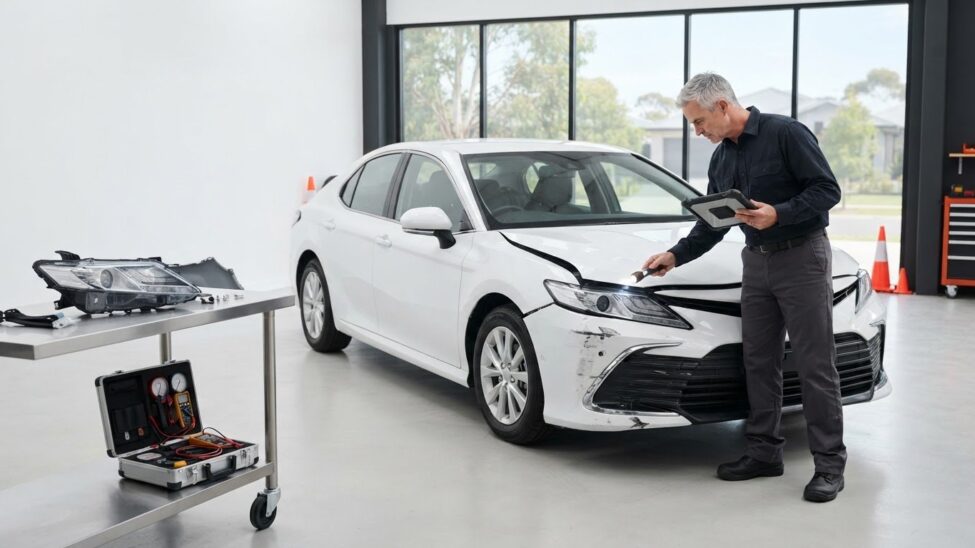
Damaged Car Valuation Australia: How to Know What Your Car Is Worth
A damage label can tell you less about your car’s value than its actual condition. A damaged car valuation australia estimate is only as useful as the details behind it. Make, model, age, kilometres, damage type and severity, repair history, and written-off status can all influence what a buyer may pay.
An online estimate may not reflect the full impact of the damage, and it may not tell you whether your car is repairable or worth more as salvage. A valuation is a starting point, not a guaranteed sale price. Clear details and supporting evidence help make the assessment more relevant to your vehicle.
This guide explains what affects a damaged car’s value, what to gather before seeking an assessment, and how repairable and written-off status can affect your options. It also compares practical ways to sell, so you can consider your next step without committing too soon. My Car Value provides vehicle valuations to help you understand market value and connects owners with professional used car buyers across Australia.
Key Takeaways
- A useful damaged car valuation australia assessment considers both the vehicle’s market context and a clear account of its condition.
- Record the make, model, year, variant, odometer reading and available service history to give the vehicle context.
- Describe each damaged area separately, take clear photos and organise relevant records to support a more informed assessment.
- Compare an online estimate, a condition-led valuation and a buyer’s offer, keeping in mind that each answers a different question.
- My Car Value connects vehicle owners with professional used car buyers across Australia, helping you explore selling options without private classifieds.
Damaged car valuation in Australia: what does the figure actually mean?
A damaged car valuation estimates what a vehicle may be worth in its current condition, taking relevant market context into account. That context can include the vehicle’s make, model, age, kilometres and demand, as well as the type and extent of the damage. A valuation isn’t a repair quote and doesn’t guarantee the amount a buyer will offer. Use it as a guide to understand possible value and consider your next step.
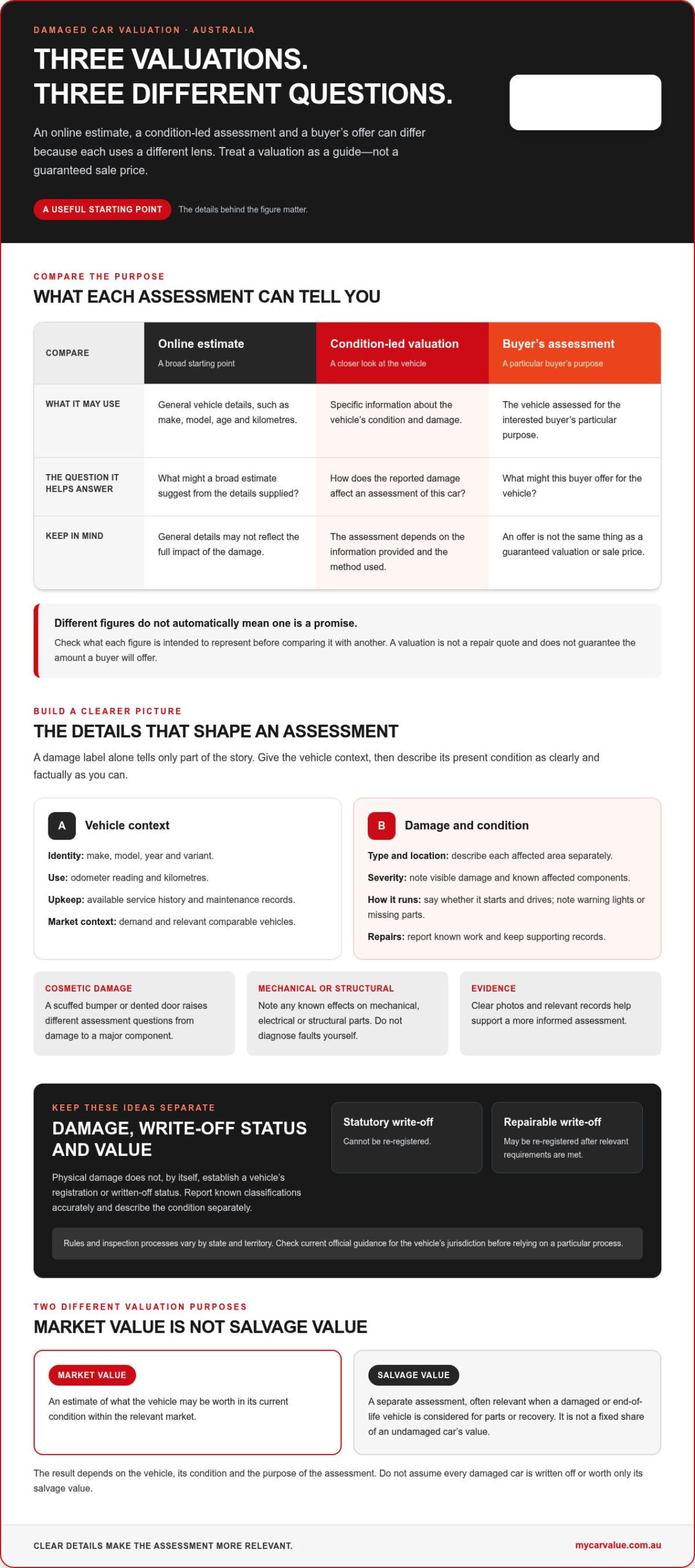
The estimate can change depending on the information supplied and the method used. A broad online estimate may rely on general vehicle details, while a condition-led assessment can consider specific damage. An interested buyer may also assess the vehicle for a particular purpose. As a result, estimates can differ without either being a promise of the final sale price. The wider Car Valuation Principles include different valuation purposes, so check what a figure is intended to represent before comparing it with another.
Does damaged mean written off or worthless?
No. Damage describes a vehicle’s physical condition. It doesn’t, by itself, establish the vehicle’s registration or written-off status. A formal written-off classification is a separate matter. Australian classifications generally distinguish statutory write-offs, which cannot be re-registered, from repairable write-offs, which may be re-registered after relevant requirements are met. Rules and inspection processes vary by state and territory, so check current official guidance for the vehicle’s jurisdiction before relying on a particular process.
A car can have accident damage without being recorded as written off. A repaired vehicle may also retain a written-off history. Keep these facts separate when describing the car: explain the damage you know about and report any known classification accurately. Don’t treat a damage label as a complete valuation. The vehicle’s recorded status and its actual condition can both affect how its value is assessed.
Market value and salvage value: what is the difference?
Market value estimates what the vehicle may be worth in its current condition within the relevant market. Salvage value is a separate assessment, often relevant when a damaged or end-of-life vehicle is considered for parts or recovery. It isn’t simply a fixed share of an undamaged car’s value. The result depends on the vehicle, its condition and the purpose of the assessment.
For example, cosmetic damage and damage to a major component raise different assessment questions. A valuation should reflect the details provided, rather than assume every damaged car is a write-off or worth only its salvage value. Be clear about what you know, and use an estimate as a starting point for understanding the vehicle’s options.
What affects a damaged car valuation in Australia?
A useful assessment needs more than a damage label. It considers the whole vehicle, its market context and the specific condition you report. Make, model, year and variant help identify comparable vehicles. The odometer reading and service history add context about use and maintenance. Together, these details help distinguish your car from another of the same model with different kilometres, features or upkeep.
For a damaged car valuation australia search, the information you provide can shape how relevant the result is. Describe each issue separately instead of summarising the car as simply “damaged”. Include what you know about:
- Damage type and location: for example, a dented door, cracked windscreen or impact to a particular corner.
- Severity and affected components: note visible damage and any known effect on mechanical, electrical or structural parts.
- Current condition: say whether the car starts and drives, and report warning lights, missing parts or known repair work.
Stick to what you’ve observed or what’s documented. Don’t diagnose a fault or inspect unsafe areas yourself. If you’re unsure what a component is called, describe where it is and what you can see.
How does the type and severity of damage change value?
Cosmetic damage, such as a scuffed bumper, differs from damage affecting a major mechanical or structural component. A valuation needs to reflect that distinction, not just the number of marks on the car. Several damaged areas may present a different overall picture from one isolated issue. Record each area and any known symptoms separately, and don’t assume repairs will add a set amount to the vehicle’s value.
Be specific about whether the car can be driven. “It starts but won’t move” gives a different account from “it starts and drives, but a warning light is on”. If repairs have already been completed, note what was done and keep any supporting records. These details explain the vehicle’s present condition without making unsupported claims about the cause or repair cost.
Why do age, kilometres, and service history still matter?
Buyers assess the whole vehicle, not only the visible damage. A newer car with lower kilometres and documented service history has a different context from an older, heavily used vehicle, even if the visible damage looks similar. Gather available service records and note maintenance work. Missing records don’t tell the full story, but clear, factual information gives an assessment more context.
Comparable listings can help you understand the market, but they aren’t direct matches if they show undamaged vehicles or different specifications. Compare like with like where possible, then account for condition instead of treating an advertised price as your car’s value. For broader context on how vehicle details shape an estimate, see the vehicle market value calculator guide.
Once you’ve organised the details, explore your car’s value as a starting point for understanding market context and possible selling options.
Online estimate, salvage assessment, or buyer offer: which is useful?
Each result answers a different question. A general online estimate gives broad market context. A condition-led valuation considers the damage you report. A salvage assessment considers the vehicle from a salvage perspective, while a buyer offer reflects a particular buyer’s interest and assessment. None is automatically the most useful for every purpose. Choose the one that helps with the decision you’re making, and compare results that use similar information and assumptions.
| Pathway | Purpose | Information used | Useful outcome | Limitations |
|---|---|---|---|---|
| General online estimate | Provide a broad market starting point | Commonly entered vehicle details, such as make, model, year and kilometres | A reference for general market context | May not reflect the vehicle’s specific damage or condition |
| Condition-led valuation | Consider the vehicle as described, including its damage | Vehicle details plus reported damage, condition and supporting information | A more relevant estimate when undamaged comparisons don’t match | Still an estimate, and only as useful as the information provided |
| Salvage assessment | Consider potential value in a salvage context | Vehicle identity, condition and details relevant to salvage | A separate perspective for a damaged or end-of-life vehicle | Doesn’t necessarily represent market value in another selling context |
| Buyer offer | Set out what an interested buyer may be prepared to pay | The buyer’s assessment, the vehicle’s disclosed condition and applicable terms | A practical indication of buyer interest | May differ from an estimate and depends on the buyer’s assessment and terms |
What can a general online car valuation tell you?
Use a general estimate to orient yourself, not as a damage-specific conclusion. If key details are missing or inaccurate, the result may be less relevant to your car. For example, an estimate based on the correct model but incomplete variant or odometer information may not closely reflect your vehicle. Disclose known damage when you move from an online estimate to a sale discussion.
When is a condition-led assessment more relevant?
A condition-led assessment is more useful when damage makes standard comparisons difficult. Clear information about affected areas, drivability and known repairs helps put the vehicle’s condition in context. Professional buyer interest can add a practical selling perspective, but it doesn’t turn an estimate into a guaranteed offer. My Car Value connects vehicle owners with professional used car buyers, helping them explore options without private classifieds. This can be useful when you want to understand buyer interest as well as the vehicle’s general market context.
Use a damaged car valuation australia estimate as one input. First decide whether you need broad market context, a condition-led view or an actual buyer offer. Then disclose the known condition and read any offer terms before deciding.
How to prepare accurate information for a damaged car valuation
A little preparation helps make a damaged car valuation australia assessment more relevant to your vehicle. Gather what you know, describe the condition plainly and don’t guess at faults. You don’t need to diagnose the damage or attempt repairs. If checking something could be unsafe, leave it alone and report only what you already know.
- Gather the vehicle details. Note the registration details, make, model, year, variant and odometer reading. Where available, compare the information with registration papers or other records.
- Describe each damaged area. Say where the damage is and what it looks like. Include known symptoms, such as whether the car starts or moves, or whether a warning light is showing. Report these details only if you know them and can check safely.
- Photograph the vehicle. Take clear, well-lit images of the whole car, then close-ups of each visible damaged area. Include relevant interior views and missing parts if it’s safe to photograph them.
- Organise supporting records. Gather service records, repair invoices and available information about previous damage or inspections. Keep the records together so you can refer to them accurately.
Which vehicle details and records should you gather?
Start with the vehicle’s identifying details and current odometer reading. A variant or trim level can help distinguish it from similar models. Add service records and repair invoices that show known maintenance or work already completed. If the car has been damaged before, note what you know and include relevant records. Don’t fill gaps with assumptions. Mark unknown details as unknown.
How should you photograph and describe the damage?
Use daylight where possible and keep the camera lens clear. Take a few views of the whole vehicle, then close-ups that show the location and visible extent of each damaged area. Include the interior if it has visible damage or missing parts. Note when the damage occurred, if known, along with any repair or inspection history. Be factual: report symptoms, not an unverified diagnosis.
Don’t conceal damage in photos or descriptions, and don’t dismantle parts or inspect unsafe areas to get a better view. If the vehicle won’t start or you’re unsure whether it’s safe to approach, don’t try to test it. Clear, complete information supports a more useful assessment, but it can’t guarantee a buyer’s offer or outcome. Treat the result as a guide, then consider your options based on the vehicle’s actual condition.
Explore a damaged car valuation and selling options with My Car Value
Once you’ve gathered the vehicle details and described its condition, a valuation can help you understand the market context and consider what to do next. My Car Value is an Australian digital valuation and buyer-matching platform. It helps vehicle owners understand their car’s value and connects them with professional used car buyers across Australia.
A valuation is a useful starting point, not a guaranteed final offer. The figure can help you frame your options, but buyer interest and any offer depend on the vehicle details, its condition and the buyer’s assessment. Share what you know accurately, then weigh the information against your plans for the car.
What happens when you submit your damaged vehicle details?
Provide the vehicle information and a factual description of its condition. My Car Value uses vehicle details to support a valuation and facilitate connections with professional used car buyers. Clear information about damage helps a potential buyer understand the vehicle’s condition. Be upfront about known damage, warning lights, missing parts and repair history instead of relying on a broad label such as “accident damaged”.
Buyer matching gives you a way to explore a sale without relying on private classifieds. It doesn’t promise a particular offer, buyer response or sale timeframe. A buyer’s assessment may differ from an initial valuation, so treat each as information for your decision, not an obligation to proceed.
How can you decide on your next step?
Compare the valuation and any buyer interest with the choices available to you. You might weigh selling the vehicle as it is against keeping it or considering repairs. If you’re weighing a repair option, use relevant repair information alongside the valuation instead of assuming repairs will increase the sale price by a set amount. The right choice depends on your circumstances and what you want from the vehicle.
If a buyer makes an offer, review its terms and make sure they reflect your understanding of the vehicle’s condition before deciding. You’re in control of whether to proceed. For broader preparation advice, the Australian guide to selling your car covers more of the sale process.
Start with the details you have. My Car Value can help you explore your vehicle’s market value and possible buyer interest, without treating an estimate as a guaranteed result.
Take the next step with a clearer picture
You don’t need to decide whether to repair, keep or sell your vehicle before exploring its value. A damaged car valuation australia can give you a useful reference point as you weigh those options. Treat it as information for your decision, not a commitment to sell. You can take the next step when you’re ready, using the facts you have.
My Car Value is an Australian digital platform for vehicle valuations, connecting vehicle owners with professional used car buyers across Australia. Exploring buyer interest can add a practical perspective to your decision. If you receive an offer, review its terms and consider whether they suit your circumstances before proceeding.
You don’t need to have every answer upfront. Start with a clearer view of your vehicle’s value, then choose the path that suits your circumstances.
One informed step can make the choices ahead easier to consider. You’re in control of what happens next.
Frequently Asked Questions
How much is my damaged car worth in Australia?
There’s no single value for every damaged car. A damaged car valuation australia estimate depends on details such as the vehicle’s make, model, age, kilometres, condition and the market for comparable vehicles. An online estimate can offer a broad reference, but it may not account for the exact damage. For a more relevant assessment, provide the correct variant, describe each known issue and include clear photos rather than relying on a brief description alone.
Can I sell a car in Australia if it is damaged?
A damaged car may attract buyer interest, depending on its condition and what a buyer is looking for. Give an accurate account of the damage and state whether the car starts or can be moved, if you know. My Car Value connects vehicle owners with professional used car buyers. If the vehicle has a formal written-off status, check the applicable state or territory requirements before making claims about registration or road use.
Does a damaged car valuation include repair costs?
No. A valuation estimates what the vehicle may be worth in its present condition; it isn’t a repair quote. A cracked headlight and a reported engine problem, for example, are different details for an assessment, but neither establishes the cost of repair. Repair costs require separate information and may depend on inspection. Don’t assume that spending a particular amount on repairs will raise the car’s sale value by the same amount.
What photos do I need for a damaged car valuation?
Take clear images of the whole vehicle, then close-ups of each visibly damaged area. Include the dashboard if warning lights are showing, and photograph the interior or missing parts where relevant and safe. Good lighting helps show colour and surface condition accurately. Keep the images unedited so they represent the car honestly. Photos add useful context, but they can’t confirm hidden faults or guarantee a particular valuation or buyer offer.
Is a damaged car automatically a write-off in Australia?
No. Visible damage alone doesn’t prove a vehicle has been formally classified as a write-off. A dented panel, for example, isn’t evidence of a formal classification. Keep what you can see separate from any official written-off status, and don’t describe the car as a repairable or statutory write-off unless you have a reliable basis for that claim. Terminology and requirements can differ across jurisdictions, so check current official guidance for the relevant state or territory.
What happens if my car has a blown engine or will not start?
State plainly that the vehicle won’t start, or report a confirmed engine issue if you have documentation. If it only clicks, stalls or shows a warning light, describe that symptom instead of diagnosing the cause. Existing inspection notes or repair records can help explain what’s known. A non-running car may still interest buyers, but any assessment depends on the vehicle’s details, condition and potential buyer interest.
Do I need a professional valuation for a damaged car?
Not every owner needs a formal valuation report. If you’re deciding whether to keep the car, an online estimate may provide a broad reference. If the damage makes ordinary comparisons less useful, a condition-led valuation or buyer response may better inform a sale decision. Consider what you need to decide first, then use information suited to that purpose. A valuation can guide your thinking, but it doesn’t commit you to selling.