
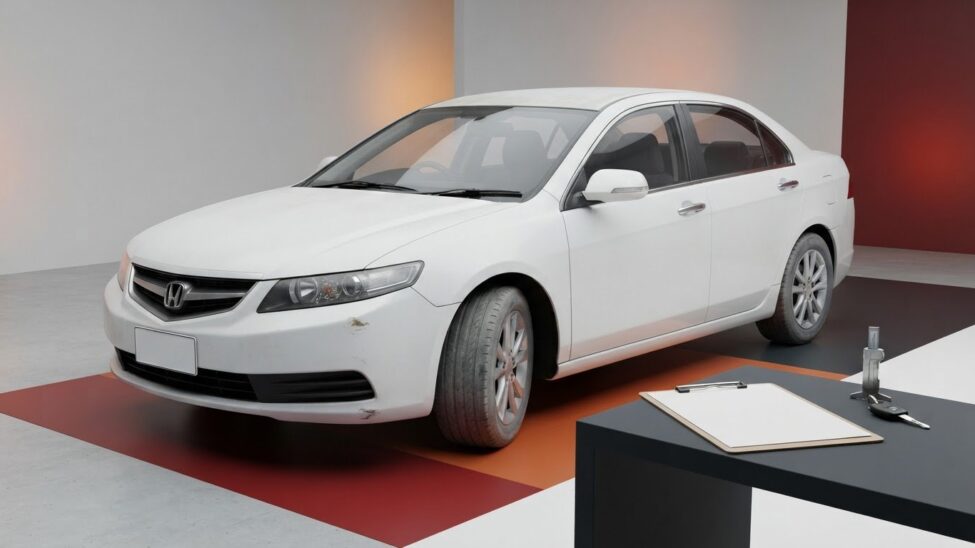
Sell a Car As Is in Australia: 2026 Guide
What if repairing your car before a sale costs more than it adds to its value? If you’re searching “sell car as is Australia”, you may be weighing up repair bills, inspection requirements and the risk of a dispute over a fault discovered later. Selling as is can be an option, but it doesn’t mean you can hide known problems or ignore your legal responsibilities.
The right next step depends on the car’s condition and the sale requirements where you live. Roadworthiness and safety inspection rules vary between Australian states and territories. Being upfront about faults helps set realistic expectations and gives both sides a clearer picture before a sale.
This guide explains what an as-is sale does and doesn’t mean, how to weigh up repair costs, and what vehicle details to prepare. It also compares private sales with connecting to professional used car buyers. My Car Value provides valuation information and helps match sellers with buyers, so you can consider your options with a clearer sense of your vehicle’s market value.
Key Takeaways
- Understand what it means to sell a car as is in Australia, including why accurate descriptions and applicable transfer steps still matter.
- See how your car’s condition and other details can affect buyer interest, and why a valuation is an estimate rather than a guaranteed offer.
- Compare private sales with professional buyer connections to weigh up the effort, enquiry handling and control involved.
- Prepare a clear vehicle summary with its make, model, year, kilometres, registration status and known faults.
- Learn how My Car Value provides valuation information and connects sellers with professional used car buyers.
What does it mean to sell a car as is in Australia?
Selling a car as is means offering it in its current condition, including existing faults or damage. The buyer considers the vehicle as it stands, rather than expecting you to repair it before the sale. However, “as is” doesn’t remove your responsibility to describe the car accurately or complete the transfer steps that apply where you live.
An as-is sale is a sale of a vehicle in its present condition, with known issues described honestly and applicable legal and transfer requirements still met. It isn’t a claim that the car is roadworthy, fault-free or suitable to drive. For example, describe a vehicle with expired registration as unregistered, rather than presenting it as ready for the road.
Which vehicle conditions commonly lead to an as-is sale?
Sellers may consider an as-is sale for a range of reasons. A damaged car may have visible bodywork issues, while a mechanically faulty vehicle may still run but need attention. A non-running car can’t be driven under its own power. An older vehicle may have accumulated wear or need repairs that the seller would rather not arrange before selling.
These descriptions don’t determine a vehicle’s value or buyer interest on their own. Make, model, age, kilometres, demand and the nature of the damage can all matter. The used car market includes vehicles in varied conditions, so don’t assume every damaged or non-running car has the same sale prospects.
Does selling as is mean you can skip disclosure?
No. Give buyers a clear, plain-language account of known faults and visible damage. Be specific where you can: explain what happens, when you noticed it and whether the car can be started or driven. Don’t describe a fault as fixed if it hasn’t been repaired, or imply the vehicle is roadworthy if you don’t know that it is.
Keep condition disclosure separate from registration, transfer and inspection rules. Those requirements vary between states and territories, and an as-is description doesn’t cancel them. Before advertising, agreeing to a sale or handing over the vehicle, check the current official guidance for your state or territory on registration transfers and any roadworthiness or safety inspection requirements.
If you’re researching how to sell car as is australia, start by describing the vehicle accurately, then confirm the steps that apply to your sale. This helps prospective buyers understand what they’re considering and lets you weigh up your options without assuming repairs are always necessary.
How does your car’s condition affect an as-is sale?
Condition is one part of the picture. Make, model, age, kilometres and current demand can also affect buyer interest. A clear description helps buyers understand the vehicle, while a broad label such as “damaged” leaves important questions unanswered.
Two cars with similar damage can attract different assessments because their age, kilometres, model and other condition details may differ. A valuation can help you understand market value, but it’s an estimate, not a guaranteed offer for your specific car. If you’re researching “sell car as is australia”, treat valuation information as a starting point for weighing up your options, not a promise of a particular sale price.
Which condition details should you record?
Prepare a straightforward account of what you know. Include mechanical issues, warning lights, collision damage and any missing or damaged components. State whether the vehicle starts, moves and can be inspected safely. Separate confirmed faults from symptoms that haven’t been diagnosed. For example, describe a warning light and when it appears rather than guessing what caused it.
Take clear photos of relevant exterior and interior areas, including visible damage and affected components. Keep any service records together. Consistent details and photos give buyers a more useful picture than a single word such as “faulty”.
Should you repair the car before selling it?
Don’t assume a repair will pay for itself in the sale. Compare the repair quote with the likely effect on the car’s presentation, buyer interest and the effort involved in your preferred sale route. A repair may address a concern that puts buyers off, but the result depends on the vehicle, the fault, the cost and how you plan to sell. If you have service records, this guide to checking a car’s service history can help you organise them.
For context on private sales, the Government of Western Australia provides guidance on paperwork, finance and roadworthiness in its Western Australia consumer protection guide to private car sales. It relates to Western Australia, so check the current official requirements for your own state or territory before deciding what to do.
If you’re unsure whether repairs are worthwhile, use the vehicle details and known faults to inform a valuation. My Car Value provides valuation information and connects sellers with professional used car buyers, giving you another route to consider without assuming repairs are necessary first.
Selling As Is: Private Sale or Professional Buyer?
Both routes can suit an as-is vehicle. The main difference is how much of the selling process you want to manage yourself. A private sale gives you direct control over the listing and buyer conversations. Connecting with a professional used car buyer is another way to reach people who buy vehicles.
| Consideration | Private sale | Professional buyer connection |
|---|---|---|
| Seller effort | Prepare and manage the listing, enquiries and viewings. | Share vehicle details through a matching platform to connect with professional used car buyers. |
| Enquiries | Respond to questions from interested buyers and explain known faults. | Buyer matching provides a route to professional buyers; the process and response can vary. |
| Inspection expectations | Arrange viewings and discuss how the vehicle can be inspected. | Discuss the car’s condition and inspection arrangements with the buyer. |
| Control | You manage the listing and buyer communication directly. | A platform facilitates the connection, while sale discussions take place with the buyer. |
When might a private sale suit an as-is car?
A private sale may suit you if you want direct control over the listing details, enquiries and viewing arrangements. That control comes with hands-on work: prepare an accurate listing, answer questions, explain faults and coordinate viewings. Describe the vehicle plainly and follow the sale and transfer requirements that apply in your state or territory.
When might a professional buyer connection be more practical?
If you’d prefer an alternative to managing private enquiries and viewings, a matching platform can connect you with professional used car buyers. My Car Value provides valuation information and facilitates these connections; it doesn’t directly purchase vehicles. A connection isn’t a guaranteed offer or sale, and no particular outcome or timeframe is assured.
Read more about professional used car buyers to understand how this route works. If you’re weighing up other options, this guide to alternatives to selling through a car auction may also help. Choose based on the effort you’re comfortable managing, your car’s condition and how you want to handle buyer conversations.
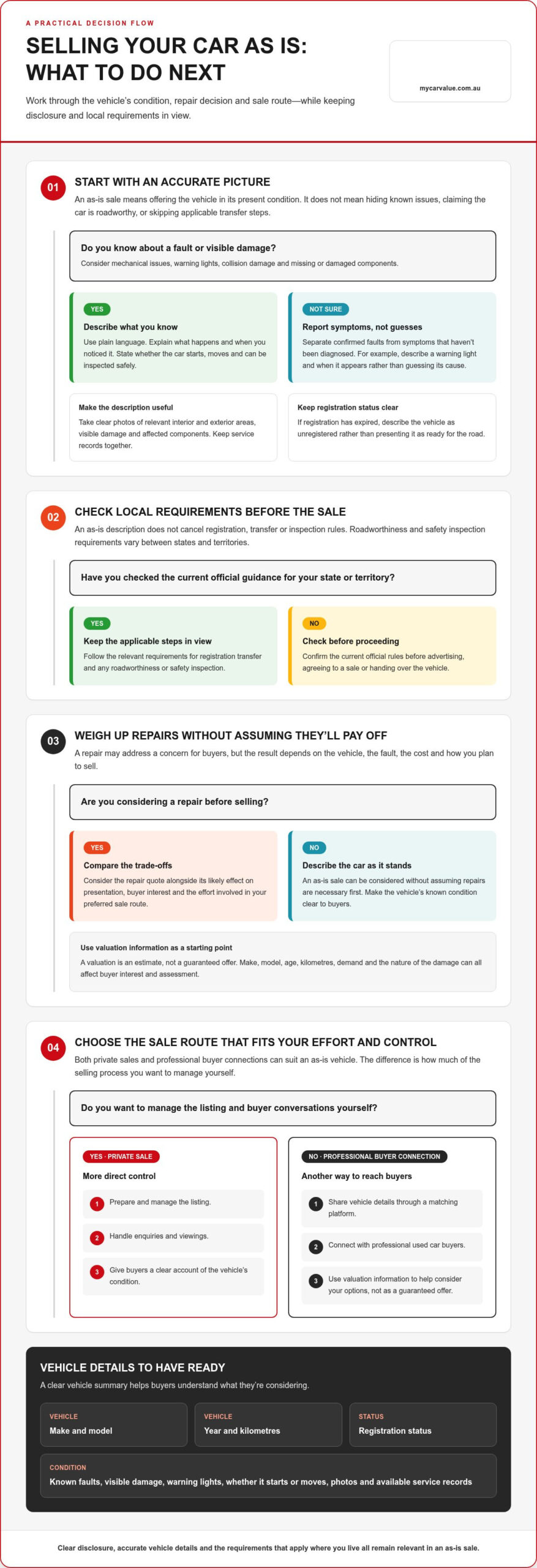
What should you prepare before selling a car as is?
Preparing a few details in advance makes it easier to explain the vehicle’s condition and avoid surprises. Use this checklist before sharing information with buyers or arranging an inspection.
- Gather the vehicle details. Record the make, model, year, kilometres, registration status, VIN and registration details. Check them against the vehicle documents so the information you provide is accurate.
- Write a condition summary. List known faults, warning lights, visible damage and missing or damaged components. Note whether the vehicle starts, moves and can be inspected safely.
- Collect available records. Bring together service records, ownership details, keys and relevant vehicle documents. These can help you answer questions and provide context about the car.
- Check the steps for your location. Confirm current official guidance on transfer, registration plates and any applicable roadworthiness or inspection requirements. Rules vary between Australian states and territories, so don’t rely on a general checklist alone.
- Prepare for assessment and handover. Take clear photos of the exterior, interior and any damage. Remove personal belongings and make the vehicle accessible for an agreed inspection.
What information and records should you gather?
Keep your vehicle summary concise and factual. Include the make, model, year, kilometres, registration status and known faults, alongside accurate VIN and registration details. Add the documents and service records you have rather than trying to fill gaps with guesses.
Describe what you observe separately from what has been diagnosed. For example, say that a warning light appears rather than naming a mechanical fault unless it has been confirmed. This distinction helps buyers understand what you know and what remains uncertain.
How do you prepare for assessment and handover?
Make the car easy to assess. Photograph damage in clear light and include enough context to show where it is. Before an agreed inspection, remove personal items and make sure the vehicle and relevant keys are accessible. If it doesn’t start or move, state that clearly when arranging the inspection.
Before completing the sale, check your state or territory’s official instructions for ownership transfer, number plates and any inspection obligations that apply to your vehicle and sale type. An as-is agreement doesn’t replace those steps. If you’re preparing to sell car as is australia, keep your summary, records and condition photos together so you can share consistent information throughout the process.
How My Car Value can help you move forward with an as-is sale
An as-is sale doesn’t have to start with a guess about what your car is worth or who might consider buying it. My Car Value helps vehicle owners understand market value and connect with professional used car buyers. The platform facilitates those connections; it doesn’t directly purchase vehicles.
The process gives you information to consider while leaving the sale decision in your hands:
- Provide your vehicle details. Enter accurate specifications, kilometres, registration status and condition information. Include known faults and be clear about whether the vehicle starts or moves.
- Review valuation information. Use the valuation as an estimate to help understand market value. It isn’t a confirmed offer for your particular car or a guarantee of a sale.
- Consider buyer connections. Your details can provide context for connecting with professional used car buyers. Accurate condition information helps make that context clearer.
- Compare your next steps. Consider any buyer response alongside your expectations, the vehicle’s disclosed condition and the effort involved in your preferred sale route.
What happens when you share your vehicle details?
Complete information helps build a clearer picture of the car. Check that the make, model, year, kilometres and registration details are accurate. Describe visible damage and known faults plainly, and distinguish confirmed issues from symptoms that haven’t been diagnosed. Missing or unclear details can make it harder to assess the vehicle’s condition, so review what you submit.
The valuation is a guide, not a promise of a particular price, buyer response or outcome. If you’re looking to sell car as is australia, use it as one part of your decision rather than treating it as a final offer.
How can you decide on your next step?
Review any buyer response against the details you supplied and the condition you disclosed. Read the sale terms carefully before accepting an offer. If you proceed, complete the transfer and other applicable steps for your state or territory using current official guidance. You can also weigh this route against the effort of managing a private sale yourself.
Take the next step with clear information
A practical as-is sale starts with an accurate picture of your car. Describe its condition clearly, gather the vehicle details and records you have, and check the transfer requirements that apply in your state or territory. Then compare a private sale with connecting to professional used car buyers, based on the effort and control you want.
If you’re ready to sell car as is australia, valuation information can help you understand market value and consider your options. My Car Value also connects vehicle owners with professional used car buyers. It facilitates the connection rather than buying vehicles directly, and valuation information isn’t a guaranteed offer or sale.
Share accurate details about your vehicle, review your options and decide which sale route suits you.
Frequently Asked Questions
Can I sell a car as is in Australia?
Yes, you can generally sell a car in its current condition, but “as is” doesn’t remove your responsibility to describe it accurately or complete the applicable sale and transfer steps. Roadworthiness, inspection and registration requirements vary between states and territories. If you plan to sell a car as is in Australia, check current official guidance for your jurisdiction and clearly state any known issues before agreeing to a sale.
Do I have to disclose faults when selling my car as is?
Describe known faults and visible damage accurately. “As is” isn’t permission to misrepresent the vehicle or conceal a significant issue you know about. Use plain language and separate confirmed faults from symptoms that haven’t been diagnosed. For example, state that a warning light comes on rather than guessing what caused it. Clear details help buyers understand the car’s condition before deciding whether to proceed.
Can I sell a car that is damaged or not running?
You can look for a buyer for a damaged or non-running car, but interest and assessment will depend on the vehicle and the details of its condition. Explain the damage, known mechanical issues and whether it starts or moves. Don’t imply it can be driven if it can’t. If it’s unregistered or can’t be driven legally, make that clear and check the relevant state or territory requirements for sale and transport.
Should I repair my car before selling it as is?
Not necessarily. Compare the repair quote with the likely effect on presentation, buyer interest and the effort involved in your preferred sale route. The right choice depends on the vehicle, the fault, the repair cost and the buyers you’re considering. Don’t assume a repair will add more value than it costs. A clear description of the fault can help you consider selling the car in its current condition instead.
Can I sell an unregistered car in Australia?
An unregistered car can be sold, but requirements and sale procedures vary by state or territory. The buyer generally can’t drive it on public roads until it’s registered, so be clear about its registration status and how it will be moved. Before advertising, agreeing to a sale or handing over the vehicle, check your jurisdiction’s current official guidance on registration, transfer steps, number plates and any applicable inspection obligations.
Is it better to sell an as-is car privately or to a professional buyer?
It depends on how much of the process you want to manage. A private sale gives you direct control over the listing and enquiries, but you’ll need to handle advertising, questions and viewings. A professional buyer connection can offer an alternative route. My Car Value connects sellers with professional used car buyers, but it doesn’t directly purchase vehicles. Neither route guarantees a sale or a particular offer.
How do I get a valuation for a car with mechanical problems?
Provide accurate details about the vehicle, including its make, model, year, kilometres, registration status and known mechanical issues. Describe symptoms clearly and distinguish them from faults confirmed by a diagnosis. My Car Value provides valuation information to help owners understand market value and can connect them with professional used car buyers. Treat a valuation as an estimate, not a confirmed offer or a guaranteed sale outcome.