

Sell a Car with Mechanical Issues in Australia: Your Practical Guide
Paying for a repair isn’t always the best first step. If you’re searching for “sell car with mechanical issues australia”, the right decision depends on the fault, the car’s condition and what a repair could realistically change. A breakdown can make selling feel uncertain, but it doesn’t mean you need to spend money before exploring your options.
A known fault may reduce your car’s value or narrow the pool of interested buyers. Before committing to repairs, compare the likely cost and benefit with selling the vehicle as-is. A clear description of the issue, along with the car’s make, model, year, kilometres and service history, helps put a valuation in context.
This guide explains how to compare repairing with selling as-is, what details to gather and how a market valuation can help you decide what to do next. My Car Value provides vehicle valuation guidance and connects sellers with professional used-car buyers, offering an alternative to finding buyers through private classifieds.
Key Takeaways
- A mechanical fault doesn’t automatically prevent a sale. Its severity, supporting evidence and the car’s overall condition shape your options.
- Before spending on repairs, compare the documented repair scope with the vehicle’s likely value in its current condition.
- Make, model, age, kilometres and market demand all affect how you sell car with mechanical issues australia. A clear diagnosis and repair records add useful context.
- Record symptoms and known faults, then keep your disclosures factual and consistent throughout the sale.
- My Car Value provides market valuation guidance and connects sellers with professional used-car buyers based on their vehicle details.
Can you sell a car with mechanical issues in Australia? Start by understanding the fault
Yes. A mechanical fault doesn’t automatically prevent a sale, but it can affect which buyers are interested and which sale options make sense. A warning light, an intermittent fault and a car that won’t start are different situations. Describe what you know, and don’t assume the cause or repair cost without evidence.
A mechanical issue is a fault that affects a vehicle’s operation or reliability; a non-running vehicle is one that cannot start or move under its own power. A car can have a mechanical issue and still be driveable. This distinction helps you describe its condition accurately and gives buyers useful context.
What counts as a mechanical issue when selling a car?
Issues range from a warning light or occasional rough start to drivability problems such as loss of power. More serious faults can involve overheating, transmission trouble or engine failure. These symptoms don’t confirm a cause: similar signs can have different explanations. A mechanic’s assessment can clarify what has been observed, what is known about the fault and whether further diagnosis or repairs are recommended.
Keep the information practical. Note when the symptom occurs, whether it happens consistently, and any warning messages or work already completed. If you have a written assessment, repair quote or service record, use it to explain the fault. Don’t present an estimate as a confirmed diagnosis. This helps buyers distinguish what is known from what remains uncertain.
How does fault severity affect your selling options?
A driveable car with a disclosed fault may attract different interest from a vehicle that cannot safely run. Age, overall condition, market demand and usable components can also affect buyer interest. A non-runner may be assessed for its condition and parts as well as its potential for repair, but no particular buyer or outcome is assured.
Don’t drive the car if you believe it may be unsafe. Roadworthiness, certificate and transfer rules vary between Australian states and territories, so check the current requirements that apply to your location and sale type. Registration status can also affect the handover steps. A fault alone doesn’t establish whether a car meets the requirements in a particular state or territory.
Terms such as Lemon law are used internationally for consumer protections concerning faulty vehicles, but they shouldn’t be treated as a summary of Australian requirements. The rules can depend on the type of sale and the relevant state or territory. For practical purposes, describe known faults honestly and keep supporting records. Understanding whether your car is driveable, what evidence supports your description and which local requirements apply will help you assess how to sell car with mechanical issues australia without assuming the vehicle is worthless or ready for the road.
Repair it or sell it as-is? Compare the decision before spending
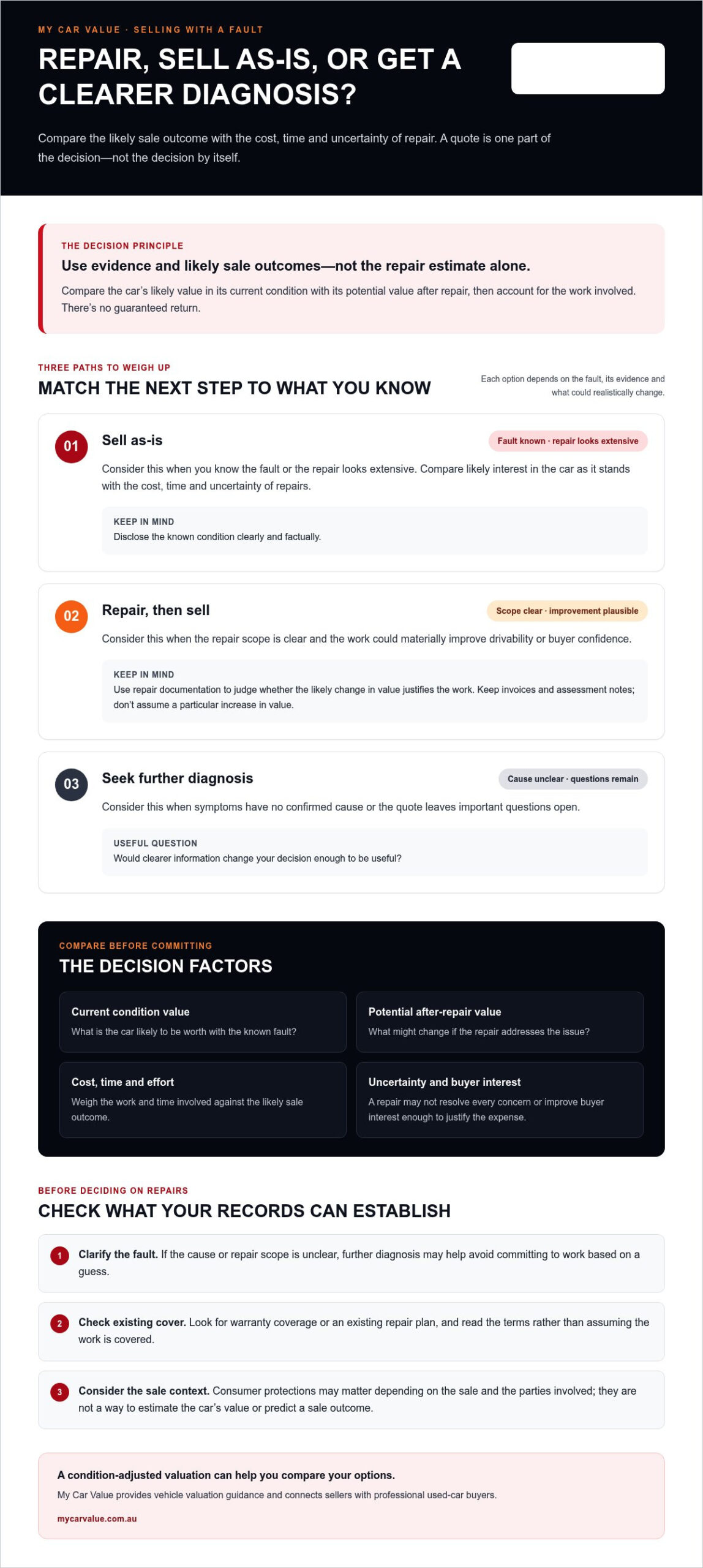
A repair quote is only one part of the decision. Compare the car’s likely value in its current condition with its potential value after the repair, then account for the repair cost, time and effort. There’s no guaranteed return: a repair may not resolve every concern or increase buyer interest enough to justify the expense.
Decide using evidence and likely sale outcomes, not the repair estimate alone. If the cause or scope is unclear, further diagnosis may help you avoid committing to work based on a guess.
| Option | Consider it when | What to weigh up |
|---|---|---|
| Sell as-is | You know the fault, or the repair looks extensive. | Compare likely interest in the car as it stands with the cost, time and uncertainty of repairs. Disclose the known condition. |
| Repair then sell | The repair scope is clear and could materially improve drivability or buyer confidence. | Use the repair documentation to assess whether the likely change in value justifies the work. |
| Seek further diagnosis | The symptoms have no confirmed cause or the quote leaves important questions open. | Consider whether clearer information would change your decision enough to be useful. |
When might a repair improve the sale outcome?
A confirmed, limited repair may be worth considering if it changes how the car drives or addresses a fault that could concern buyers. Check your records for warranty coverage or an existing repair plan, and read the terms rather than assuming the work is covered. After repairs, keep invoices and assessment notes. Use these records to understand what the work establishes, rather than assuming it will raise the vehicle’s value by a particular amount.
Consumer protections may also matter depending on the sale and the parties involved. Choice outlines consumer rights for faulty cars in Australia under Australian Consumer Law. Use this as background on buyers’ rights, not as a way to estimate your car’s value or predict a sale outcome.
When could selling the car as-is make more sense?
Selling as-is may be practical if diagnosis remains uncertain, the repair scope is substantial, or you don’t want to spend time arranging work. Factor in the possibility that repairs may uncover further faults. A condition-adjusted valuation can help you compare options. My Car Value provides valuation guidance and connects sellers with professional used-car buyers.
If you’re weighing up the broader steps involved in a sale, the guide Sell My Car: The Ultimate 2026 Guide to Selling Your Vehicle in Australia can help you plan the process. For a starting point on your vehicle’s market value, get a car valuation, then consider it alongside the fault details and repair evidence. That comparison can help you decide whether to sell car with mechanical issues australia as-is, repair first or investigate further.
What affects the value of a car with mechanical issues?
A mechanical fault is one part of the valuation, not the whole picture. Make, model, age, kilometres, general condition and current demand all help shape market value. The same fault can have different implications for different vehicles: a repairable issue on a sought-after model may be viewed differently from a major fault on an older car with other wear.
Be specific about what’s known. The type and severity of the fault, whether it has been diagnosed, and any repair records can help explain the car’s condition. A warning light with no diagnosis leaves more uncertainty than a documented assessment, but neither guarantees a particular value or offer. An online estimate is a guide based on the details provided, not a guaranteed final offer.
Which vehicle details help create a realistic valuation?
Gather the registration and vehicle identification details, variant, odometer reading and available service records. Describe the fault plainly: note the warning light or symptom, when it began, how often it occurs and whether the car currently runs. Don’t present a suspected cause as confirmed. Clear photos and any diagnosis, repair quote or invoice can add useful context.
Complete information makes it easier to distinguish your vehicle from similar models and understand its condition. Missing details can make an estimate less specific. For more valuation context, the guide Vehicle Market Value Calculator: How to Estimate Your Car’s Worth in 2026 explains how to approach an estimate. Service invoices and logbook entries can also show what work has been completed. See Car Service History Check: The Australian Guide to Maximising Value (2026) for more on organising those records.
How do professional buyers assess a faulty vehicle?
Professional used-car buyers may weigh repair needs, resale potential and usable components differently. A clear fault description and supporting documents give them better information to consider, but an indicative valuation is not the same as an offer. Further vehicle information or an assessment may affect what a buyer is prepared to offer, so don’t treat an online estimate as a commitment.
Keep the details consistent. If the car sometimes starts but won’t run reliably, say so rather than labelling it simply “running” or “not running”. If the diagnosis is incomplete, state what has been checked and what remains unknown. This helps avoid confusion when professional buyers consider the information.
For anyone looking to sell car with mechanical issues australia, a market valuation is a practical starting point before deciding what to do next. My Car Value provides vehicle market valuations and connects sellers with professional used-car buyers. It facilitates the connection, rather than purchasing the vehicle, and buyer interest and outcomes depend on the vehicle details and the buyers’ assessment.
How to prepare and disclose a mechanically faulty car for sale
Good preparation helps you describe the car consistently and gives a valuation or buyer assessment useful context. Before seeking an estimate or discussing a sale, gather the vehicle details, fault information and relevant records. Keep confirmed findings separate from anything you suspect but haven’t verified.
What information should you gather before requesting a valuation?
Work through this checklist before you sell car with mechanical issues australia:
- Record the symptoms. Note what happens, when it started, whether it’s intermittent and whether anything has changed. Include dashboard warning lights or messages, using the wording shown where possible.
- Describe how the car operates. State whether it starts, runs and moves under its own power. Don’t drive it if you believe it may be unsafe.
- Collect the vehicle details. Have the registration information, vehicle identification details, variant and odometer reading ready. Gather ownership documents relevant to the sale.
- Organise its history. Set aside service records, inspection findings, repair estimates and invoices. These can show what’s been checked or repaired without proving more than the documents actually say.
- Take clear photos. Photograph the exterior, interior, odometer and any visible damage. Use well-lit images and include relevant areas without trying to disguise wear or faults.
A short written timeline can help keep details straight. For example, record when a warning first appeared, whether it returns after starting and what checks or repairs followed. If there’s no confirmed diagnosis, say so rather than naming a cause.
How can you disclose faults clearly and arrange handover?
Describe known symptoms in direct, factual language. Separate what you’ve observed from a mechanic’s confirmed findings, and share the supporting documents you have. Keep the same description in valuation information, buyer discussions and sale paperwork. Clear disclosure helps reduce misunderstandings, but it doesn’t guarantee a particular valuation or sale outcome.
Before handover, agree how the vehicle will be accessed and collected. Explain whether it starts or moves, discuss loading needs if it doesn’t, and confirm practical arrangements such as access to the vehicle and transfer of keys and documents. Remove personal belongings and keep copies of the records you provide.
Registration transfer, roadworthiness certificates and other paperwork requirements can differ by state or territory and may depend on the sale circumstances. Check the current rules that apply to your location before completing the handover. Don’t assume that a fault or an as-is sale removes any applicable requirements.
Once your vehicle details, fault notes and documents are organised, My Car Value can provide valuation guidance and connect you with professional used-car buyers.
Sell a car with mechanical issues through a clearer buyer-matching process
A fault can make it harder to know where to start. My Car Value brings together vehicle market valuation guidance and connections with professional used-car buyers. It facilitates those connections rather than purchasing vehicles directly. Accurate information about the car and its condition gives buyers more context, but it can’t guarantee an offer or a particular outcome.
What happens when you submit vehicle details?
Start with the basics: make, model, year, variant, kilometres and general condition. Then describe the known issue in plain language. Include symptoms, warning lights, whether the vehicle starts and runs, and any diagnosis or repair documents you have. If you’re unsure of the cause, say so. Clear, accurate details make the valuation guidance more relevant than a description that leaves the fault unclear.
After providing the information, review the valuation guidance and consider the buyer connections. My Car Value connects sellers with a network of professional used-car buyers rather than acting as the buyer. Each buyer may assess the car according to its condition and their own requirements. Review the options presented before deciding whether to take the next step.
How do you choose the next step with confidence?
Compare any proposed next steps with what you’ve documented and what matters most to you. Make sure the buyer has the same understanding of the fault, whether the vehicle runs and what records are available. If a detail changes or you find another relevant document, update the information before proceeding. Keep a written record of the vehicle details and condition discussed so you can refer back to what was disclosed.
Consider the practical arrangements too. Confirm how the vehicle will be accessed and, if it can’t move under its own power, discuss loading and collection needs before agreeing to a handover. A buyer connection doesn’t mean the sale is settled. Consider each proposed step on its own terms, including whether it fits your priorities and the vehicle’s actual condition.
This process replaces guesswork with a clearer sequence: provide vehicle details, describe the known fault, review the valuation guidance and consider connections with professional buyers. For more on what to expect from this buyer type, see Professional Used Car Buyers: The Efficient Way to Sell Your Vehicle in 2026. To explore your car’s value and possible buyer connections, start with the information you’ve gathered.
Choose your next step with confidence
Your next move doesn’t have to be a major repair or a rushed decision. Set a clear priority first. Are you hoping to avoid spending more time on the car, or do you want to understand whether resolving the fault could improve your sale options? That answer gives you a practical way to weigh up what you’ve learned.
If you’re deciding how to sell car with mechanical issues australia, you don’t need every unknown resolved before taking a considered next step. Use valuation guidance and buyer connections as information to weigh up, not as an obligation to proceed. Compare the options with your priorities and decide what suits your circumstances.
Take the process at your own pace. A clear decision starts with the facts you have, and the next step can be as simple as exploring your options.
Start with your vehicle details and known fault information to explore a valuation and professional buyer connections.
Frequently Asked Questions
Can I sell a car with mechanical issues in Australia?
Yes, a mechanical fault doesn’t automatically prevent a sale in Australia. Options may include selling the vehicle in its current condition, depending on its state and the applicable requirements. For example, note whether the car starts reliably or only after several attempts. Describe what you’ve observed, and check your state or territory’s current transfer and roadworthiness rules before agreeing on handover arrangements.
Is it worth repairing a car before selling it?
It depends on whether the repair is clearly defined and likely to change the sale outcome. A documented repair that restores an important function may help, while work on an uncertain fault may add expense without resolving the underlying issue. Compare the car’s likely value before and after the proposed work, and consider delays or the chance of further problems. Don’t treat a repair estimate as proof that the vehicle’s value will rise by the same amount.
How much is a car with a blown engine worth in Australia?
There’s no single value for a car with a blown engine. Two cars with the same model and engine problem may differ in kilometres, body condition, age and demand. A buyer may also consider whether other components are usable. Provide the vehicle’s exact variant and odometer reading, along with any written diagnosis. Use an online estimate as a starting point for understanding market value, not as a guaranteed offer or final sale price.
Do I have to disclose mechanical problems when selling my car?
You should clearly disclose mechanical faults you know about and avoid describing a suspected cause as a confirmed diagnosis. For example, say that the engine overheats during longer drives if that’s what you’ve observed, rather than claiming a specific component has failed without evidence. Keep your description consistent in the valuation details and sale discussions. Legal requirements can depend on the transaction and jurisdiction, so check current Australian and relevant state or territory guidance.
Can I sell a car that will not start?
Yes, a car that won’t start may still have sale options, but make its non-running condition clear from the outset. Record what happens when you turn the key or press the start button, including any clicking, dashboard lights or changes in sound. Don’t attempt to drive it. Before handover, agree how the vehicle will be moved and whether loading equipment is needed, then check the transfer steps that apply where you live.
Should I get a mechanic’s diagnosis before selling a faulty car?
A mechanic’s diagnosis can be useful if the fault is intermittent, the cause is unclear or you’re weighing up a repair. It can help distinguish observed symptoms from confirmed findings and give buyers more context. Keep the report, invoice or estimate with your vehicle records, and describe exactly what it does and doesn’t confirm. A diagnosis can inform a valuation, but it won’t guarantee a particular estimate or offer.