

Pre-Sale Car Inspection: Guide to Maximising Value
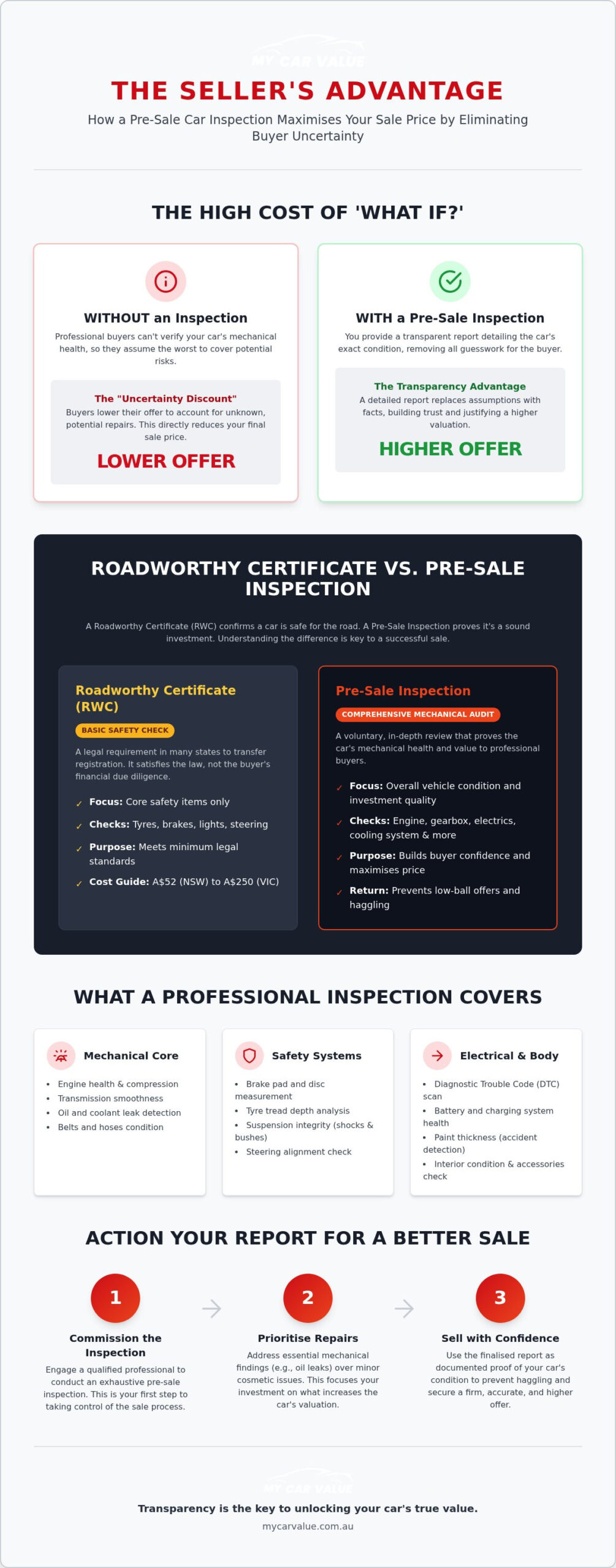
A pre-sale car inspection isn’t an optional cost; it’s a transparency tool that stops professional buyers from applying an “uncertainty discount” to your vehicle. Many Australian sellers hesitate to book an assessment, fearing they’ll uncover issues that sink the sale. In reality, the unknown is what truly hurts your valuation. When you can’t prove the mechanical health of your car, buyers naturally hedge their bets by offering less.
It’s common to feel stressed about hidden mechanical gremlins being used as leverage in a negotiation. You might also feel confused about whether a standard Roadworthy Certificate, which can cost up to A$250 in Victoria or a capped A$52 in New South Wales, is enough to satisfy a professional buyer. This guide clarifies that distinction so you don’t waste money on repairs that won’t actually increase your car’s final sale price.
Discover how a strategic inspection helps you secure a higher price and a faster sale when dealing with professional buyers. We’ll examine which mechanical details matter most, how to use transparency to reduce haggling, and why a clear report gives you total confidence in your car’s condition. This approach ensures you get a fair valuation and a seamless experience from start to finish.
Key Takeaways
- Understand why a voluntary pre-sale car inspection acts as a powerful transparency tool that prevents professional buyers from discounting your vehicle.
- Identify the critical mechanical and safety systems covered in a professional report, from engine performance to tyre tread depth.
- Evaluate the cost-to-return ratio and see how an upfront investment protects your final sale price from aggressive haggling.
- Learn a methodical way to action your report findings by prioritising essential mechanical repairs over minor cosmetic issues.
- Use your inspection results as documented proof of condition to get a more accurate valuation when you’re ready to sell.
What is a Pre-Sale Car Inspection and Why Does it Matter?
A pre-sale car inspection is a voluntary, exhaustive review of your vehicle’s mechanical and cosmetic condition conducted before you list it for sale. While most people think of a Pre-purchase inspection as something a buyer orders, savvy sellers use it to flip the script. By commissioning this report yourself, you provide a transparent record that removes the guesswork from the transaction. This proactive step shifts the emotional dynamic from suspicion to professional cooperation. It positions you as a transparent seller who has nothing to hide, which is exactly what professional buyers look for.
Professional buyers operate on strict margins. When they evaluate a vehicle without a detailed report, they apply what is known as an “Uncertainty Discount.” If a buyer cannot verify the remaining life in the clutch or the current state of the cooling system, they will assume these components require immediate work. They naturally lower their offer to cover that perceived financial risk. A pre-sale car inspection eliminates this buffer by replacing assumptions with hard data. It allows you to identify deal-breakers, such as a weeping head gasket or failing suspension bushes, before they become high-pressure hurdles during a price negotiation. Fixing these issues early, or disclosing them upfront, keeps you in control of the conversation.
The Difference Between ‘Roadworthy’ and ‘Pre-Sale’
It’s easy to confuse a Roadworthy Certificate (RWC) with a comprehensive inspection. In Australia, an RWC is a legal requirement for transferring registration in various states and territories. It focuses strictly on safety items like tyres, brakes, and lights to ensure the car isn’t a danger to others. A pre-sale car inspection goes much deeper. It examines engine compression, gearbox smoothness, and electrical system health. While an RWC confirms the car is safe to drive, a pre-sale report proves the car is a sound investment. One satisfies the law; the other satisfies the buyer’s financial requirements.
Why Professional Buyers Prefer Inspected Vehicles
Eliminating the guesswork helps buyers provide more competitive quotes. Professional buyers need to calculate reconditioning costs before they can give you a final price. A detailed report allows them to see exactly what work is required to get the car ready for their lot. This level of transparency makes the selling process through services like My Car Value significantly more efficient. Instead of receiving a broad estimate subject to a physical inspection, you’re positioned to secure a firm offer. When a buyer knows they won’t find hidden mechanical gremlins, they can commit to a higher valuation with total confidence.
What Does a Professional Pre-Sale Inspection Cover?
A professional pre-sale car inspection is a comprehensive diagnostic event. It goes far beyond a simple visual check. A qualified inspector examines the mechanical core of your vehicle, specifically focusing on the engine’s health, transmission smoothness, and the efficiency of the cooling system. They look for signs of oil leaks, coolant contamination, or worn belts that could lead to a breakdown. By identifying these issues early, you prevent a professional buyer from using them as leverage to drive down your price. Details matter. A solid report makes it easier to get a competitive offer from professional buyers who value transparency.
Safety systems receive equal attention. The inspector measures brake pad thickness and examines tyre tread depth across all four wheels. They also check the integrity of the suspension, looking for leaking shocks or perished bushes. Modern cars require electrical diagnostics too. Inspectors use scanning tools to check for Diagnostic Trouble Codes (DTCs) hidden in the car’s computer. They verify battery health and ensure every accessory, from the air conditioning to the power windows, functions correctly. Understanding How to Get a Pre-Purchase Inspection from a seller’s perspective helps you anticipate the questions a professional buyer will ask during the final valuation.
The process concludes with a road test and a body assessment. During the drive, the inspector listens for unusual noises under load and checks for steering alignment issues. They also use paint thickness gauges to detect hidden repairs from prior accidents. Inside the cabin, they evaluate the upholstery and look for excessive wear that doesn’t match the odometer reading. This thoroughness ensures the final report is a factual reflection of the car’s true state.
The ‘Traffic Light’ Reporting System
Most Australian inspectors use a “Traffic Light” system to categorise their findings. Green items are in good condition and require no action. Red items are immediate safety risks or mechanical failures that usually serve as deal-breakers. Amber status represents items that are functional now but will require attention soon. This amber category is where you find the most value. You can choose to fix these minor issues to present a “clean” report or use them to justify a slightly lower, but firm, asking price.
Verifying Vehicle History and Identity
Identity verification is a critical part of the inspection. Inspectors verify the VIN digits to ensure the car’s identity is legitimate and matches the registration papers. They cross-reference the physical condition of the components with your car service history check. This step confirms that the maintenance schedule has been followed correctly. Finally, they ensure the mechanical reality of the car aligns with its PPSR status, protecting you from claims of undisclosed damage or repair history.
Cost vs. Return: Is a Pre-Sale Inspection Worth It?
Investing in a pre-sale car inspection typically costs between A$250 and A$500 in Australia. While this feels like an added expense, it acts as a financial shield during negotiations. Without a report, you’re vulnerable to “price chipping.” This happens when a buyer identifies a minor fault, such as worn brake pads, and demands a A$1,000 discount. If your report shows the actual repair cost is only A$400, you’ve saved A$600 instantly. The inspection pays for itself by closing the gap between a buyer’s perceived repair costs and the mechanical reality.
The biggest risk isn’t the cost of the report; it’s the opportunity cost of a failed sale. If a buyer’s own mechanic discovers a hidden leak, the deal usually dies on the spot. You then lose weeks of time relisting the car, paying insurance, and watching the vehicle’s value depreciate. A “no-surprises” sale creates a faster transaction. When you provide the data upfront, you eliminate the stress of last-minute price renegotiations. It’s a pragmatic way to protect your time and your bottom line.
When to Skip and When to Ship
Not every car needs a full mechanical breakdown. If you’re selling an older “runabout” for a few thousand dollars, a standard Roadworthy Certificate (RWC) is usually sufficient. However, for late-model or high-value vehicles, an inspection is mandatory for achieving a top-tier price. Unique or enthusiast vehicles also require specialist reports to satisfy used car buyers who understand the specific maintenance needs of niche models. Match the depth of your inspection to the market value of your vehicle.
The Negotiation Power of a Clean Bill of Health
A clean report is a premium feature. It allows you to defend your asking price against low-ball offers with objective evidence. Transparency is rare in the used car market, and professional buyers value it highly. Documented cars often attract faster offers because the buyer can skip their own lengthy due diligence process. We see that professional buyers in competitive hubs like Brisbane or Adelaide prioritise vehicles with a clear history. Providing a report shows you’re a serious seller, which naturally encourages serious offers.
How to Action Your Inspection Report for a Better Sale
Receiving your report is only the beginning of the value-add process. To maximise your return, you must act on the findings methodically. Start by reviewing the ‘Red’ items. These are deal-breakers. They indicate safety risks or major mechanical failures that will stop a sale in its tracks. You must either repair these or be prepared to accept a significantly lower price. Next, evaluate the ‘Amber’ items. Calculate if fixing a minor leak or replacing a sensor will return more than its cost. If a A$200 repair prevents a A$1,000 “uncertainty discount” from a buyer, it’s a smart investment.
Always keep your receipts. Attach invoices for any work triggered by the pre-sale car inspection directly to the report itself. This creates a documented trail of proactive maintenance that professional buyers value. Update your listing immediately to reflect this. Use the fact that you have a recent, independent inspection as a primary selling point in your description. Finally, present the report early in the process. Don’t wait for a buyer to ask for it. Showing the document at the start of a viewing sets a tone of total transparency and professional confidence.
Prioritising Repairs for Maximum ROI
Mechanical health usually beats cosmetic perfection in the eyes of a professional buyer. A polished car with a clean mechanical report sells faster than a dirty one with a perfect report, but a shiny car with hidden mechanical issues will always struggle. Focus on the ‘Tyre and Brake’ rule. Fresh consumables like new tyres or brake pads justify a higher asking price because the buyer knows they won’t have immediate out-of-pocket expenses. If you choose not to fix certain items, use the report to justify a “sell as is” price. This transparency allows for a quick, friction-free transaction.
Disclosing Issues Without Scaring Buyers
Honesty is a tactical advantage when selling a vehicle. Use the report to practice professional disclosure. You might say, “The car is in great shape, but the report noted the battery is at 60%, so I’ve priced it accordingly.” This approach builds immense trust. It also prevents legal headaches or “buyer’s remorse” disputes after the money has changed hands. Being upfront about the vehicle’s true state facilitates a much smoother transaction with professional used car buyers who appreciate a seller who respects their time and provides accurate data.
Ready to Sell? Combine Your Report with an Accurate Valuation
A pre-sale car inspection serves as the definitive proof of your vehicle’s condition. It removes the emotional guesswork from the selling process and replaces it with objective facts. Use the details from your report to provide precise data when using a vehicle market value calculator. Instead of guessing if your car is in “good” or “excellent” condition, you can now point to specific mechanical results. This accuracy ensures the estimate you receive is realistic and defensible during the final handover. Facts close deals.
Timing is critical. A pre-sale car inspection report is typically viewed as current for 30 days. After this point, its relevance begins to fade as buyers may suspect new wear and tear has occurred. Act while the information is fresh to maintain your negotiating leverage. Moving quickly allows you to connect with professional buyers who prioritise transparency. These buyers are often willing to pay a premium for a car that comes with a verified clean bill of health because it reduces their own risk and reconditioning time. Don’t let a good report go stale.
Getting Your Real-World Market Value
Standard “book values” only provide a starting point based on year and model. They fail to account for a meticulous service history or recent mechanical upgrades. Book values are averages. Your car’s physical condition is the true multiplier for its final price. By using a modern digital platform, you can reach professional buyers in Melbourne or Perth who actively seek your specific make. This targeted approach is far more efficient than traditional private classifieds, where you often waste hours filtering out unserious inquiries and low-ball offers.
Final Checklist Before the Handover
Prepare for the final transaction with a methodical approach. A smooth handover reinforces the buyer’s confidence and ensures the deal closes without last-minute hitches. Complete these final steps to ensure a professional finish:
- Organise all paperwork: Gather your service logbook, the recent inspection report, and all spare keys in one folder.
- Final clean: Give the car a thorough wash and vacuum. A pre-sale inspection is more convincing when the vehicle’s visual presentation matches its mechanical health.
- Remove personal items: Clear out the glovebox, centre console, and boot to make the car feel ready for its new owner.
A pre-sale car inspection is the ultimate tool for converting uncertainty into a firm offer. By identifying mechanical issues early, you protect yourself from aggressive price negotiations and eliminate the stress of private sale haggling. This proactive transparency builds immediate trust with professional buyers, ensuring they value your car based on its actual condition rather than a worst-case scenario.
Our platform specialises in connecting you with a national network of professional buyers who appreciate this data-driven approach. It’s a transparent process that saves you time and ensures you receive a fair valuation without the legacy complexities of traditional selling methods. You’ve done the hard work of maintaining your vehicle; now it’s time to let that effort reflect in your final sale price.
Take control of your sale and move forward with total confidence in your car’s true market worth.
Frequently Asked Questions
Is a pre-sale inspection the same as a Roadworthy Certificate (RWC)?
No, they serve different purposes. A Roadworthy Certificate is a legal minimum required in states like Victoria and Queensland to ensure a vehicle is safe for the road. It focuses on safety basics like tyres, brakes, and lights. A pre-sale car inspection is a voluntary, comprehensive mechanical health check. It examines the engine, transmission, and electrical systems to prove the car is a sound investment for the next owner.
How much does a pre-sale car inspection cost in Australia?
Costs typically range between A$250 and A$500 depending on the vehicle type and the detail of the report. As of July 2026, national mobile services like Vehicle Inspectors offer tiered pricing starting at A$249 for a Bronze inspection and rising to A$449 for a Gold package. These are flat-rate fees, though some providers may add travel surcharges for remote locations. Investing in a report often pays for itself by preventing price haggling.
Can a pre-sale inspection help me get a better price from a dealer?
Yes, it provides significant leverage during negotiations. Dealers and professional buyers often apply an “uncertainty discount” when they have to guess a car’s mechanical state. Providing a recent report removes this financial risk. It allows the buyer to offer a firm price closer to the true market value because they don’t have to hedge against hidden faults. Transparency usually leads to a higher, faster valuation.
Should I fix the ‘Amber’ issues found in the report before selling?
Only fix these items if the repair cost is lower than the price drop a buyer would demand. Amber items are currently functional but nearing the end of their service life. Replacing a worn battery or an ageing sensor can often justify a higher asking price and build trust. If the repair is expensive, it’s often more pragmatic to disclose the issue upfront and adjust your price accordingly to ensure a quick sale.
How long is a pre-sale inspection report valid for?
Most professional buyers consider a report “fresh” for 30 days. Beyond this window, the document loses its impact because new mechanical issues could have developed during daily driving. This 30-day period aligns with the validity of a Victorian RWC, though other certificates vary; for example, a NSW eSafety Check lasts six months. Always aim to list your car immediately after the pre-sale car inspection is completed to maximise its value.
Will a professional buyer still want to do their own inspection if I have one?
They will likely perform a brief verification check to ensure the vehicle matches your provided report. However, having your own documentation speeds up the process significantly. It sets a professional baseline for the transaction and reduces the time they spend searching for faults. A high-quality report from a recognised independent inspector often satisfies their initial due diligence requirements, leading to a much smoother and faster handover process.
Does a pre-sale inspection cover the car’s finance and history status?
No, mechanical inspections focus strictly on the physical condition of the vehicle. You must obtain a separate PPSR check to verify if there is any encumbrance, theft history, or written-off status. Combine your mechanical report with a formal history check to provide a complete transparency package. This dual approach ensures there are no legal or mechanical surprises, which is exactly what professional buyers look for when making competitive offers.
What happens if the inspection finds a major fault I didn’t know about?
Use this information to protect your legal standing and reputation. You can either repair the fault to maintain your original asking price or disclose the issue and lower the price for an “as-is” sale. Identifying a major fault now is better than having a deal collapse at the last minute. Being upfront about the car’s condition prevents future disputes and ensures the buyer knows exactly what they are purchasing.