

Selling an Unregistered Car in Australia: The 2026 Legal and Practical Guide
What if you could skip the mechanical repairs, bypass the roadworthy inspection, and still get a fair price for your vehicle today? Many Aussie drivers feel trapped when their registration expires, fearing they’re stuck with a “lawn ornament” that’s impossible to move. You might worry about hefty fines for selling without a certificate or the massive cost of fixing old mechanical issues just to pass an inspection. It’s a stressful position to be in, but it doesn’t have to be your reality.
It is entirely possible to legally sell unregistered car Australia wide while avoiding the typical pitfalls of the private market. This guide provides the clarity you need to navigate the 2026 legal landscape across every state and territory. You’ll discover how to secure a legal “as-is” sale and arrange for immediate vehicle removal without spending a single dollar on repairs. We provide a clear breakdown of state regulations and explain how to use our car buyer comparison service to find the most efficient path to cash. Whether you’re in NSW, Victoria, or Queensland, you can turn that stationary vehicle into a fair payment without the mechanical drama.
Key Takeaways
- Confirm the legal requirements for your specific state to ensure a compliant sale without the need for a current roadworthy certificate.
- Avoid the “rego trap” by calculating whether mechanical repairs for registration will actually return a profit or just waste your money.
- Discover why professional buyers are often the fastest way to sell unregistered car Australia wide compared to picky private buyers.
- Master the essential paperwork, including the Bill of Sale, to shield yourself from any future fines or legal liabilities once the car is gone.
- Use data-driven valuation tools to compare multiple cash offers and secure free vehicle removal from your property.
Is it Legal to Sell an Unregistered Car in Australia?
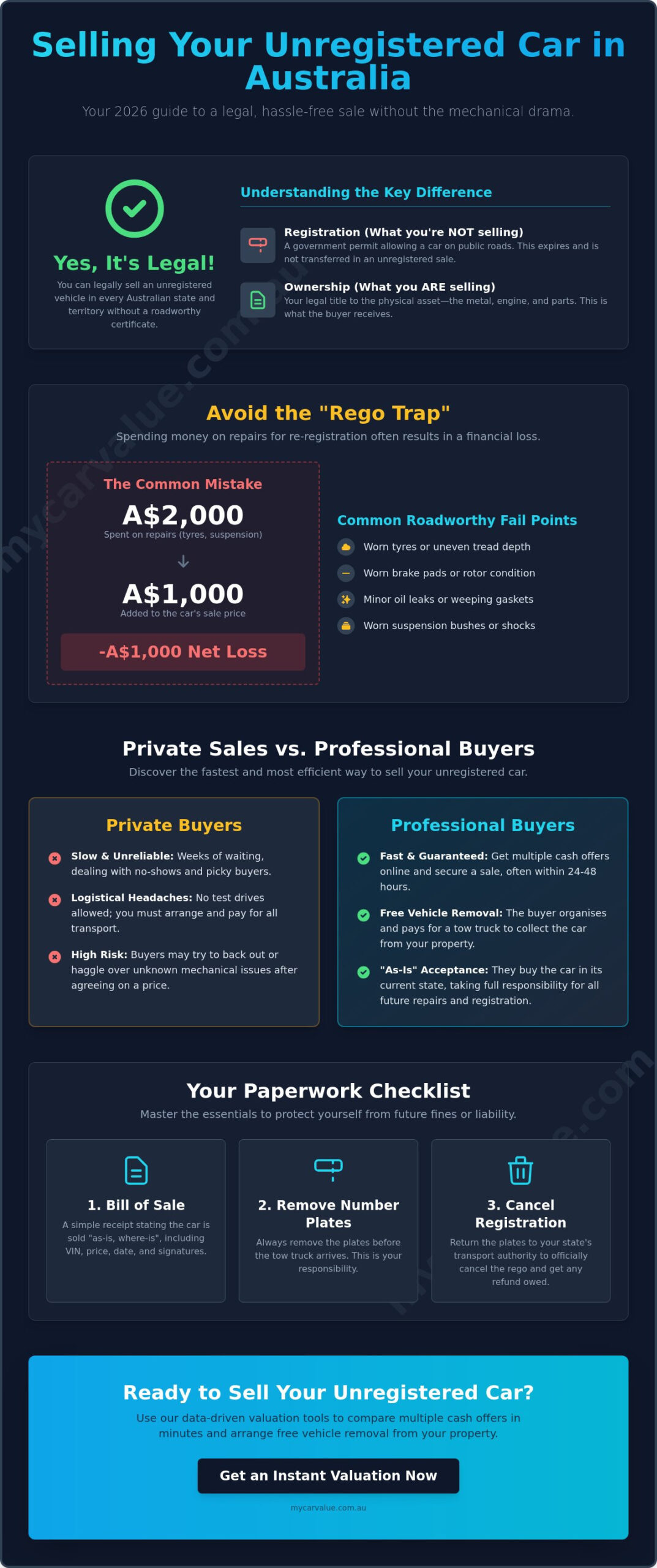
Yes, you can legally sell an unregistered vehicle in every Australian state and territory. Many owners worry that an expired rego makes their car unsellable, but that isn’t the case. You don’t need a current Roadworthy Certificate (RWC) or a Safety Certificate to complete the transaction. An unregistered sale is simply a transfer of ownership for a vehicle with lapsed or cancelled plates. This makes it an ideal option if you want to sell unregistered car Australia wide without the headache of mechanical inspections.
The primary restriction is logistical. Because the car isn’t registered, it cannot be driven on public roads. This includes test drives or moving the car to a buyer’s house. You’ll need to arrange for the vehicle to be towed or collected on a trailer. While this sounds like a hurdle, professional buyers often include free removal as part of their service, stripping away the complexity for you. It’s a straightforward process that focuses on the asset rather than the paperwork.
The “As-Is, Where-Is” Rule
When you sell a car “as-is,” the buyer agrees to take the vehicle in its current state. This means they assume all responsibility for future repairs, towing, and registration costs. It’s the most frictionless way to move a vehicle that’s seen better days. However, “as-is” doesn’t mean you can hide everything. You must still disclose major known faults, like a blown head gasket or significant structural damage, to remain transparent. For older, high-kilometre, or damaged cars, this method is the preferred strategy. It saves you from the “rego trap” of spending thousands on a car you’re about to get rid of anyway.
Registration vs. Ownership
It’s vital to understand the difference between the right to drive and the right to own. Registration is a government permit that allows a vehicle to use public infrastructure. Ownership, or title, is your legal right to the physical asset itself. You’re selling the metal, the engine, and the parts, not the permission to drive it home. Because the car lacks active Australian vehicle registration plates, the buyer cannot legally drive it. They’ll need to apply for an Unregistered Vehicle Permit (UVP) or use a trailer. Eventually, the new owner will likely need a “Blue Slip” or a similar comprehensive identity and safety inspection to get it back on the road. By choosing to sell unregistered car Australia sellers can bypass these hurdles and let the buyer handle the re-registration logistics.
The Hidden Costs of Re-Registering Before a Sale
Many sellers fall into the “rego trap.” They believe spending money to register the car will result in a higher profit. Often, the opposite is true. Mechanical repairs required for a roadworthy certificate can easily exceed the vehicle’s actual market value. Imagine spending A$2,000 on new tyres and suspension only to increase the sale price by A$1,000. You’ve effectively lost A$1,000 in the process. It’s a common mistake that turns a simple sale into a financial burden.
Logistics add another layer of expense. Since the car is unregistered, you cannot drive it to the mechanic for inspections. You’ll need to pay for a tow truck for every trip to the workshop. These costs eat into your potential return quickly. If your registration has already expired, it’s often a clear signal to skip the stress. You can sell unregistered car Australia wide to professional buyers who handle the heavy lifting for you. To see what your vehicle is worth in its current condition, you can get an instant car valuation online and compare your options.
The Roadworthy Certificate (RWC) Hurdle
Getting an RWC is rarely a simple “pass.” Mechanics check for specific safety issues that can be expensive to rectify. Common fail points include:
- Worn tyres or uneven tread depth
- Brake pad thickness and rotor condition
- Minor oil leaks or weeping gaskets
- Worn suspension bushes or leaking shock absorbers
RWCs also have a short shelf life. Most are only valid for 30 days. If you don’t find a buyer within that month, you’ll have to pay for a new inspection. Private buyers are often picky. They might demand a fresh certificate even if yours is still valid, adding more cost and frustration to your plate. Selling as-is removes this ticking clock entirely.
Interstate Sales and Plate Disposal
If you’re selling to a professional wrecker or a buyer from another state, you must manage your plates correctly. Remove the plates before the buyer takes the car. This allows you to cancel the registration officially and protects you from future fines or toll charges. You can often claim a pro-rata refund on any remaining CTP insurance or registration fees if the rego hasn’t fully lapsed. Return the plates to your local transport authority, such as VicRoads or Service NSW, to receive a receipt of disposal. This step ensures the car is no longer legally tied to your name, providing a clean break from the vehicle.
Private Sales vs. Professional Car Buyers
Choosing the right buyer determines how much effort you’ll put into the sale. Most private buyers on platforms like Facebook Marketplace or Gumtree search for “turn-key” vehicles. They want a car they can drive home immediately. When you list an unregistered vehicle, you’re targeting a very small pool of “project” seekers or hobbyists. These buyers often haggle aggressively. They use the lack of registration as a primary lever to drive your price down, citing the “unknown” risks of future repairs.
Professional buyers, such as wreckers and recyclers, operate differently. They specialise in purchasing vehicles in any condition, regardless of their registration status. They don’t need a roadworthy certificate because they aren’t looking for a daily driver. Instead, they value the car for its parts, metal, or resale potential within the industry. While a private listing can linger for weeks with no serious enquiries, a professional buy-out typically concludes within 24 to 48 hours. It’s the difference between a long-term project and an immediate result.
Logistics often kill private deals. A private buyer must figure out how to get the car from your driveway to their home. This involves hiring a tow truck or applying for a temporary permit. Professional networks remove this friction entirely. Towing is typically included for free as part of the service. You don’t have to coordinate anything or pay out of pocket. You simply accept the offer and wait for the truck to arrive. This efficiency makes it the smartest way to sell unregistered car Australia wide.
Why Private Buyers Avoid Unregistered Cars
Trust is the biggest barrier in the private market. Without active registration, a buyer cannot legally test drive the vehicle on public roads. This makes them nervous. They fear “hidden” mechanical issues that a standard roadworthy inspection would otherwise uncover. Even if the car runs perfectly, the logistical nightmare of organising their own transport often turns them away. Most people don’t want the stress of managing a tow truck for a car they haven’t even driven yet. This uncertainty leads to endless questions and very few firm offers.
The Advantages of a Professional Comparison Service
You don’t have to call every wrecker in the city to find a good deal. Modern platforms like My Car Value simplify the process by acting as a data-driven bridge. Our car buyer comparison service connects you with multiple professional offers simultaneously. You receive instant valuations based on real-time scrap and used market data. This eliminates the need for “tyre-kickers” or time-wasters visiting your home. You remain in control of the process, choosing the best offer from a vetted network. It’s a frictionless way to sell unregistered car Australia and ensures you get a fair cash price without the traditional obstacles of the secondary market.
Paperwork Checklist for an Unregistered Sale
Selling a car without registration doesn’t mean you should skip the paperwork. In fact, a clear paper trail is more important than ever. It acts as your primary defence against future legal or financial liabilities. Once the vehicle leaves your driveway, you need proof that you’re no longer responsible for its use, storage, or disposal. Failing to document the transfer can lead to unexpected headaches, even if the car is destined for a wrecking yard. To sell unregistered car Australia safely, you must treat the transaction with the same level of detail as a standard registered sale.
The core of your documentation is the Bill of Sale. This is a simple contract that clearly states the vehicle is “sold unregistered and as-is.” By including this phrase, you confirm that the buyer acknowledges the lack of a roadworthy certificate and accepts the car’s current condition. Before you finalise the deal, always verify the buyer’s identity. Ask to see their driver’s licence and record their full name and address. You should also double-check the Vehicle Identification Number (VIN) against the car’s chassis. Ensuring the numbers match prevents any identity disputes later on.
What to Include in Your Receipt
A comprehensive receipt protects both parties. It doesn’t need to be complex, but it must be accurate. Ensure your document contains the following details:
- Full names, addresses, and signatures of both the buyer and the seller.
- The exact time and date of the physical handover.
- The vehicle’s make, model, year, and VIN.
- The agreed sale price and payment method.
- A clear statement that the car has no registration and no number plates.
This document serves as your evidence if the buyer later claims the car was misrepresented. Before you commit to a buyer, compare professional car offers to ensure you’re starting the paperwork with the best possible price in hand.
Notifying the Transport Authority
Your job isn’t finished when the car is towed away. You must notify your state’s transport authority, such as Service NSW, VicRoads, or TMR Queensland. This is usually done through a “Notice of Disposal” or a “Transfer of Registration” form. Even though the car is unregistered, the government needs to know it has changed hands. This step is critical. If the car is later dumped, involved in an accident, or used in a crime, the VIN will still lead back to you. Submitting the disposal notice immediately stops you from receiving fines or being held liable for the new owner’s actions. It provides the clean break you need to move on from the vehicle with total peace of mind.
Get an Instant Valuation for Your Unregistered Car
Stop guessing what your car is worth. Many owners leave money on the table because they don’t have access to real-time market data. When you want to sell unregistered car Australia wide, you need more than a rough estimate. You need concrete offers. Our platform strips away the mystery. We provide data-driven insights tailored to your vehicle’s specific state. Whether your rego expired yesterday or three years ago, we provide the clarity required to make an informed decision. You stay in control of the process from start to finish.
The My Car Value platform simplifies the entire journey. Instead of chasing individual wreckers or recyclers, you receive up to five cash offers through our car buyer comparison service. There is no obligation to sell. You simply get a clear picture of your car’s current market value. If the offers don’t meet your expectations, you haven’t lost anything. If they do, you’ve just saved yourself days of manual searching. Free removal and towing are standard features of our partner buyer network. This ensures the price you’re quoted isn’t eaten away by transport fees.
How the My Car Value Tool Works
Starting the process is straightforward. Enter your vehicle’s make, model, and year into our instant car valuation tool. Accuracy is key at this stage. Be honest about the condition of the car. We specialise in connecting sellers of all vehicle types. This means accident damage, high kilometres, or even a blown engine won’t stop a sale. Our system analyses real-time scrap and used market data to match you with reputable buyers across Australia instantly. You compare the market from your couch. This avoids the legal risk of driving an unregistered car to multiple yards for quotes.
Finalising Your Sale with Confidence
Once you have your offers, the power is in your hands. Choose the buyer that provides the best combination of price and convenience. You aren’t just looking for the highest number. You’re looking for the most frictionless experience. After selecting a buyer, organise a pick-up time that suits your schedule. Our partners are experts at handling the logistics of unregistered vehicles. They arrive with the necessary equipment to safely remove the car from your property. Get paid on the spot and hand over the keys. It’s a hassle-free conclusion to what used to be a complicated problem. You can sell unregistered car Australia wide today and turn that stationary asset into cash without the stress.
Turn Your Unregistered Car into Cash Today
You now have the full picture of the 2026 Australian market. Selling “as-is” isn’t just a legal option; it’s often the smartest financial move. By avoiding the rego trap and skipping expensive mechanical repairs, you protect your profit margins. Remember to always finalise your Notice of Disposal to ensure a clean break from the vehicle’s future liabilities. This ensures you aren’t held responsible for the car once it leaves your property.
When you choose to sell unregistered car Australia wide through a professional network, you eliminate the friction of transport and picky private buyers. You don’t need to worry about towing costs or roadworthy certificates. It’s a direct path from a stationary asset to a fair cash payment.
Get an instant valuation for your unregistered car today. Our platform provides access to five or more cash offers instantly, all based on real-time market data. We also arrange free national towing and removal to make the process as seamless as possible. Take control of your driveway and get a fair price for your car right now. It’s time to let the professionals handle the heavy lifting while you enjoy the results.
Frequently Asked Questions
Can I drive an unregistered car to the buyer’s house?
No, you cannot legally drive an unregistered vehicle on public roads to a buyer’s location. Doing so in states like Victoria can result in fines exceeding A$800. You must arrange for a tow truck, use a trailer, or obtain a temporary movement permit from your state transport authority. These permits are strictly for specific journeys and usually require a valid safety inspection or a declaration of roadworthiness.
Do I need a roadworthy certificate to sell a car without rego?
You do not need a roadworthy certificate to sell a vehicle once the registration has lapsed. Selling “as-is” is a legal and common practice that allows you to transfer ownership without performing mechanical repairs. This is the fastest way to sell unregistered car Australia wide if you want to avoid the “rego trap” of spending more on repairs than the car is actually worth.
What happens to my insurance when I sell an unregistered car?
Your Compulsory Third Party (CTP) insurance ends automatically when the registration is cancelled or expires. You are responsible for manually cancelling any comprehensive or third-party property insurance policies you have with private providers. Contact your insurer immediately after the sale to stop future premiums and check if you are eligible for a pro-rata refund on any unused portion of your policy.
How much does it cost to get an unregistered vehicle permit?
Unregistered Vehicle Permit (UVP) fees vary by state and are current as of June 2026. In New South Wales, a permit costs A$26 including CTP insurance. Queensland charges A$38.90 per day plus the cost of insurance. In the ACT, a day permit for a private car is A$44.60. Always verify the exact cost with your local transport office as these fees can change annually based on state budget adjustments.
Can I sell a car that has been unregistered for several years?
Yes, you can sell a car regardless of how long it has been unregistered. The length of time the car has been off the road does not affect your legal right to sell it as a physical asset. Many professional buyers specialise in these “barn finds” or long-term stationary vehicles, purchasing them for their metal value or spare parts even if they are no longer in running condition.
Who is responsible for towing the car after the sale?
Towing responsibility is usually a matter of negotiation between the buyer and the seller. If you sell to a private buyer, they must typically organise and pay for their own transport. However, when you sell unregistered car Australia wide through a professional buyer network, free removal and towing are standard features. This removes the logistical burden and ensures the car is moved safely and legally.
Do I need to return the number plates to the rego office?
You should return your number plates to the local transport authority to officially cancel the registration and clear your liability. This prevents the plates from being misused and ensures you aren’t hit with fines or tolls incurred by the new owner. In states like South Australia, returning the plates is a key step in the disposal process, and new plates cost approximately A$34 if the car is ever re-registered.
Can I sell an unregistered car if it was a statutory write-off?
You can sell a statutory write-off unregistered, but it can only be sold for parts or scrap metal. These vehicles are legally prohibited from ever being re-registered in Australia. It is vital to disclose this status clearly on your Bill of Sale. This transparency protects you from legal claims and ensures the buyer understands the vehicle can never return to public roads.