

How to Lodge a Notice of Disposal: The Complete Australian Guide
Handing over the keys to your car is only half the sale. The most critical step happens after the buyer drives away. You’ve likely heard horror stories of former owners receiving a stack of speeding fines or toll invoices because they didn’t lodge a notice of disposal immediately. It’s a frustrating and stressful situation that can take weeks to resolve with state transport authorities while you try to prove the car is no longer yours.
You can avoid this legal headache entirely by following the correct process for your specific state. This guide provides the exact steps to protect yourself from fines and legal liability immediately after a sale. We’ll show you how to navigate state-specific requirements, what details you must collect from the buyer, and how to get instant confirmation that you’re no longer the registered operator. Use this clear checklist to ensure a seamless transition so you can focus on your next vehicle purchase with total peace of mind.
Key Takeaways
- Protect yourself from legal liability by understanding why a notice of disposal is your only shield against the buyer’s speeding fines and toll charges.
- Use our checklist to gather essential buyer information, including their full name, current address, and Australian driver licence number.
- Navigate state-specific portals like MyServiceNSW or mySAGOV to lodge your notification online and receive instant confirmation of the transfer.
- Learn how to avoid the “toll road trap” by ensuring your e-tag and registration details are updated immediately after the vehicle changes hands.
- Complete your post-sale checklist by securing your transaction receipt and managing your car insurance policy for a clean break.
What is a Notice of Disposal and Why is it Essential?
Selling a car involves more than just a handshake and a bank transfer. A notice of disposal is the formal notification you provide to your state’s transport authority. It acts as a legal declaration that you are no longer the person in charge of the vehicle. This document officially records the date and time the vehicle changed hands, providing a clear boundary for your legal obligations. Without it, the government still views you as the person responsible for the car’s presence on the road.
The seller is legally responsible for lodging this notice. It is a common misconception that the buyer handles the entire process. Until the transport authority receives your notification, you remain the default recipient for all liabilities linked to the vehicle. This includes speeding fines, red-light camera infringements, and parking tickets. If the new owner drives through a toll point without a tag, the invoice will land in your letterbox unless the disposal is on record. This process is central to the system of motor vehicle registration in Australia, ensuring that the government database accurately reflects who is currently operating the vehicle on public roads.
The Legal Difference Between Disposal and Transfer
It helps to understand that disposal and transfer are two sides of the same coin. The seller disposes of the vehicle, while the buyer transfers the registration. These are separate legal actions. Lodging your notice doesn’t automatically complete the buyer’s side of the deal, but it does update your status as the registered operator. It effectively severs the contract between you and the transport department regarding that specific vehicle.
You should never rely on the buyer to lodge their paperwork. Some buyers delay the transfer to avoid immediate costs like stamp duty or administrative fees. If they fail to lodge the transfer and you haven’t notified the authority of the sale, you stay legally tied to the car. Your notice of disposal is your only guaranteed protection against their future driving behaviour. It ensures that any incidents occurring after the sale date are attributed to the correct person.
When Exactly Should You Lodge Your NOD?
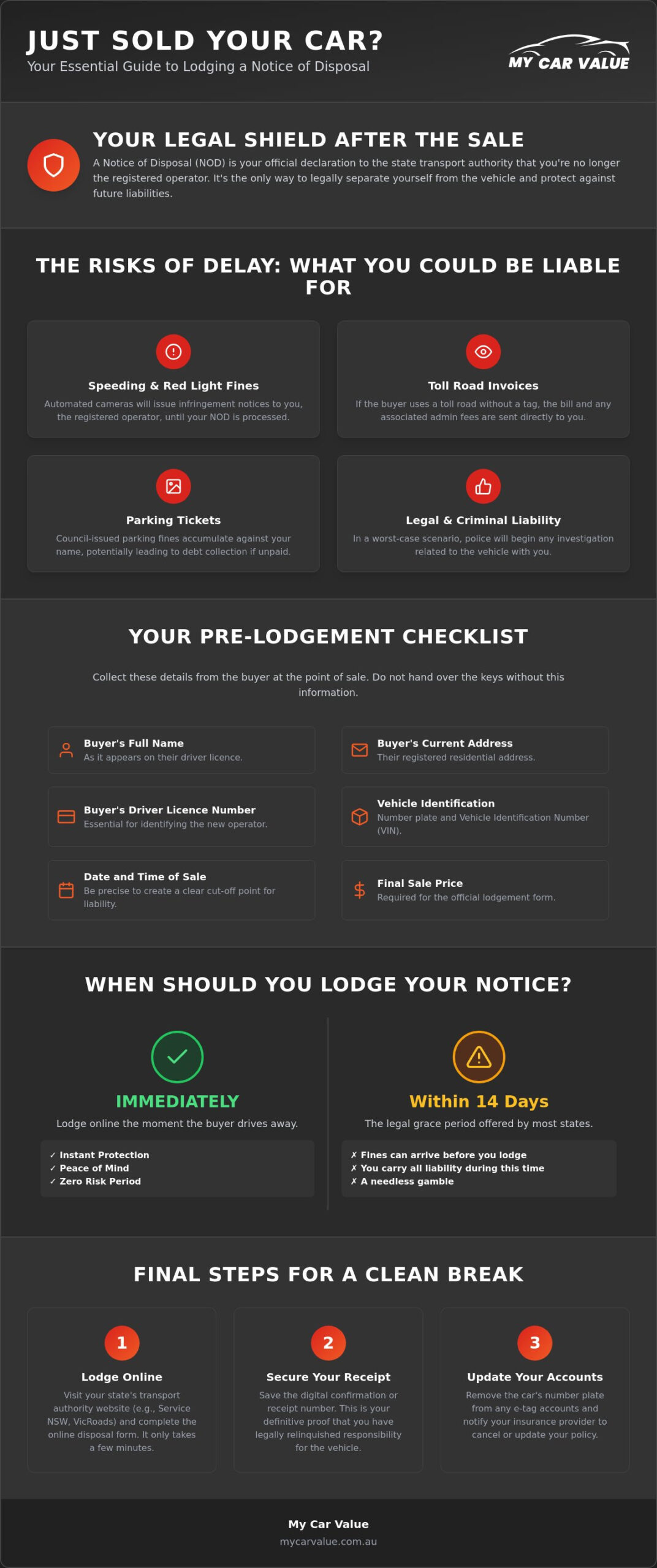
Lodge your notice the moment the buyer drives away. While most Australian states offer a 14-day window to submit the form, waiting is a gamble you don’t need to take. If the buyer is involved in an accident or caught speeding an hour after the sale, you want that disposal record already in the system. Most states now offer online portals that provide instant confirmation, making the process take only a few minutes.
If you choose to work with professional used car buyers, they generally streamline this process. They understand the importance of immediate lodgement and can guide you through the required details to ensure a clean break from the vehicle. Prompt action ensures you can move on to your next car without the shadow of the old one’s fines hanging over you. It is the final, essential step in a successful car sale.
The Risks of Failing to Lodge a Notice of Disposal
Neglecting to lodge your notice of disposal creates a legal vacuum where you remain responsible for a vehicle you no longer control. Automated enforcement systems, such as speed and red-light cameras, rely entirely on the transport authority’s database. If the buyer is caught speeding through a school zone or running a red light, the infringement notice is automatically generated in your name. You then face the burden of proving you weren’t behind the wheel, a process that is far more time-consuming than the initial lodgement.
This risk extends beyond simple fines. If the vehicle is involved in a serious accident or used in a crime, the police will start their investigation at your front door. Without a formal record of sale, your legal standing is compromised. It’s also possible for a missing disposal record to affect your insurance. If you attempt to make a claim on a new policy while still being the registered operator of a “phantom” vehicle, it can lead to complications during the underwriting process or future claims assessments.
Receiving Fines and Tolls for a Car You Don’t Own
The “toll road trap” is a common issue for former owners. If your e-tag or account remains linked to the vehicle’s number plate, you will continue to be billed for every trip the new owner takes. While you can eventually dispute these charges, toll providers often charge administrative fees to reverse or transfer an invoice. Parking fines are even more problematic. Councils often issue these directly to the registered operator, and they can accumulate for weeks before you even realise there is a problem. You can Submit a notice of disposal online to sever this link immediately and ensure you aren’t paying for someone else’s commute.
Impact on Your Driver Licence and Demerit Points
Demerit points are initially assigned to the person listed on the registration papers. If a buyer commits a high-range speeding offence, you could receive a notice of licence suspension before you’ve even had a chance to explain the sale. Clearing your name requires a formal statutory declaration, which must be witnessed by a Justice of the Peace or a solicitor. This is a stressful legal hurdle that can be avoided with a three-minute online update. Maintaining a clean driving record is also financially beneficial. A history of unresolved infringements can negatively impact your insurance premiums or your ability to secure a good trade-in price when you upgrade. To avoid these risks and ensure a professional handover, you might choose to sell your car to a reputable buyer who manages the disposal process correctly.
Preparation: Information You Need Before You Start
Efficiency is key when dealing with government portals. Before you begin the process, gather all necessary documentation to avoid session timeouts or errors. You cannot complete a notice of disposal with incomplete records. Ensure you have the buyer’s full name, their current residential address, and their Australian driver licence number ready. If the buyer is a car dealership, you will need their organisation’s name and ABN instead.
You must also provide specific vehicle data to verify the transaction. Have your registration plate number and the exact date the sale was finalised on hand. Transport authorities require a secondary identifier to confirm the vehicle’s identity. This is almost always the automobile VIN number. Providing this 17-character sequence ensures the system matches the correct vehicle to your records, preventing administrative errors or fraudulent submissions. Keep a copy of the bill of sale nearby, as it contains all these details in one place.
Finding and Verifying the Automobile VIN Number
The automobile VIN number is the unique global identifier used by transport authorities to track vehicle history. This 17-character “fingerprint” is essential for modern vehicle transactions. If you do not have your registration papers, you can find the VIN in several physical locations on the car. Check these common spots:
- The base of the passenger-side windscreen, visible from the outside.
- The inner leaf of the driver’s side door pillar.
- The firewall or suspension tower inside the engine bay.
- The build plate located under the bonnet.
Ensure you transcribe the characters exactly. The system will reject the notice of disposal if the VIN does not match the registration plate in the state database. This secondary check is a security measure designed to protect sellers from unauthorised changes to their vehicle’s status. If you want to understand exactly what each character in that sequence means, our guide to VIN digits explained for Australian vehicles walks you through how to decode your car’s unique identifier with confidence.
Calculating Sale Price vs. Market Value
State authorities require both the sale price and the estimated market value. This information is used to calculate the stamp duty, which the buyer is responsible for paying. Generally, the government applies the duty to whichever figure is higher. This prevents people from under-reporting the sale price to avoid taxes.
Don’t guess these figures. Providing an unrealistic market value can trigger an audit or delay the transfer process for the buyer. If you are unsure of what your car is currently worth in the Australian market, use a vehicle market value calculator to get an accurate estimate. Having a data-backed figure ensures your lodgement is transparent and professional. It also provides the buyer with a clear expectation of their upcoming transfer costs.
How to Lodge Your Notice of Disposal Online
Lodging your notice of disposal online is the most efficient way to sever your legal connection to a vehicle. Most Australian transport authorities have digitised this process, allowing you to complete the notification in under five minutes. This method provides an immediate digital audit trail that protects you from the moment the buyer drives away. Follow these five steps to ensure your records are updated correctly:
- Gather your documents: Have your Australian driver licence and the buyer’s details, including their full name, address, and licence number, ready.
- Log in to the portal: Access your state’s transport authority website, such as MyServiceNSW, myVicRoads, or mySAGOV, using your verified account.
- Identify the vehicle: Enter the registration plate number and the automobile VIN number to confirm the car’s identity in the state database.
- Input transaction data: Provide the final sale price and the exact date the buyer took possession of the vehicle.
- Review and submit: Double-check all entries for accuracy and submit the form. Always download and save the transaction receipt or confirmation number for your records.
State-by-State Authority Directory
Each state and territory manages its own registration database. You must lodge the notice with the authority where the car is currently registered, regardless of where the buyer lives. The primary authorities include:
- NSW: Service NSW (Transport for NSW)
- VIC: VicRoads
- QLD: Department of Transport and Main Roads (TMR)
- WA: Department of Transport (DoT)
- SA: Service SA
- TAS: Transport Tasmania
- ACT: Access Canberra
- NT: Motor Vehicle Registry (MVR)
Most of these agencies now offer dedicated mobile apps that streamline lodgement even further. For example, the Service NSW app allows you to lodge a disposal by scanning the buyer’s licence directly. If you are selling to an interstate buyer, you still lodge the notice with your home state authority to close your record. If you prefer a faster, guaranteed sale without the administrative burden, you can sell your car to professional buyers who manage the entire transition on your behalf.
What to Do if You Can’t Lodge Online
If you don’t have a digital account or the online system cannot verify your vehicle details, you must use a paper-based alternative. Most registration certificates have a disposal section on the reverse side. Complete this with the buyer and ensure both parties sign the document. You can then post the form to the address listed on the certificate or visit a service centre in person.
Be aware that manual processing is significantly slower than digital lodgement. While online updates are processed instantly, paper forms can take 5 to 10 business days to reflect in the system. During this period, keep a clear photo or photocopy of the signed form. This document is your only evidence of the sale date if an infringement notice arrives before the paperwork is finalised.
After Lodging: Final Steps for a Clean Break
Completing your notice of disposal is a major milestone, but your responsibilities don’t end the moment you hit submit. You must secure your transaction receipt or confirmation number immediately. This digital record is your primary evidence if the state’s database fails to update or if a fine is issued in error. Save a PDF copy or print the confirmation screen. Without this number, you may struggle to prove the exact time and date the legal responsibility shifted to the buyer.
Contact your insurance provider as soon as the car leaves your driveway. Most Australian insurers allow you to cancel your policy over the phone or via their mobile app. You can often claim a pro-rata refund for the remaining months of your premium. Alternatively, you can transfer the existing policy to your new vehicle, which often saves you the administrative fees associated with starting a fresh contract. Keeping your paperwork organised is vital. Store the original bill of sale and a copy of the notice of disposal for at least five years. This timeframe aligns with most state record-keeping requirements and protects you during future tax audits or ownership disputes.
Managing Your E-Tags and Toll Accounts
A common mistake is assuming the transport authority shares data with toll providers like Linkt or E-Toll. They don’t. Your notice of disposal will not stop toll charges if the vehicle’s number plate is still linked to your account. Log in to your toll portal and follow these steps:
- Remove the sold vehicle’s registration from your account list.
- Check for any “unmatched” trips that may have occurred during the handover.
- Physically remove the e-tag from the windscreen before the buyer drives away.
- Update your account with the registration of your replacement vehicle.
If you discover charges on your account after the sale, contact the toll provider immediately. Most will reverse the charges if you provide your disposal receipt as proof that you were no longer the registered operator at the time of the trip.
Preparing for Your Next Vehicle
Closing out a sale correctly sets the foundation for your next purchase. A clean administrative history makes it much easier to sell my car in the future. You establish yourself as a reliable seller who maintains accurate records. Before you commit to a new car, ensure you have a clear understanding of your current financial position. Get an accurate valuation to determine exactly how much equity you have for your next deposit. If you want to avoid the administrative burden altogether, working with professional used car buyers offers a stress-free alternative. They handle the disposal paperwork and ensure a fast, transparent transition, allowing you to focus on finding your next vehicle without the paperwork headache.
Secure Your Sale and Move Forward
You now have the tools to finalise your car sale with confidence. Lodging a notice of disposal is the single most important step to safeguard your driving record and bank account from someone else’s mistakes. By gathering the buyer’s details and using your state’s digital portal immediately, you eliminate the risk of unexpected fines or toll invoices. This simple action ensures that the legal responsibility for the vehicle shifts the moment the keys change hands.
A successful sale starts with the right preparation and accurate data. Our streamlined digital process connects you with a network of professional Australian used car buyers and uses real-time market data to provide precise figures. Get an accurate market valuation before you sell with My Car Value to ensure you’re making an informed decision from the start. Taking control of the paperwork ensures a clean break and a faster transition to your next vehicle. You’ve done the hard work of finding a buyer; now finish the job properly and enjoy the road ahead.
Frequently Asked Questions
Is there a fee to lodge a Notice of Disposal in Australia?
There is no fee to lodge a notice of disposal in any Australian state or territory. Government transport authorities provide this service for free to ensure their databases remain accurate. While the buyer is responsible for paying transfer fees and stamp duty, the seller’s notification process is entirely cost-free across the country.
What happens if I don’t have the buyer’s driver licence number?
You will likely be unable to complete the process through an online portal without the buyer’s driver licence number. Most digital systems require this identifier to verify the new operator’s identity instantly. If you didn’t collect this information, you may need to submit a paper form via post or visit a service centre in person with the buyer’s full name and residential address.
Can I lodge a Notice of Disposal if I’ve lost my registration papers?
Yes, you can still lodge your notice even if your physical registration papers are missing. Online lodgement systems primarily rely on your own driver licence details and the vehicle’s registration plate or VIN to identify the car. As long as you can verify your identity and provide the car’s specifics, the original paperwork is not a requirement for the digital update.
Does a Notice of Disposal transfer the car’s insurance to the new owner?
No, the notice of disposal only updates the government’s registration records. It does not affect your private insurance policy. You must contact your insurance provider separately to cancel your coverage or transfer it to a replacement vehicle. If you don’t do this, you might continue to pay premiums for a car you no longer own.
What should I do if I receive a fine after I’ve lodged my disposal notice?
You should nominate the new owner by providing the transport authority with your disposal confirmation receipt. If an infringement notice arrives after you’ve notified the government, it usually means the fine was issued before the system fully updated. Providing your transaction number or a copy of the signed disposal form will redirect the fine to the correct person.
How do I find the automobile VIN number if the car is already gone?
Check your old insurance renewal notices, service logbooks, or previous registration certificates for the 17-character VIN. These documents are the most reliable way to find the number after the vehicle has been handed over. If you previously conducted a PPSR search or have a digital car history report, the VIN will be recorded in those files as well. For a full breakdown of what each position in that sequence represents, see our complete guide to decoding VIN digits on Australian vehicles.
Is a Notice of Disposal the same as a Bill of Sale?
No, these documents serve different purposes. A Bill of Sale is a private receipt between the buyer and seller that proves a financial transaction took place. A notice of disposal is an official government notification that tells the transport authority you are no longer the registered operator. You need both to ensure a clean and legally sound car sale.
Can I lodge an NOD if I sold the car to a licensed motor dealer?
Yes, you can and should lodge a notice when selling to a dealer. When completing the form online, the system will prompt you for the dealer’s organisation name and their Australian Business Number (ABN) instead of a personal driver licence. This ensures the vehicle is correctly recorded as dealer stock and removes your liability while the car is on their lot.