
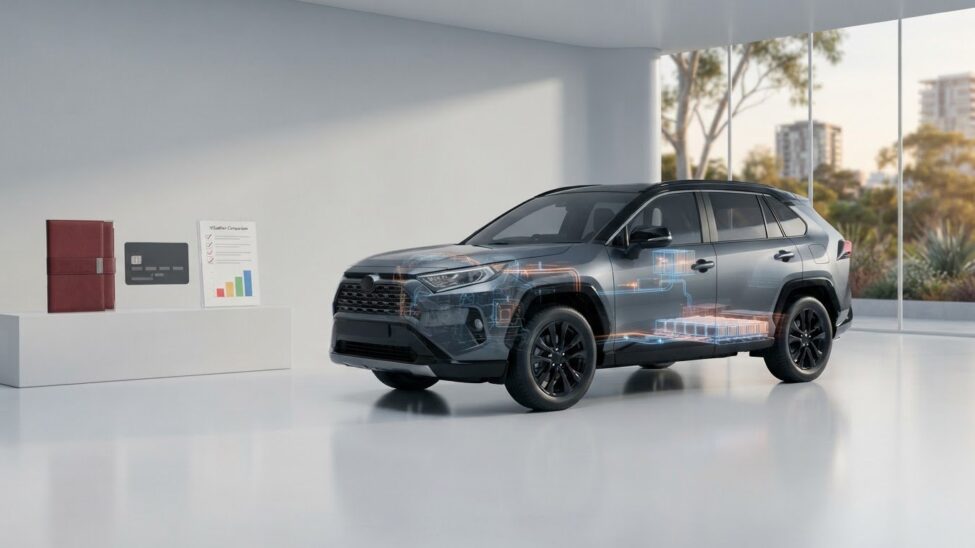
Hybrid Car Valuation Guide: Understand Your Hybrid’s Value in 2026
Could two hybrids with similar age and kilometres receive very different offers because they use different technology? A conventional hybrid, plug-in hybrid (PHEV) and mild hybrid have different systems, so the exact variant, condition and available service records can all affect how buyers assess them. This hybrid car valuation guide explains what to check before comparing estimates and offers.
An online estimate is a useful starting point, but it is not the same as a buyer’s offer. The vehicle’s identity, odometer reading, condition and the information supplied can all affect an assessment. To understand why figures differ, compare them using consistent vehicle details and condition notes.
Here, you’ll learn how hybrid type can shape a valuation, which battery and maintenance records to gather, and how to compare estimates with buyer offers. You’ll also find out what to prepare, including your vehicle’s VIN. My Car Value provides a free online valuation and displays the top 5 cash offers from competing third-party buyers. There is no pressure to accept an offer.
Key Takeaways
- Identifying your exact drivetrain and variant helps you compare your hybrid with relevant vehicles.
- Separate documented service and battery information from assumptions. Battery condition is one part of the vehicle’s overall assessment.
- Compare estimates using the same vehicle details, condition information and date. Look for similar cars with the same year, variant and kilometres.
- Gather your VIN and service records, and describe known faults or damage accurately before requesting offers.
- The My Car Value form takes less than 2 minutes. Most sellers receive the top 5 offers within minutes, and the team responds within 24 hours.
Hybrid car valuation guide: identify your hybrid type before estimating value
A hybrid car valuation is an estimate based on the vehicle’s identity, condition and relevant market comparisons. It helps you understand what your car may be worth, but it is not a guaranteed sale price. The word “hybrid” alone is not enough to identify suitable comparisons.
Hybrid covers several drivetrain types. Conventional hybrids, plug-in hybrids and mild hybrids use electric power differently. Compare your car with vehicles that share its specific technology, rather than with any model described as a hybrid. The overview of types of hybrid vehicles provides useful background. For your car’s exact classification, check its vehicle documentation.
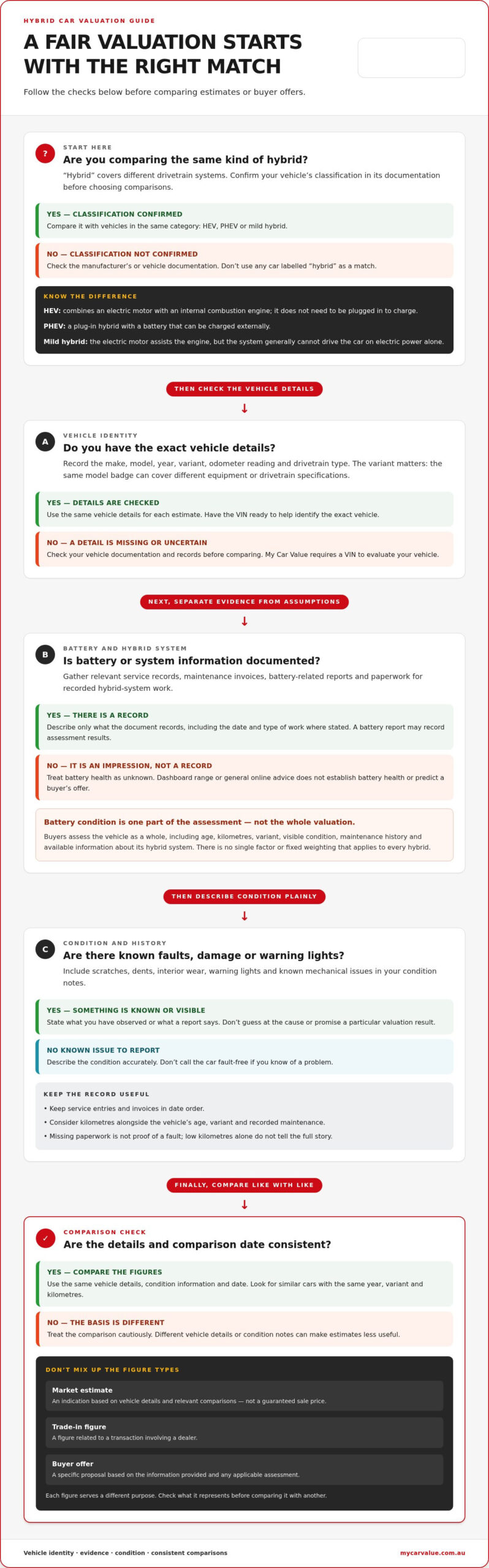
Keep estimates, trade-in figures and individual buyer offers distinct. A market estimate is an indication based on vehicle details and comparisons. A trade-in figure relates to a transaction involving a dealer, while a buyer offer is a specific proposal based on the information provided and any applicable assessment. These figures serve different purposes, so check what each represents before comparing them.
HEV, PHEV and mild hybrid: which type are you valuing?
An HEV, or conventional hybrid, combines an electric motor with an internal combustion engine and does not need to be plugged in to charge. A PHEV is a plug-in hybrid with a battery that can be charged externally. A mild hybrid is a separate category: its electric motor assists the engine, but the system generally cannot drive the car on electric power alone. Check the manufacturer’s documentation to confirm your vehicle’s classification.
HEV, PHEV and mild hybrid describe different drivetrain systems. Use comparisons from the same category when assessing your vehicle’s value.
Record the details that identify your hybrid accurately
Before comparing estimates, note the make, model, year, variant, odometer reading and drivetrain type. The variant matters because cars with the same model badge can have different equipment or drivetrain specifications depending on their year and version. An incorrect match can make a comparison less useful.
Use the vehicle identification number (VIN) to identify the exact vehicle and check it against your records. My Car Value requires a VIN to evaluate your vehicle, so have it ready when you provide your details.
- Check the drivetrain type in the vehicle’s documentation.
- Record the year, variant and current odometer reading.
- Use the VIN to help identify the exact vehicle.
Getting the vehicle identity right is the first step in this hybrid car valuation guide. Once you have confirmed the details, you can compare like with like and interpret the figures more clearly.
What affects hybrid car valuation? Battery evidence, condition and records
A hybrid’s value is not determined by its battery alone. Buyers assess the vehicle as a whole, including its age, odometer reading, variant, visible condition, maintenance history and the information available about its hybrid system. Comparisons also need to reflect the correct drivetrain and specification. There is no single factor or fixed weighting that applies to every hybrid.
Separate confirmed information from assumptions. A dated service invoice can document maintenance or a repair. A battery report may record the results of an assessment. A dashboard display or general advice online does not establish the battery’s health or predict what a buyer will offer. Keep relevant evidence together so you can describe the car’s history accurately.
How to present hybrid battery and system information
Gather the service book, maintenance invoices, battery-related reports and paperwork for any recorded work on the hybrid system. An overview of hybrid vehicle components and levels can provide general background. Use your own vehicle records to describe its specific history.
- Describe battery or system work only when it is documented, including the date and the type of work recorded.
- Do not diagnose battery health from dashboard range or general online advice. Treat an unverified impression as unknown, not as a test result.
- If a warning light is on or you know of a fault, state what you have observed or what a report says. Do not guess at the cause or promise a particular valuation result.
Clear maintenance evidence helps a buyer assess the vehicle, but it does not guarantee a higher offer. A complete record provides context; it does not replace an assessment of the car’s overall condition.
Why service history, kilometres and condition still matter
Consider the odometer reading alongside the vehicle’s age, variant and recorded maintenance. A low kilometre reading alone does not tell the full story if the service record is incomplete. Similarly, higher kilometres do not show how consistently the vehicle has been maintained. A car service history check can help you organise documents and identify gaps, but missing paperwork is not proof of a fault.
Describe the vehicle’s condition plainly. Note scratches, dents, interior wear, warning lights and known mechanical issues. Do not describe the car as fault-free if you know of a problem. Consistent details make comparisons more useful and reduce the chance that an estimate relies on assumptions that do not match the vehicle.
- Keep service entries and invoices in date order.
- Record the odometer reading and known faults accurately.
- Compare vehicles with similar age, variant, kilometres and disclosed condition.
Once your information is organised, use My Car Value’s online valuation to review valuation information and offers from third-party buyers. You choose whether to contact a buyer or proceed with an offer.
Compare hybrid valuations fairly: estimates, similar cars and buyer offers
Put each figure in context before deciding what it tells you. An online estimate, a vehicle listing and a buyer’s offer are different things: an estimate indicates value, an advertised price is what a seller is asking, and an offer is a buyer’s proposal for your car. None guarantees the final amount from a sale.
Use the same vehicle details for each comparison. Match the drivetrain category first, then check the year, variant, kilometres, features and disclosed condition. A plug-in hybrid should not be compared with a conventional hybrid just because both have the same model badge. Differences in specification or known faults can also make two otherwise similar examples poor matches.
Choose genuinely comparable hybrid vehicles
Look for reference vehicles with the same hybrid type and as close a match as possible on year, variant and odometer reading. Note differences in equipment, battery or system information, and described condition instead of treating the vehicles as identical. Online listings can show what sellers are asking, but an asking price does not confirm what a buyer ultimately paid.
For wider context on what estimate tools can and cannot show, refer to your vehicle market value calculator guide. Treat the result as one reference point, then compare it with suitably matched vehicles and specific buyer offers.
Read an estimate alongside real buyer offers
Record the source and date for each figure, along with the vehicle details and condition information used. Estimates can differ because their inputs, comparison data or methods differ. If an offer is based on incomplete or inaccurate details, it may not be a fair comparison with one based on a full description.
Use a simple worksheet to keep the information consistent:
| Estimate or offer source | Vehicle details used | Condition assumptions | Date received |
|---|---|---|---|
| Online estimate | Record drivetrain, year, variant and kilometres | Note what was entered or assumed | Add the date |
| Comparable listing | Record the same details and any differences | Note the seller’s description | Add the date viewed |
| Buyer offer | Record the details provided to the buyer | Note any stated conditions or assessment steps | Add the date received |
Compare the rows, not just the figures. If an estimate assumes excellent condition while an offer reflects disclosed damage, the difference may relate to the information each used. Keep the details and dates beside each result so you can review the comparison if the vehicle’s condition or information changes.
Multiple offers can show how different buyers assess the same vehicle, but they do not promise a particular result. My Car Value displays the top 5 cash offers from competing third-party car-buying companies. You can compare them without an obligation to proceed, then contact the buyer you choose directly.
Prepare your hybrid for valuation: a practical information checklist
Preparing your details makes it easier to request a valuation and compare results on a like-for-like basis. Work through this checklist first, and keep facts you can support separate from anything you are unsure about.
- Identify the vehicle. Find the VIN and confirm the make, model, year, variant and drivetrain type from the vehicle’s records. Note the current odometer reading. Do not rely on the badge alone to identify the exact specification. My Car Value requires a VIN to evaluate your vehicle.
- Gather supporting records. Set aside the service book, invoices and any available battery or hybrid-system reports. Use these documents to describe recorded maintenance or repairs. Do not infer battery condition from a dashboard display or general advice online.
- Describe its condition accurately. Note visible damage, interior wear, warning lights, known faults and any gaps in the service history. If a valuation request asks for photographs, use clear images that show the vehicle’s current condition. Keep descriptions consistent across requests.
- Compare the results. Record the source and date of each estimate or offer, along with the vehicle details and condition information provided. If two figures differ, check whether they were based on the same variant, kilometres and disclosures before drawing a conclusion.
Keep the details factual
Be specific without guessing. For example, describe a warning light on the dashboard rather than naming a fault that has not been diagnosed. If you have an invoice for work on the hybrid system, refer to what it says. If you do not have a battery report, do not present an assumption as a confirmed battery assessment.
Accurate information helps make estimates and offers easier to compare. Do not minimise known damage or leave out a fault. Cleaning, repairs or routine maintenance may affect presentation or document the car’s history, but none guarantees a higher offer. Consider any work on its own merits instead of assuming it will change the valuation by a particular amount.
Use the same core details each time you request a valuation. If a form asks for more information, answer consistently and keep a copy of what you submitted. This gives you a clearer basis for reviewing results and spotting differences in assumptions. For broader sale-preparation advice, refer to the sell my car guide alongside this hybrid car valuation guide.
The My Car Value form takes less than 2 minutes. Most sellers receive the top 5 offers within minutes, and our team will get back to you within 24 hours. The service is free for sellers, with no commission or hidden fees. You can review the offers and decide whether to proceed.
Get and compare hybrid car offers through My Car Value
Once you have gathered your vehicle details, My Car Value lets you review valuation information alongside offers from competing third-party car-buying companies. The platform connects sellers with buyers. It does not buy your hybrid, and you are not required to accept an offer or sell.
Compare the offers without pressure to sell
Submit accurate details about your hybrid, including its VIN. The form takes less than 2 minutes to complete. Most sellers receive the top 5 cash offers within minutes, and the My Car Value team responds within 24 hours.
The service is free for sellers, with no commission or hidden fees. Review the offers at your own pace. You can consider an offer, contact a buyer to discuss it, or choose none. My Car Value lists established car-buying companies, but does not guarantee their conduct. Do your own research before proceeding.
Compare each offer with the details you submitted. Check that the vehicle’s drivetrain, variant, kilometres and disclosed condition are represented accurately. If you notice an error or omitted fault, correct the information before relying on the offer. Clear details help you understand what each buyer is assessing, but do not oblige you to accept an offer.
Take the next step with clear expectations
Choosing an offer starts a direct relationship between you and that buyer. You handle negotiations, vehicle logistics and payment with the chosen buyer, not through My Car Value. The platform displays offers so you can compare them; it does not arrange collection or handle payment.
Before proceeding, confirm the buyer’s identity and understand the terms being discussed. If you have concerns, verify the buyer’s identity and ABN. Keep communication and payment details clear, and do not release the vehicle until payment has been received and cleared in your account. These checks help you make your own informed decision; My Car Value cannot guarantee how a third-party buyer will act.
This hybrid car valuation guide has covered how drivetrain type, records, condition and fair comparisons can help you assess the information in front of you. Use accurate details to request offers, then take time to compare them. You can proceed with a buyer if an offer suits you, or walk away if none does.
Use your valuation to make a confident next move
Before acting on an offer, decide what a good outcome looks like for you. Consider your timing, whether you need to replace the car and how each option fits your plans. These priorities give you a practical basis for weighing offers rather than focusing on one figure in isolation.
A valuation is a decision tool, not a decision in itself. Use this hybrid car valuation guide to assess your options, then take the time you need to choose your next step. You are in control of whether to proceed.
With clear priorities and accurate information, you can move forward with greater confidence.
Frequently Asked Questions
Can I value a hybrid car if its battery warning light is on?
Yes, you can request a valuation, but disclose the warning light accurately. If you have a diagnostic report or service record, use it to describe what has been checked or recorded instead of guessing at the cause. For example, note when the warning appeared and whether a workshop has documented a finding. The vehicle’s overall condition and the buyer’s assessment matter; a warning light alone does not establish a specific valuation outcome.
Does a hybrid battery replacement automatically increase a car’s value?
No. A documented battery replacement is relevant information, but it does not guarantee a higher valuation or buyer offer. Keep the invoice and any related service records, and check that they identify what component was replaced and when. Include those details consistently whenever you request estimates or offers. This lets you compare results using the same documented history, without assuming the replacement determines the car’s current battery condition or resale value.
What information do I need for a hybrid car valuation?
Have your VIN, make, model, year, variant and odometer reading ready, along with accurate details about the car’s condition. Gather service records and battery-system documents if you have them, so you can describe recorded work precisely. My Car Value requires a VIN to evaluate a vehicle. Check the VIN against your vehicle documents before submitting, and describe known damage or faults clearly rather than relying on estimates based on incomplete details.
Can I use My Car Value to compare offers without accepting one?
Yes. You can compare and consider the offers, accept one, or decide not to proceed with any. My Car Value is free for sellers, with no commission or hidden fees. If you choose to contact a buyer, you deal directly with that third-party company. You and the selected buyer handle negotiations, vehicle logistics and payment arrangements between you, so take time to review the terms before agreeing to proceed.
How quickly will I receive hybrid car offers?
The form takes less than 2 minutes to complete. Most sellers receive the top 5 offers within minutes, and the My Car Value team will get back to you within 24 hours. These are the stated service timings, but they do not guarantee that every seller will receive offers on the same schedule. Submitting your details does not commit you to a sale, and receiving offers does not guarantee that a transaction will go ahead.
Is My Car Value responsible for checking or guaranteeing a buyer?
No. My Car Value lists established car-buying companies, but does not guarantee their conduct. Do your own research before deciding to proceed. If you have concerns, verify the buyer’s identity and ABN, and make sure payment has cleared in your account before releasing the vehicle. The sale is arranged directly between you and the chosen buyer, including negotiations, logistics and payment, so keep a clear record of your communications and agreed terms.