
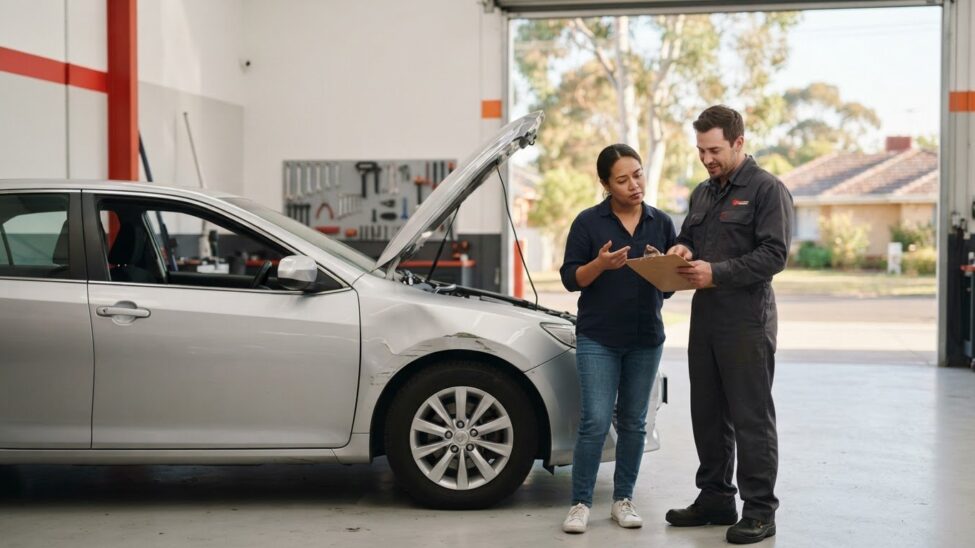
Selling a Car That Needs Repairs in Australia: Your 2026 Guide
What if repairing your car first leaves you worse off? When selling a car that needs repairs in Australia, the cheapest-looking option isn’t always the one that puts you ahead. A repair may improve the car’s appeal, but you could spend more than you recover when you sell.
Before committing to repair costs or accepting an as-is offer, weigh up the fault, the car’s overall condition and what buyers may be willing to pay. The repair bill alone won’t tell you which option makes more sense.
This guide explains how to compare repair costs with likely sale outcomes, how faults and service records can affect value, and what to prepare before discussing a sale. It also covers paperwork and roadworthiness requirements, which can vary by state and territory. A valuation can give you a useful starting point, and My Car Value connects Australian sellers with professional used car buyers to explore an as-is sale. A buyer’s offer may differ from the valuation.
Key Takeaways
- A car with faults may still be saleable, but the right approach depends on the type and severity of the damage.
- When selling a car that needs repairs in Australia, compare a written repair estimate with the likely difference between sale outcomes.
- Make, model, age, kilometres and service records can all inform an as-is assessment, alongside the fault itself.
- Prepare a clear account of known issues and gather relevant diagnosis, repair and vehicle documents before selling.
- My Car Value provides a valuation as a starting point and connects sellers with professional used car buyers. It doesn’t directly purchase cars.
Can You Sell a Car That Needs Repairs in Australia?
Yes. A car that needs repairs may still be saleable, depending on its condition, registration status and the circumstances of the sale. It might have minor cosmetic damage, a serious mechanical fault, accident damage or a problem that stops it starting. These differences can affect which buyers are interested and whether the car can be driven or needs another collection arrangement.
If you’re considering selling a car that needs repairs australia, remember that an as-is sale means describing the vehicle’s current condition. It doesn’t mean every buyer will accept it. The car’s condition may also affect how it can be transported, so include that in your plans.
What counts as a car that needs repairs?
Faults vary in type and severity. A scratched bumper or faded paint is cosmetic. A rough-running engine, faulty electrics or transmission problem may need mechanical attention. Issues with brakes, steering, tyres or other safety-related components can affect whether the vehicle is safe to use.
An intermittent fault or warning light matters too, even if the car seems to run normally most of the time. An engine warning light, for example, can have different causes. Don’t present a possible cause as a confirmed diagnosis. Describe what you’ve noticed and share any inspection or repair records you have.
Can you sell a car that is unroadworthy or won’t start?
A car that won’t start or may be unroadworthy can still attract interest, but its condition may narrow the pool of buyers and affect collection arrangements. Don’t assume it can be driven to a buyer or that the usual transfer steps apply in every situation.
Registration, roadworthiness and transfer requirements vary between Australian states and territories. Check the relevant government guidance before arranging a sale, particularly if the car is unregistered or has a safety-related fault. The Australian Design Rules (ADRs) set technical requirements for vehicle design and construction, including safety and emissions. They aren’t a substitute for checking the rules that apply to your vehicle’s road use or sale.
Describe known damage and faults clearly when discussing the car. Accurate details help buyers assess whether it suits their needs and what further checks or transport arrangements may be required. A valuation can help you understand market value, while a buyer’s offer depends on the vehicle’s condition and the buyer’s assessment.
How Repairs and Faults Can Affect Your Car’s Value
A fault is only one part of an as-is assessment. Buyers may also consider the car’s make and model, age, kilometres, service history and current demand. A popular model with documented servicing may attract interest despite a fault, while the same issue could weigh more heavily on an older vehicle with limited records.
The same fault can affect two cars differently because their age, overall condition, repair history and buyer demand aren’t the same.
Which vehicle condition details matter most?
Give a clear account of how the car behaves, not just the name of a suspected fault. Note whether it starts, runs and moves safely, and mention warning lights, unusual noises or intermittent problems. Include when the issue began and whether it has changed over time.
Diagnosis can reduce uncertainty. Share inspection results, repair quotes or records of work already attempted, but distinguish confirmed findings from a guess. Accurate kilometres and service records help buyers understand the vehicle’s use and maintenance. If records are incomplete, say so rather than filling gaps with assumptions.
Why an estimated value may differ from a buyer’s offer
A valuation is a useful starting point, based on the vehicle details and condition information supplied. It can help you understand the car’s estimated market position, but it isn’t a guaranteed or binding purchase price.
A professional buyer may assess the car in person and find that its actual condition differs from the description. A fault that appears minor may have a wider cause, while a documented diagnosis can make the issue clearer. Missing service records or additional wear may also affect the assessment. As a result, an eventual offer may differ from an indicative valuation.
Keep the distinction clear when comparing information about “selling a car that needs repairs australia”: an estimate helps set expectations, while a buyer’s offer reflects their assessment of the specific vehicle. Share accurate details from the outset to make that comparison more useful.
My Car Value provides a valuation to help you understand market value and connects sellers with professional used car buyers. Use the vehicle valuation as a starting point, then consider any buyer assessment alongside the car’s known condition and records.
Should You Repair the Car or Sell It As-Is?
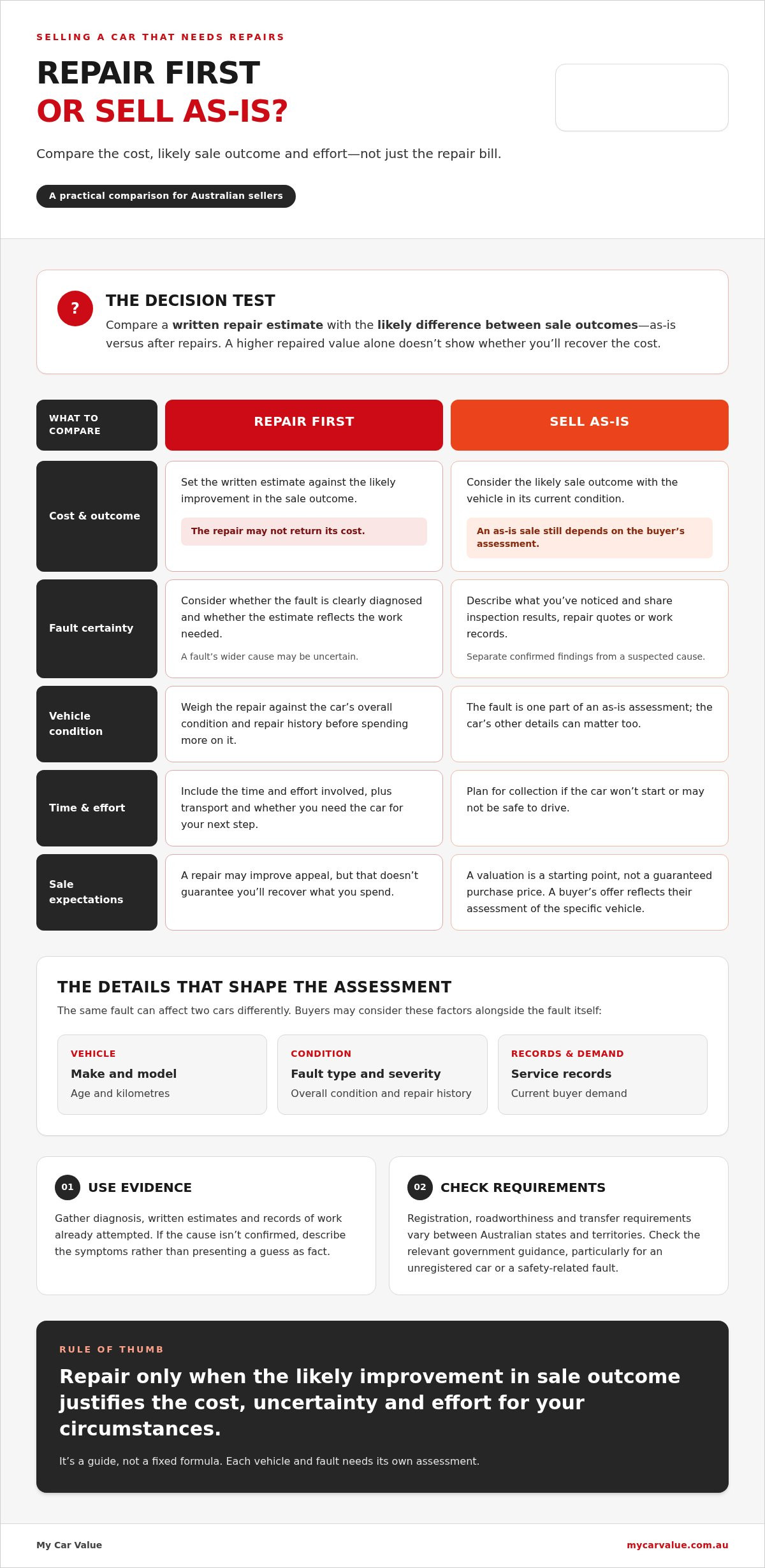
Compare the repair estimate with the likely difference between an as-is sale and a sale after repairs. Don’t compare the repair bill with the car’s full repaired value alone. A repair might increase buyer interest, but that doesn’t mean you’ll recover its cost. Also consider uncertainty, time, transport and whether you need the car for your next step.
Rule of thumb: repair only when the likely improvement in sale outcome justifies the cost, uncertainty and effort for your circumstances. Use this as a guide, not a fixed formula. Each vehicle and fault needs its own assessment.
| Option | What to weigh up |
|---|---|
| Repair first | Compare a written estimate with the likely difference in sale outcomes. Consider whether the fault is clearly diagnosed and whether the car’s overall condition supports spending more on it. |
| Sell as-is | Consider whether avoiding repair costs, delays and extra transport arrangements suits your priorities. The car’s condition may affect buyer interest and any offer. |
| Wait for a diagnosis | If the cause or scope of the fault is unclear, get more information before deciding. A diagnosis can help you compare options with less guesswork. |
When might repairing the car make sense?
A limited repair with a clear diagnosis and written estimate is easier to weigh up than a fault with an unknown cause. Consider the vehicle as a whole: its age, condition, service history and likely appeal after the repair. Fixing one issue may not justify further spending if other problems remain.
Check any relevant warranty or insurance terms before paying for work. Coverage depends on the circumstances and the applicable policy or warranty conditions, so don’t assume a repair will be covered.
When might selling as-is be the practical choice?
An as-is sale may suit you if the car has several faults, the repair scope is uncertain, or you’d rather explore buyer interest before organising work. It isn’t automatically the better financial choice, and not every buyer will consider every vehicle.
Think about what happens next. If the car can’t be driven safely, transport may affect your plans. If you need to replace it soon, time may matter as much as the possible sale difference. Compare your options against your priorities, not just the repair estimate.
For a starting point, get a vehicle valuation through My Car Value, which connects sellers with professional used car buyers. A valuation isn’t a guaranteed offer, but it can help you assess the as-is option alongside your repair estimate.
How to Prepare a Faulty Car for Sale in Australia
A clear record of the car’s condition helps buyers assess it and reduces confusion during the sale. Use this checklist to organise the relevant details before you seek buyer interest.
- Record the symptoms. Note when each fault occurs, whether it is constant or intermittent, and whether the car starts, runs or moves.
- List warning lights and visible damage. Include cosmetic damage, unusual noises and any safety concerns you’ve noticed.
- Gather diagnosis and repair records. Collect inspection reports, repair quotes, receipts and details of work already attempted.
- Organise vehicle details and paperwork. Have the registration information, accurate kilometres and available service records to hand. Include relevant insurance information if it relates to damage or a claim.
- Plan safe transport. If the car can’t be driven safely or won’t start, settle suitable collection arrangements before agreeing on a handover.
- Check local requirements. Registration, roadworthiness and transfer processes can vary by state or territory. Check the current rules that apply to your vehicle and sale.
What information should you disclose to a buyer?
Describe known faults, warning lights, damage and repair attempts accurately. Separate what you’ve observed from what has been diagnosed. For example, say the engine warning light comes on intermittently if that’s what you know. Don’t state a specific mechanical cause unless it has been confirmed.
Share relevant reports, quotes and receipts so a buyer can understand what has been checked or repaired. Disclosure requirements may depend on the circumstances and applicable rules, so verify current state or territory guidance rather than relying on a general assumption.
Which documents and vehicle details should you gather?
Bring together the vehicle’s make, model, registration details and odometer reading, along with available logbook or service records. Add diagnostic reports, repair estimates, invoices and relevant insurance paperwork. A complete history can provide useful context, even if it shows that maintenance or repairs are incomplete. For more guidance, read the car service history guide.
Preparing these details is a practical first step when selling a car that needs repairs in Australia. Keep the documents together and be ready to explain which issues are confirmed and which remain undiagnosed.
How to Sell a Car That Needs Repairs Through My Car Value
Use My Car Value to get a market-value starting point and connect with professional used car buyers. The platform facilitates those connections; it doesn’t directly purchase vehicles. Describe the car’s faults and condition accurately so the information you provide is a useful basis for the next step.
What happens after you provide your vehicle details?
The process has three parts:
- Submit your vehicle details. Provide information such as the car’s make, model, age, kilometres and condition, including known faults.
- Review a valuation. Use it as an indication of market value based on the information supplied, not as a guaranteed offer or purchase price.
- Connect with professional used car buyers. Buyers can assess the specific vehicle and its condition when considering whether to make an offer.
A clear description matters. If the car has an intermittent warning light, won’t start or has an undiagnosed issue, include that detail rather than assuming the valuation accounts for it. My Car Value helps you explore a potential as-is sale by connecting you with buyers, but it doesn’t set or guarantee their offers.
Start with a My Car Value valuation to understand your car’s market-value starting point.
What should you compare before accepting an offer?
Consider the offer against the vehicle’s actual condition and the information you disclosed. If a buyer’s assessment differs from your expectations, ask which details or inspection findings contributed to the difference. Your valuation is a reference point; the buyer’s offer reflects their assessment of the specific car.
Before agreeing to a sale, confirm the transaction, payment and collection arrangements directly with the buyer. If the vehicle can’t be driven, make sure the collection plan suits its condition. Also check the registration and transfer steps that apply in your state or territory.
If you’re comparing ways of selling a car that needs repairs australia, use the valuation alongside your records and the buyer’s assessment. A used car buyer guide, a 2026 car selling guide and a vehicle market value calculator guide can also help you understand the wider process and interpret an estimate. These guides provide context, but the vehicle’s actual condition remains central to any buyer’s offer.
Make Your Next Move With Clearer Information
Selling a car that needs repairs in Australia starts with understanding the fault, the vehicle’s overall condition and what repair work could realistically change. Compare a written estimate with the likely difference in sale outcomes, not just the car’s potential value after repairs. If the diagnosis is uncertain, gather more information before deciding.
Before exploring a sale, record known issues accurately and organise relevant service, diagnosis and repair documents. Registration, roadworthiness and transfer requirements can vary by state or territory, so check the rules that apply to your vehicle.
A vehicle valuation can help you understand market value before you explore sale options. My Car Value also connects Australian sellers with professional used car buyers. The valuation is a starting point, not a guaranteed offer, and buyers assess each vehicle based on its specific condition.
With clear information and a practical comparison, you can choose the next step that best fits your car and circumstances.
Frequently Asked Questions
Can I sell a car that needs repairs in Australia?
Yes, a car that needs repairs may still be saleable, depending on its condition and the circumstances. Minor cosmetic damage, mechanical faults, accident damage and a car that won’t start can all affect buyer interest. If you’re searching for “selling a car that needs repairs australia”, remember that an as-is sale doesn’t mean every buyer will accept every vehicle. Registration, roadworthiness and transfer requirements can vary by state or territory.
Is it better to repair a car before selling it?
Not always. Compare a written repair estimate with the likely difference between an as-is sale and a sale after repairs, rather than comparing repair costs with the car’s full repaired value. A clearly diagnosed, limited repair may be easier to assess. If the fault is uncertain or the car has several issues, consider getting more information first. Your time, transport needs and next steps matter too.
Can I sell a car that does not run?
Yes, a car that doesn’t run may still interest a buyer, but its condition can limit who considers it and affect collection arrangements. Be clear about whether it starts, runs or moves, and describe known faults without guessing at their cause. Don’t assume it can be driven on public roads. Check the rules that apply to its registration and transfer, and agree on suitable transport arrangements before the handover.
Do I have to tell a buyer about known mechanical problems?
Be upfront about known mechanical problems, warning lights, damage and repair attempts. Separate what you’ve observed from any confirmed diagnosis. For example, say a warning light comes on intermittently if you don’t know its cause. The rules may depend on the sale and your circumstances. Businesses selling vehicles have Australian Consumer Law obligations, while private-sale requirements can differ. Check current guidance that applies to your situation if you’re unsure.
How do repairs affect a car’s value or buyer offer?
Repairs and faults can influence buyer confidence and the offer, but they’re not the only factors. Make, model, age, kilometres, service history and demand also inform an assessment. A clear diagnosis and repair records can help explain the vehicle’s condition, while an unknown or intermittent issue may create uncertainty. An indicative valuation is a starting point based on supplied information. A buyer’s offer may change after assessing the specific car.
Can I sell a car without a roadworthy certificate in Australia?
It depends on the state or territory and the circumstances of the sale. For example, a roadworthy certificate is generally required for private sales of registered vehicles in Victoria and Queensland, while it isn’t generally required for private sales of registered vehicles in New South Wales or Western Australia. Other rules and exceptions apply. Check current requirements for your location, vehicle and sale before making arrangements.
How can I get a valuation for a faulty car?
Submit your vehicle details and describe its faults accurately, including whether it starts, runs and moves. If you’re selling a car that needs repairs in Australia, My Car Value can provide a market-value starting point and connect you with professional used car buyers. The platform facilitates these connections; it doesn’t directly purchase cars. A valuation isn’t a guaranteed offer, as buyers assess the particular vehicle and its condition.