
Car Price Estimator: Value Your Car in Australia 2026
What if the number you get for your car is a useful guide, but not the amount a buyer will offer? A car price estimator can help you understand where your vehicle sits in the Australian market, but its result isn’t a guaranteed sale price. That difference can be confusing, especially if you’re unsure which details to enter or how your car’s condition and history might affect the estimate.
For a more relevant result, check your car’s make, model, year, badge or variant and kilometres travelled before entering them. If the estimator asks about condition or service history, answer as accurately as you can. This guide explains what a car price estimator can tell you, which factors may shape its result and how to interpret the estimate without treating it as a firm offer. You’ll also learn how to use that information when considering your next step. My Car Value helps owners explore selling options by connecting them with professional used car buyers. It facilitates those connections rather than purchasing vehicles directly.
Key Takeaways
- Use a car price estimator to build a clearer picture of your vehicle’s market value, then treat the result as a guide when weighing up your options.
- Check the year, variant and odometer reading carefully. Accurate details help make an estimate more relevant to your car.
- Consider condition, service records and vehicle history when assessing why a buyer’s view may differ from an online estimate.
- Gather your vehicle information and records before deciding which selling pathway best suits your priorities.
- My Car Value can help you explore a valuation and connect with professional used car buyers.
What does a car price estimator tell you about your car’s value?
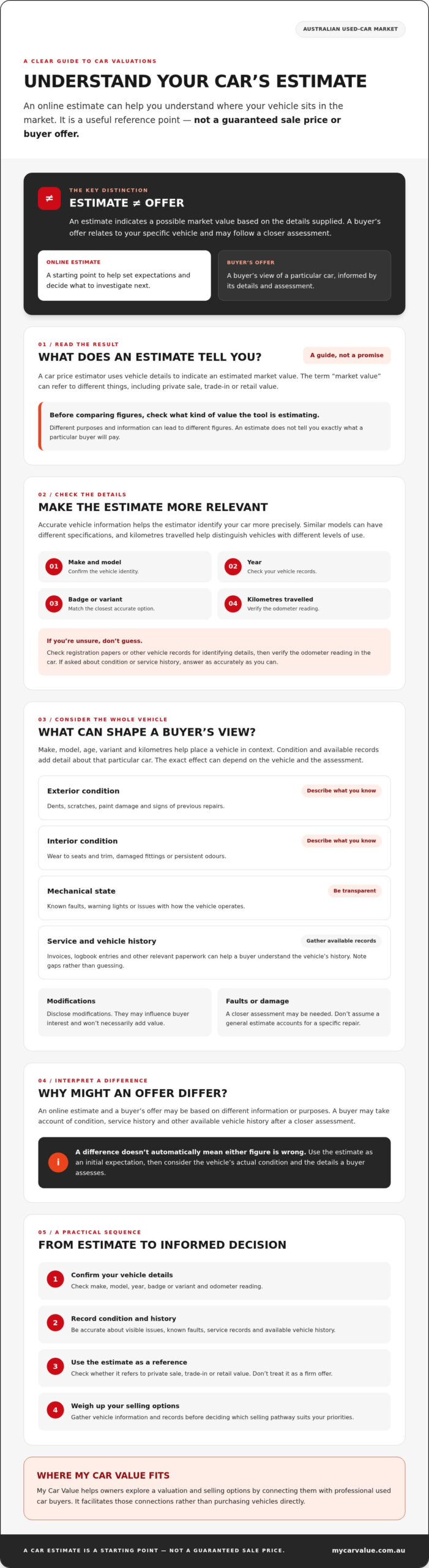
A car price estimator uses details about a vehicle to indicate an estimated market value. It gives you a starting point for understanding what your car may be worth, not a confirmed buyer offer or guaranteed sale price.
That estimate can help you set expectations before exploring how to sell. Keep in mind that “market value” can refer to different kinds of value, such as a private sale, trade-in or retail value. The process of estimating the market value depends on the vehicle and the purpose of the valuation. Before comparing figures, check what kind of value each tool is estimating.
Think of the result as a reference point. It can help you decide what to investigate next, but it doesn’t tell you exactly what a particular buyer will pay for your specific car.
What information does a car price estimator need?
Useful details usually include the make, model, badge or variant, year and odometer reading. These details identify the vehicle more precisely. Two cars from the same model range may have different features or specifications, so selecting the right variant matters. The kilometres travelled also help distinguish one vehicle from another.
Don’t guess if you’re unsure. Check your registration papers or other vehicle records to confirm the year and identifying details, then verify the odometer reading in the car. If the estimator uses a drop-down list, match the badge or variant as closely as possible rather than choosing the first similar-sounding option. Accurate information makes the result more relevant. For a closer look at how vehicle details inform a valuation, read a guide to using a vehicle market value calculator.
Is an estimate the same as an offer?
No. An estimate is an indication based on the information supplied to the tool. A buyer’s offer relates to a specific vehicle and may follow a closer assessment. Its condition, service history and other available vehicle history can affect buyer interest and the assessment.
An estimate is a guide, while an offer reflects a buyer’s assessment. If a later offer differs from the estimate, it doesn’t automatically mean either figure is wrong. They may be based on different information or purposes. Use the estimate to form an initial expectation, then consider the vehicle’s actual condition and the details a buyer takes into account before deciding what to do next.
Which factors can move a car price estimator’s result?
A vehicle’s value depends on more than its make and model. A car price estimator uses identifying details to place the vehicle in context, while condition and records can help explain how that particular car compares with others of the same type.
Age, make, model and variant help distinguish vehicles with different specifications. Kilometres travelled offer another point of comparison: two otherwise similar cars may have had very different levels of use. Accurate details matter. A mistaken badge or odometer reading can make the information supplied less representative of your vehicle.
How do kilometres and condition affect an estimate?
The odometer reading helps distinguish similar vehicles, but it doesn’t tell the whole story. A buyer may also consider the car’s visible condition and how it runs. Be ready to describe what you know about:
- Exterior: dents, scratches, paint damage or signs of previous repairs.
- Interior: wear to seats and trim, damaged fittings or persistent odours.
- Mechanical state: known faults, warning lights or issues with how the vehicle operates.
You can report the odometer reading and visible issues, but a closer assessment may be needed to establish the extent of damage or identify mechanical concerns. Describe the car honestly rather than assuming a fault will have a particular effect on its value. Disclose modifications too, as they may influence buyer interest and won’t necessarily add value. If a car has a fault, such as a blown engine, don’t assume a general estimate accounts for the repair required. Include accurate details wherever requested and discuss the issue when exploring buyer interest.
Why do service history and vehicle records matter?
Service records can help a buyer understand how the vehicle has been maintained. Gather available invoices, logbook entries and other relevant paperwork, and note any gaps rather than filling them with guesses. A car service history check guide can help you understand what records may be useful to review.
Vehicle history is another part of the picture. A PPSR check is one way people look into a vehicle’s recorded history; consult a dedicated guide for details about what it checks and how to interpret the result. An online estimate may not capture every detail in those records, and a buyer’s assessment may take them into account alongside the car’s condition.
Start with what you can verify: the vehicle identification, kilometres, servicing documents and known issues. If you’re considering a sale, My Car Value can help you explore a valuation and connect with professional used car buyers. It facilitates that connection; it doesn’t directly purchase vehicles.
How do you use a car price estimator and interpret the result?
Use the estimate as a starting point, not a verdict. The details you enter shape how relevant the result is to your vehicle, so check them before submitting. Then consider the estimate alongside your car’s actual condition and decide what information or selling options to explore next.
What should you check before entering your car details?
Gather the details first. Check your registration papers or vehicle records rather than relying on memory, and confirm the odometer reading from the dashboard. If a field is unclear, verify it before continuing instead of choosing a guess.
- Identify the vehicle. Confirm its make, model, year and badge or variant. Similar model names can refer to different specifications.
- Enter the requested details accurately. Follow the estimator’s fields and check each entry, especially the year, variant and kilometres travelled.
- Have relevant records ready. Note available service information and any known damage or condition issues, in case they’re requested or useful when you review the result.
- Review the estimate. Check that it relates to the vehicle details you supplied. If you spot an error, correct it before using the result to plan.
- Choose your next step. Use the estimate to set an initial expectation, then consider whether to gather more information or explore a sale option.
Missing or incorrect details can make the result less relevant to your car. For example, selecting a different variant may point to a vehicle with different specifications. An odometer reading entered incorrectly may also change how closely the estimate reflects your vehicle. If the result seems unexpected, check those entries first before drawing conclusions about your car’s value.
How should you read an estimated value?
Read the figure as an indication, not a promised sale price. Estimators can use different inputs or valuation approaches, while buyers may assess the specific car, including its condition and available history. That’s why results from different tools, or a later buyer assessment, may not match.
For broader context on what valuation tools can indicate, refer to a vehicle market value calculator guide. Use the estimate to frame your expectations, then weigh it against the details a buyer may consider. An online result alone doesn’t confirm what a buyer will offer.
If you’re ready to explore a valuation and possible selling options, My Car Value can help connect vehicle owners with professional used car buyers. The platform facilitates the connection; it doesn’t directly purchase vehicles.
Why can a car price estimate differ from a real buyer offer?
An online estimate and a buyer’s offer serve different purposes. A car price estimator uses the details supplied to produce an indication of value. A buyer can consider the specific vehicle, including its confirmed condition and history. The estimate is useful for setting expectations, but it doesn’t guarantee an offer or sale price.
| Comparison | Online estimate | Buyer offer |
|---|---|---|
| Purpose | Indicates a possible market value based on the tool’s approach. | Sets out what a buyer may offer for the vehicle. |
| Information | Usually relies on the details entered by the owner. | May take account of confirmed vehicle details and information about its condition and history. |
| Assessment | Is generated from the available inputs and the tool’s valuation method. | May reflect an assessment of the specific car and the buyer’s intended use for the valuation. |
What can change after a buyer assesses the vehicle?
A buyer may consider details that an online tool can’t confirm from the information entered. For example, the car’s actual condition, service records or vehicle history may add context to the initial estimate. If the year, variant or odometer reading was entered incorrectly, the estimate may not represent the vehicle accurately.
Share accurate information and disclose known issues. A buyer’s assessment may differ once details are checked, but there isn’t a standard adjustment for a particular fault or history item. Ask what information the buyer has considered and how it relates to the vehicle’s assessment.
How can you compare estimates fairly?
Before comparing results, check that each valuation uses the same vehicle year, variant, kilometres travelled and condition information. Also consider what each figure is intended to represent. One tool may indicate a broad market value, while another may use different inputs or assumptions. Treat results as indicative until you understand those differences.
Comparable inputs make valuation results easier to assess. If the figures still differ, check the assumptions behind each one rather than treating one result as automatically more accurate. A buyer’s offer is a separate assessment of a specific vehicle, not simply a confirmation of an online estimate.
What can you do after using a car price estimator?
Use the estimate to plan, not to rush into a decision. First, confirm the vehicle details and gather the information a buyer may want to understand. Then consider which selling pathway fits your priorities, such as convenience or exploring other sale options. The estimate can help you prepare, but a later assessment or offer may differ.
How can you prepare before exploring buyer interest?
Get the basics together so you can describe the car clearly:
- Check registration details and confirm the make, model, year and variant.
- Record the current odometer reading.
- Organise available service records and note any gaps.
- Write down known damage, faults or other condition issues.
Be accurate and straightforward. Don’t assume a particular issue will lead to a specific change in value. The estimate is based on the information supplied, while a buyer may take the vehicle’s confirmed condition and history into account. If any detail is uncertain, check your records before sharing it.
Your preferred way to sell also matters. Think about what you value most and which steps you’re comfortable managing. A sell my car guide can help you understand the broader process and prepare for the decisions ahead.
How does My Car Value help with the next step?
My Car Value helps vehicle owners obtain market valuations and connects them with professional used car buyers. It facilitates that connection; it doesn’t directly purchase vehicles. A valuation is a starting point for exploring your options, not a guaranteed offer or promise of sale.
If you’re considering selling, keep your vehicle details and records handy when you explore buyer interest. Be prepared to discuss the car’s condition honestly, and assess any later offer on its own terms. This helps you compare the estimate with information about your specific vehicle, rather than treating the figures as interchangeable.
When you’re ready, explore My Car Value to obtain a valuation and consider connecting with professional used car buyers.
Take your next step with a clearer picture
A car price estimator can help you understand your vehicle’s potential market value, but the result is a guide, not a guaranteed offer. Check that the details you enter are accurate, especially the year, variant and odometer reading. Condition, service records and vehicle history can also shape how a buyer assesses the specific car.
Use the estimate to set expectations and prepare for a conversation about selling. My Car Value is an Australian vehicle valuation platform that connects owners with professional used car buyers. It facilitates those connections; it doesn’t directly purchase vehicles. Treat the estimate as a starting point, then consider any buyer assessment separately.
With accurate information and a clear sense of your priorities, you can decide which next step suits you.
Frequently Asked Questions
How accurate is a car price estimator?
A car price estimator gives you an indication of value, not a guaranteed sale price. How relevant the result is depends partly on the details entered, such as the vehicle’s year, variant and kilometres travelled. Online tools may not capture every aspect of a car’s condition or history. Use the estimate to set expectations, then consider any further assessment of your specific vehicle separately.
What details do I need to use a car price estimator?
You’ll generally need the vehicle’s make, model, year, badge or variant, and odometer reading. Check these against registration papers or vehicle records rather than relying on memory. Some tools may request other details, so follow the fields shown. Have available service records and information about the car’s condition to hand, particularly if you’ll use the estimate to explore selling options.
Is a car price estimator the same as a buyer’s offer?
No. An estimate is an indication based on the details supplied to a valuation tool. A buyer’s offer relates to a specific vehicle and may take account of its confirmed condition, history and other relevant information. Treat the estimate as a guide to help you plan, not as a promise that a buyer will offer that amount or that the car will sell for it.
Why do different car price estimators give different results?
Valuation tools may use different data, inputs or methods, and their results may reflect different types of value. Check that you’ve entered the same year, variant, kilometres and condition details in each estimator. Then look at what each result is intended to represent. If the assumptions differ, the figures aren’t directly comparable, so don’t assume one is automatically more accurate.
Can I use a car price estimator if my car has damage?
Yes, you can use an estimator, but report the vehicle details and known damage accurately wherever the tool asks for that information. A general estimate may not reflect the full extent of damage or mechanical issues. Keep notes about the condition and any known faults. A buyer may consider the specific vehicle and its condition when making a separate assessment.
What should I do after getting a car price estimate?
Check that the estimate reflects the correct vehicle details, then gather registration information, available service records and notes about the car’s condition. Decide what matters most in your preferred selling pathway, and use the estimate as a reference point rather than a fixed price. If you explore a buyer offer, consider it separately and check what vehicle information informed the assessment.
Does My Car Value buy cars directly?
No. My Car Value is an Australian vehicle valuation platform that helps owners obtain market valuations and connects them with professional used car buyers. It facilitates those connections; it isn’t a direct vehicle purchaser. An estimate or connection doesn’t guarantee an offer or sale. To explore a valuation and connect with professional used car buyers, visit My Car Value.